Why did it all go wrong for Keir Starmer?

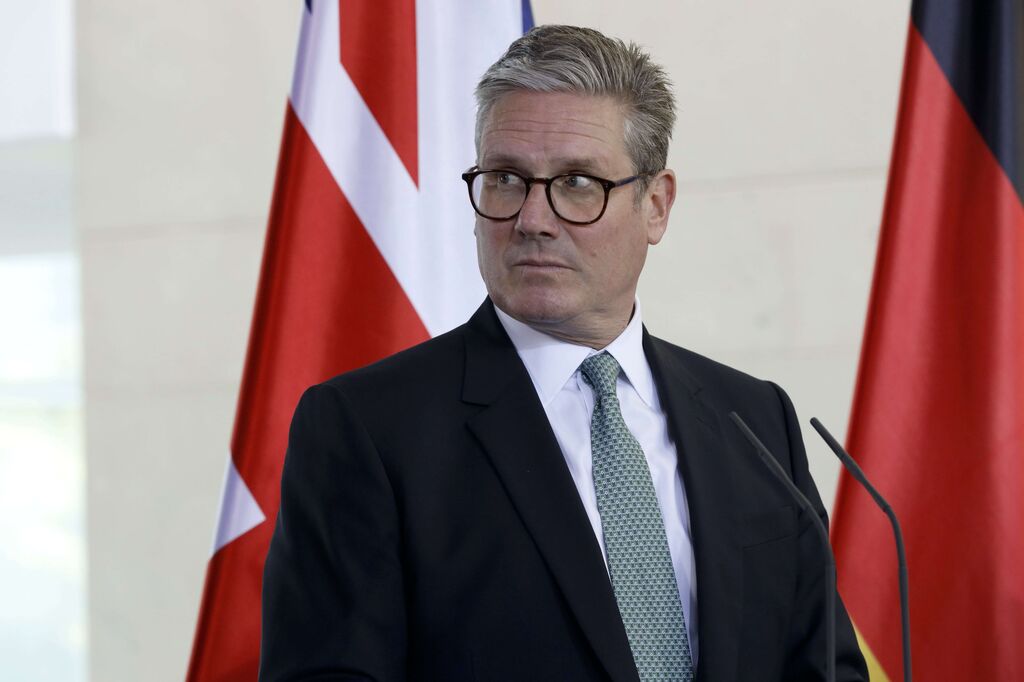
The resignation this week of Sir Keir Starmer marks the beginning of the end of another chapter in British politics.
If Andy Burnham stands uncontested for the leadership of the Labour Party, he could be Prime Minister by 16 July. I suspect that as we get closer to Sir Keir's departure there will be plenty of debate about his achievements and failures, and how his premiership should be judged. Yet one thing that has struck me over the past few years is how many people, including many who disagreed with him politically, have described him as decent, serious and honourable.
In an age of political cynicism, that is no small thing.
Indeed, Christians should be amongst the first to recognise the importance of integrity, diligence and public service. I know firsthand that politics is often a bruising vocation, and those who step forward to serve deserve our gratitude in many respects, even when we disagree with them. Public life needs men and women of character.
And yet Starmer's resignation also leaves behind an unanswered question.
Character matters, but is it enough?
Where did Keir Starmer go wrong?
I have written before that one of Starmer's challenges was a perceived lack of vision. Looking back, I think that criticism was probably too simplistic. He clearly did have a vision. He wanted a more prosperous country, better-run public services and a government that was competent and stable after a prolonged period of political turbulence. Those are worthwhile ambitions and, in a different political era, they may well have been enough.
Of course, many CARE supporters will understandably judge his premiership through a rather different lens. The assisted suicide debate, together with the sense that some principled voices within his own party found themselves increasingly marginalised for taking a different view, will, for many, shape how these years are remembered. Those are important concerns, and I don't want to minimise them.
My point here, however, is slightly different. Even had those controversies never arisen, I suspect the deeper challenge I am describing would still have remained.
The question, perhaps, is not whether Starmer had a vision, but his inability to be able to communicate a story of what it looked like. The public never really got what he was trying to convey, and his message often felt more like a set of sensible objectives than a compelling answer to the question of who we want to be, and what a good life in today's (and tomorrow's) Britain might actually look like.
Many people are searching to be part of something bigger than a mere competent administration (regardless of whether you think this Government achieved that or not). Just keeping the lights on isn’t enough. They are looking for a story and a sense of direction. They are looking for some understanding of what kind of society we are trying to build.
A narrow vision
None of this is to dismiss economic growth. Families need jobs, businesses need confidence and public services need funding. In many respects I do not disagree that these were important things for Keir Starmer focus on.
But whilst prosperity may be a key element necessary for a flourishing society, God’s word warns us that it is not all-sufficient. If decency was not enough to save Starmer’s leadership, perhaps the same is true of prosperity (such as it is). It matters, but it is not enough.
A nation may become wealthier whilst also becoming more anxious, more fragmented and less certain of who it is. People do not simply want higher wages. They want purpose. They want belonging. They want to know what kind of society they are helping to build, and what future they are being asked to invest in.
Perhaps that also helps explain another of the recurring criticisms made of Starmer: that he was prone to U-turns because he himself did not have a direction guided by a bigger story.
I have written before about the Prime Monster’s U-turns, and while it is sometimes necessary to change course because of changing circumstances or facts, he did change his mind on a number of symbolically and tactically important issues. That proved politically damaging because whilst people will often forgive a change of direction if they understand the destination, they find it hard to accept uncertainty.
There are only so many battles (and tough decisions) a Prime Minister can take. Keri Starmer repeatedly wasted political capital, only to then reverse course and not actually secure the benefits of having done so.
The impossible job
But I suspect there is a wider lesson here, not just about Starmer but about modern politics.
Over thirty years ago, Channel 4 broadcast a documentary about the-then England football manager Graham Taylor, called ‘An Impossible Job’, which followed England’s unsuccessful attempt to qualify for the World Cup. Today, the England football team might be more successful, but as we prepare for our sixth Prime Minister in seven years, you might be forgiven for wondering whether the really impossible job is that of Prime Minister.
Increasingly, we seem to be asking our leaders to be all things at once. We want them to be competent administrators and inspiring visionaries. We want them to run complex institutions effectively whilst communicating hope and purpose. We expect them to navigate international crises, understand domestic concerns, connect emotionally with voters, perform well in the media and somehow remain authentic throughout.
Those are not unreasonable aspirations. Christians should want leaders of integrity, wisdom and competence. We should pray for them. We should encourage them. We should want public life to attract people of character.
But I also wonder whether we sometimes ask politics to do more than politics was ever intended to do.
Politics matters, and political decisions affect millions of lives, particularly the poorest and most vulnerable. But it is not ultimate.
No Prime Minister can provide meaning, identity or salvation. No government programme can answer the deepest questions about what it means to be human or what ultimately constitutes a good life. Perhaps one reason our politics so often feels disappointing is that we increasingly expect it to fulfil needs it was never designed to meet.
This is why it is important that we bring the Christian perspective to the public square
A better story
The Christian faith offers a richer account of human flourishing than either prosperity or political success alone can provide.
At its best, it reminds us that people are more than consumers, workers, taxpayers or economic units. Every person possesses inherent dignity because they are made in the image of God. And we also believe that families communities, meaningful work, justice, and caring for the vulnerable matter.
That does not mean looking backwards with nostalgia. This week Andy Crouch, spoke at the most recent ARC conference in London. He has written much about our calling as Christians to be stewards. As stewards, we are not ‘museum curators’ preserving a lost past, but cultivators and culture-makers. We are called to renewal, not to nostalgia.
And we do not want to simply condemn what has gone wrong in society, or Prime Ministers for failing to sort out all our problems within a couple of years. If we are not careful, Christians can become very good at critique whilst being less effective at service.
We can become so focused on defending what we believe to be true that we neglect the practical work of loving our neighbours and serving the vulnerable. God’s word shows us a good way to live, not simply how to argue.
That is one reason why I find the frequent attempt to separate truth and compassion so unconvincing. Contemporary public debate often seems to assume we must choose between them, as though compassion means affirmation and truth means judgement.
Yet the Christian faith refuses that choice. Throughout the Gospels Jesus consistently combines truth and compassion. He welcomes the outsider, seeks out the marginalised and shows extraordinary mercy. Yet he also speaks clearly about what is good, harmful, life-giving and destructive.
Compassion is not simply giving people what they want. Genuine compassion seeks another person's good. At the same time, truth disconnected from compassion quickly becomes harsh and self-righteous.
The challenge facing Britain is not simply how to become richer or more efficient. It is how to become a society that better embodies both justice and mercy, responsibility and compassion. It means sometimes understanding we will not always get what we want, or what we think we need in the short term.
What democracy needs
That is why I suspect the most important question raised by Starmer's resignation is not actually about Starmer at all.
It is about us.
We may need to ask what kind of leaders we want to run the country. But we also need to ask ourselves: what kind of citizens do we want to be?
A healthy democracy requires more than good leaders. It requires good citizens. Citizens who are willing to engage critically without becoming cynical. Citizens who can disagree without despising one another. Citizens who can recognise achievement as well as failure. Citizens who can extend grace without abandoning accountability.
As Christians, we rightly want leaders who demonstrate integrity, wisdom, vision and competence. Those are good aspirations, and we should never stop encouraging them. But the New Testament spends at least as much time talking about the formation of our own character as it does about the qualities we should seek in others.
The fruit of the Spirit includes patience, kindness, gentleness and self-control. Those virtues surely have a place in our political life as well as our personal lives.
It is right that we continue to ask for better leaders. It is right that we hold those who govern us to high standards. Yet democracy is not simply about choosing leaders. It is also about the kind of people we ourselves are becoming.
At a time when Britain seems uncertain about where it is heading, we do not just need is not leaders with vision, courage and wisdom, but citizens who are willing to practise patience, grace, humility and hope.
Those may not be the qualities that generate the loudest headlines. Yet they are the virtues that help sustain both democratic life and Christian witness, and they may prove to be amongst the most important gifts we can offer our nation in the years ahead.