What Ecclesiastes can teach Andy Burnham on his path to power

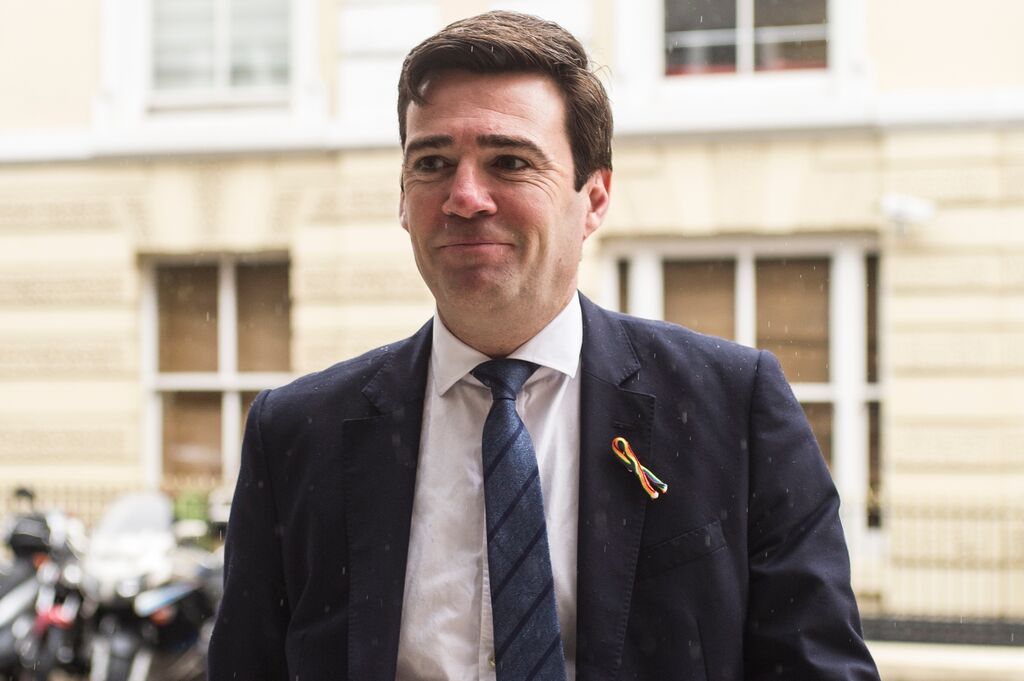
After many weeks of intrigue and speculation, we woke this morning to the results of the Makerfield by-election. Andy Burnham, Labour’s candidate and (until this morning) Mayor of Greater Manchester, won by a convincing margin. He took 55% of the vote for Labour, gaining 10 percentage points from their result in the last general election. Reform, who were second, gained 35% despite a strong showing in the recent local elections. Concerns were raised that Reform’s share would be split by the presence of Restore Britain, but they only managed 7%, meaning that Burnham and Labour comfortably beat both Restore and Reform combined.
What has made this by-election of national significance is Andy Burnham’s political ambitions. With support for the Prime Minister on shaky ground over recent months, Burnham has made it clear he would challenge Keir Starmer for the top spot if he returned to Westminster. Burnham’s victory in Makerfield sets up a potential leadership challenge in the coming days and weeks.
Burnham used his victory speech to set out his stall not only as an MP, but as a potential Prime Minister. He said: “There will be no second chance, but it is a chance now, from this result tonight, to build a new politics based on unity and hope… We must now take this path and put this country back on the right path, and bring people back together and get things working properly again.” Wes Streeting, another potential leadership candidate, has called on the Prime Minister to consider his position over the weekend. Keir Starmer, for his part, has warned that a leadership election could send “the country into chaos” and repeated his desire to fight any challenge. More high-profile resignations from ministers over the coming days, however, could force the Prime Minister’s hand.
Whether Starmer steps down or stays on to fight, it seems certain that a battle for the leadership of the Labour Party, and the premiership, is inevitable. It is difficult to see how Starmer can stay on much longer and, while not certain, Andy Burnham stepping into his place seems the most likely outcome.
Speaking after the Makerfield election, Labour MP for Southport, Patrick Hurley, said that Keir Starmer will “go down in history as a monumental figure in Labour party politics”, going on to say:
to everything there is a season and right now we need a transition to something new.
I don’t know if he knew it, but Hurley was quoting from the Bible. Consciously or not, he drew on the book of Ecclesiastes to speak about the current political climate.
Often seen as a downbeat book, Ecclesiastes actually has a lot to say to those seeking political power. It was written by an anonymous ‘Teacher’ who was “son of David, king in Jerusalem” (Ecclesiastes 1:1). Some identify this with Solomon, who was famed for his wisdom. Whoever the Teacher was, they knew power and prestige, and reflected on their value in a broken and sinful world.
Ecclesiastes has a lot to teach us about our world today. It also has important lessons for Andy Burnham, and anyone else who wants to walk the path to political power.
A new season, but not a new situation
Patrick Hurley’s words cite one of the best known parts of Ecclesiastes, which are so familiar they were even turned into a pop song in the past:
There is a time for everything, and a season for every activity under the heavens: a time to be born and a time to die, a time to plant and a time to uproot, a time to kill and a time to heal, a time to tear down and a time to build,
The message is clear: there are times and seasons in life, and as one season finishes, another, often different, one presents itself. Ecclesiastes takes eight verses to list a range of these from sowing and reaping, war and peace, and scattering and gathering, to weeping and laughing.
Hurley draws on Ecclesiastes as he says “to everything there is a season and right now we need a transition to something new.” His message is that the old season of Starmer is ending, and the new season of Burnham is about to begin. Burnham himself invokes the same idea saying that his victory “could, just could, be the turning point” as he looks for a “new path for Britain”.
For those who are frustrated with the leadership of Keir Starmer it is a tempting proposition: out with the old and in with the new. A different person at the top could lead to a new season of politics. Starmer’s time is over, but Burnham’s time is beginning.
A new leader cannot possibly solve all the issues that Labour have contended with since they came to power. Even if there is a new season, Ecclesiastes tells us that a new season doesn’t necessarily mean a new situation:
What has been will be again, what has been done will be done again; there is nothing new under the sun. Is there anything of which one can say, “Look! This is something new”? It was here already, long ago; it was here before our time.
Sure, times change, says the Teacher, but that doesn’t mean we are facing something new. We have seen all of this before. A new leader doesn’t mean a new political situation. The same issues exist after Makerfield as before it. The same problems will fall into Andy Burnham’s lap as fell into Keir Starmer’s.
This is not a call for doom and gloom, but for political realism. Burnham, or someone else, in Number 10 does not fundamentally change the opportunities or challenges facing the country. What has been will be again. A new leader can give new energy, a fresh outlook, and a clearer vision. But the issues don’t change, just the team that is facing them.
Supporters can become critics
Chapter four of Ecclesiastes contains these words of wisdom from the Teacher:
Better a poor but wise youth than an old but foolish king who no longer knows how to heed a warning.
I don’t know if it’s right to call Burnham a ‘poor youth’ or Starmer an ‘old and foolish king’, but many within the Labour Party certainly see the Prime Minister as someone who “no longer knows how to heed a warning”! Despite his determination to stay and fight, some hope Starmer will come to his senses and step aside. The strength of Burnham’s victory in Makerfield has led to suggestions that there might not be a leadership challenge at all, but that leadership hopefuls will make way for Andy Burnham, with Streeting and Rayner taking cabinet positions in exchange for their sacrifice.
Whatever the outcome, the Teacher of Ecclesiastes goes on to have important words for whoever takes Starmer’s place:
I saw that all who lived and walked under the sun followed the youth, the king’s successor. There was no end to all the people who were before them. But those who came later were not pleased with the successor. This too is meaningless, a chasing after the wind.
Whoever sits in power at Number 10 comes in a long line of previous Prime Ministers. They face the same pressures and complexities as those who have come before them. Andy Burnham will not be immune to the difficulties that Keir Starmer had to face. He may deal with them differently, sometimes better, sometimes worse, but he cannot think that things will be different for him, or anyone else who comes after him.
Perhaps the most sobering advice from Ecclesiastes is found in verse 16: “But those who came later were not pleased with the successor.” Burnham’s pursuit of the premiership comes because of the dissatisfaction displayed toward Starmer. It would be unwise to think that there won’t come others who feel dissatisfaction toward Burnham as well. It seems that as soon as a leader is elected, the media start to speculate on who might come after them. Today it is Burnham replacing Starmer; soon another person might succeed Andy Burnham.
Those who support you one day can quickly become your critics the next. A lot of expectation has landed on Andy Burnham’s shoulders. He has a heart for politics, and a great deal of ability as well. But there is no way that he will meet every expectation of even his most ardent supporters. Both the upstart youth and the old king find that they have those who are not pleased with them.
Burnham, or any other wannabe Prime Minister, will need to manage criticism well. Ecclesiastes has some good advice:
Do not pay attention to every word people say, or you may hear your servant cursing you—for you know in your heart that many times you yourself have cursed others.
We hope that politicians will listen to what people say, since they are elected to represent them (and Makerfield will want Burnham to represent them even if he becomes PM). But the gossip of Westminster is something that every party leader needs to avoid. They can become distracted by words of dissatisfaction and criticism instead of serving the country. Whoever is Prime Minister will need to recognise that disapproval and displeasure is part of what it means to be a leader.
Keep your promises
Burnham’s message of hope and change has appealed to the voters in Makerfield, and may appeal to a majority of the parliamentary Labour Party. But broad promises of “a new path for Britain” where the government gets “things working properly again” are one thing. It is a very different thing to actually deliver.
Once again, Ecclesiastes has wise words about keeping your promises:
When you make a vow to God, do not delay to fulfill it. He has no pleasure in fools; fulfill your vow. It is better not to make a vow than to make one and not fulfill it. Do not let your mouth lead you into sin. And do not protest to the temple messenger, “My vow was a mistake.” Why should God be angry at what you say and destroy the work of your hands?
These verses speak about fulfilling vows to God through sacrifices in temple worship. But they apply just as well to broader pledges and promises, just as Jesus widens the scope when he says not to make an oath at all, but: “All you need to say is simply ‘Yes’ or ‘No’” (Matthew 5:37). What you say should be what you do.
Former New York Governor Mario Cuomo once coined the phrase: “You campaign in poetry. You govern in prose.” Attractive words and big ideas on the campaign trail becomes the prose of practicalities once you are elected. Even more so when you move quickly from being elected to leading the country.
Some within the Labour Party have hinted that if Burnham becomes Prime Minister he should call a general election if his policies move too far from the manifesto. His agenda for change needs to be moderated by the promises already made. It is one thing to say something, it is another thing entirely to put it into practice. Or, to put it Ecclesiastes’ terms: “Much dreaming and many words are meaningless.”
One of the things that Burnham will need to do to keep his promises is to stick with his plans for the long term. Ecclesiastes tells us:
The end of a matter is better than its beginning, and patience is better than pride.
It’s much better to promise what you can fulfil, than to offer much but be unable to deliver it. Pride and power can be the watchwords of politics rather than patience. But we need politicians and Prime Ministers who will patiently get things done, being realistic about the time it takes to effect real change.
Some might say that is what Keir Starmer was doing - keeping going, being patient, and not giving up when times get tough. If he goes and Burnham comes in, the task will still be the same: to stay the course and invest the time and patience to see the country grow and flourish.
Work hard for the country but hold it lightly
Being Prime Minister is not an enviable job. It is hard work, with long hours, difficult decisions, and stressful situations. Anyone who wants to take the reins of power carries a huge responsibility and should go in with their eyes open.
Ecclesiastes talks a lot about the value, and struggle, of work. “A person can do nothing better than to eat and drink and find satisfaction in their own toil” (Ecclesiastes 2:24). Every Prime Minister, of any party, needs our prayers that they might work hard and find some measure of satisfaction in what they are able to achieve.
The Teacher has some further advice about working hard:
Sow your seed in the morning, and at evening let your hands not be idle, for you do not know which will succeed, whether this or that, or whether both will do equally well.
I doubt that the hands of most Prime Ministers have been idle in the morning or the evening, no matter what side of the political spectrum they are on. But the hard work that Ecclesiastes envisages comes with a healthy dose of humility. The reason we are to work hard is because we don’t always (or often) know what will succeed. Some things will, and others won’t. A leader needs to have the vision to put forward bold plans for the future while having the humility to know that they won’t all work, and won’t all be right.
Does Burnham have this attitude? One commentator writes:
Burnham has this strange combination of attributes. He drinks in the attention, but seems genuinely self-effacing. All his movements and mannerisms reflect humility. Obviously this is partly artificial … but it seems to also be partly genuine.
Whether that description is accurate for Andy Burnham as Prime Minister remains to be seen. But like patience, humility is a rarely seen and rarely prized commodity in politics. Yet humility is essential because our leaders need to work with dedication while also recognising that what they work for doesn’t last.
What do people get for all the toil and anxious striving with which they labor under the sun? All their days their work is grief and pain; even at night their minds do not rest. This too is meaningless.
One of the recurring themes in Ecclesiastes is the idea of things being ‘meaningless’ (‘vanity’ in some translations). It’s a word that literally means ‘mist’ or ‘vapour’. Imagine the steam rising from your kettle when you make a cup of tea or coffee. It’s there and it’s real, but it disappears quickly and is impossible to grasp hold of.
The Teacher of Ecclesiastes reminds us that life is like a vapour. Much of what we run after is here for a short time and is impossible to hold on to. This includes politics. There are lots of good things that can be achieved by politics, but it is not eternal. If we look to our political status or accomplishments for ultimate meaning then we will be sorely disappointed.
It is good that people like Keir Starmer, Wes Streeting, and Andy Burnham (and others) want to serve by being Prime Minister. It is laudable that they want to work hard on behalf of the country. But whoever resides in Number 10 needs to avoid the temptation to find their meaning and worth in that role. For that, Ecclesiastes reminds us, is meaningless.
Fear God
Now all has been heard; here is the conclusion of the matter: Fear God and keep his commandments, for this is the duty of all mankind. For God will bring every deed into judgment, including every hidden thing, whether it is good or evil.
These are the final words and summary of Ecclesiastes. There is much that is good in this world and can be enjoyed. But there is also much that is frustrating and meaningless because it does not last. Therefore we should throw ourselves into the arms of the one who does last, our Eternal Creator God.
Fear God. That is the overall message of Ecclesiastes. It’s the way for us to get the right perspective on politics and everything else in life.
Keir Starmer has been honest in saying that he does not believe in God. I still respect him as a public servant, and my prayer is that he comes to know and fear God, because that is the best thing for him as a person, and for his service as a politician.
I don’t know if Andy Burnham fears God or not. He has said in the past: “I’m Catholic by upbringing, but I’m not particularly religious now”. So I pray that he too knows and fears God for his good, and for the good of his politics.
It is also what we should pray for ourselves. Our greatest good is not having the ‘right’ person as Prime Minister, whether that’s Keir Starmer, Andy Burnham, or a different person or party entirely. Our greatest good is to know and fear God, keeping his commandments and walking in his ways.
Whatever happens with the occupant of Number 10, Downing Street over the coming days and weeks, we can be secure in this: our God reigns and his leadership is perfect and never-ending.