Why do politicians struggle to fix social care?
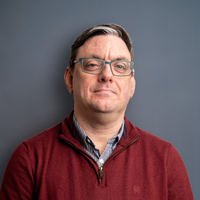

It’s a major dereliction of public duty that Parliament has not faced up to this of all challenges, something so fundamental to life as this.
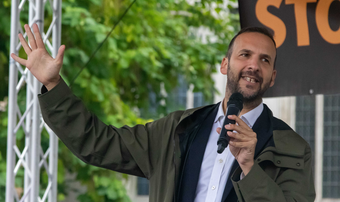
Those were the words of Prime Minister Andy Burnham this week as he announced a new push to reform adult social care in the UK. Speaking at a Jewish Care facility in North London, he made a series of promises: to bring forward Baroness Casey’s report into social care from 2028 to next year, to establish a National Care Service across the country, to improve pay and conditions for the care workforce, and to establish cross-party talks to make all of this happen.
Burnham put personal and political capital behind his plans, framing it as a test of his premiership and saying that he would not like to leave office without implementing significant change. He said in his speech: “I am making this a test of myself whether I can bring forward a solution, or I would never forgive myself, ever.”
A solution is needed, but why does social care need fixing, and why do so many politicians struggle to do so?
The state of social care
‘Adult social care’ is a broad term that covers a wide range of activities that help older people, or those living with disability or physical or mental illness, to live independently and safely. It can range from support for washing and dressing, to staying active and engaged with their community, and can happen in people’s own home or in day centres and residential homes.
In a BBC interview, Burnham warned of the consequences of failing to address adult social care: “If we don’t do it, the NHS will collapse under the weight of trying to care for people who’ve not really needed to end up in the NHS system,” he said.
Social care in comprises almost 20,000 services, provided by private, public, and voluntary organisations with nearly a million people receive publicly funded long-term social care. Age UK estimates that a further two million people over 65 have unmet needs for their own care or support. Underfunding at the local level means that 40% fewer adults over 65 are receiving care compared to 20 years ago, despite the population having increased by 40%.
Working in social care is not seen as an attractive proposition, with low wages and high turnover of staff. Despite this, there are 1.5 million care workers in the UK (a similar number to the NHS), almost a quarter of whom come from outside the UK. This has increased after Boris Johnson’s Government placed care workers on the Shortage Occupation List; recent crackdowns on immigration could leave the care sector short of workers. Nearly 161,000 hours of home care could not be delivered in the first three months of 2024 because of staff shortages.
Financial and staffing constraints have meant that care is rationed, with in-home care visits often capped at 15 minutes. As Michael King, Local Government and Social Care Ombudsman, has said: “When looking at visits which may require care workers to dress, wash or feed a person, 15-minutes is rarely enough.” Three-quarters of those doing home visits are not paid for the time spent travelling to homes, which can make up a fifth of their working day.
Where there are gaps in the social care provision, friends and family step up to meet the need. The Office for National Statistics says there are 4.7 million unpaid carers in England. Many leave jobs, or go part-time, in order to provide care for relatives.
Given these facts, why hasn’t something been done already?
A political trap?
Politics UK notes that: “Social care acts almost as a trap for politicians” adding that “for the majority of political figures, tackling social care has often been high risk and low reward.”
Politicians agree that something needs to be done, but disagree on how to do it. They try to avoid the subject if at all possible. In the first televised leaders’ debate of the 2024 Election, Rishi Sunak and Keir Starmer spent a total of 36 seconds on social care, with neither challenging the other on their points. “It’s created a feeling in Westminster that this is too difficult,” admitted Burnham this week, “and if you take it on, you’re taking on too big a political risk”.
Despite this, every Prime Minister of the past thirty years has attempted to reform adult social care… and failed to do so. Even Burnham acknowledged this, noting that in the thirty years since the Royal Commission on Social Care, there have been 22 reviews into the subject. Yet the system has remained largely unchanged since it was established along with the NHS in 1948.
Burnham himself put forward proposals back in 2009 when he was Health Secretary under Gordon Brown. It is also worth noting that all of the reforms he announced this week – Baroness Casey’s report, a National Care Service, reform of care workers pay, and even cross-party talks – were initially announced under Keir Starmer’s leadership.
“You’ve probably got a feeling of déjà vu, don’t you?” said the Prime Minister, adding that “this time we’re going to do it right.” History shows that he will be unique among modern-day Prime Ministers if he can make serious progress.
To be fair to Andy Burnham, he has put his own reputation on the line for this. Speaking to the BBC, he said: “Whatever political capital I have, I will put into fixing broken social care, and I would not want to leave office without having brought in … substantial change”.
Will he do it? That remains to be seen, but he faces an uphill battle, and not just because of the political traps of Westminster. Social care reform comes up against roadblocks in the hearts and minds of the general public. You and I present our own barriers to change. Here’s why:
Most don’t understand it
One of the biggest barriers to social care reform is how poorly understood the system is to most of us. Natasha Curry, Deputy Director of Policy for the Nuffield Trust, an independent healthcare think-tank, writes about the reason for social care being ‘politically toxic’:
The simple answer is that too few people understand what social care is, how it works or how essential it is until they or a family member need it … Around one-third of us think social care is part of the NHS and free at the point of use. It’s not clear whether the two-thirds of us who don’t think it’s part of the NHS have any better understanding of what it actually is.
Polling shows how little people understand about social care. Research conducted in 2025 found that 31% of people believe that the NHS provides the majority of social care services, and 33% believe that these services are free to access. Neither of these things are true. Most social care is provided by independent (often private sector) organisations. Social care is also means-tested, not free at the point of need like the NHS.
Other research has found that nearly half of people had little to no understanding of what ‘social care’ actually means, and 5% had not heard of the term ‘social care’ at all. The Joseph Rowntree Foundation found that “people were generally unaware of the high costs of care and believed support was more generous than it is” in their 2025 study.
It’s not difficult to see how social care fails to get overhauled if most of us are unaware of what is involved. I have to confess, I didn’t really know myself until I started researching this article. If Burnham’s mission is able to make us more aware of social care and how it operates, it will go a long way to achieving its goal of lasting change.
It is challenging to pay for
A survey found that 83% of people were shocked to find out how expensive care was, and 65% were surprised by how little financial support was available, and how much they were expected to contribute. Coupled with the fact that a third of people believe that social care is free at the point of need, it is clear that there is a big gap between expectation and reality when it comes to paying for social care.
In England the responsibility to provide care rests on local councils, with each local authority deciding what to spend. The bill for adult social care each year adds up to £32 billion, and is increasing. People are living longer, and the cost of care is going up, which puts more pressure on funds. Some authorities have had to make cuts to services such as libraries, road maintenance, and waste collection, to make up the shortfall. Reforming the social care system is also costly, estimated by the Health Foundation to cost up to £17 billion.
At the same time, the ‘upper threshold’ for social care, which decides what level of savings and assets a person can have and still receive publicly funded care, has been unchanged at £23,250 since 2010. If it had increased in line with inflation, it would be at least £10,000 higher by now. It has been estimated that half of people over 65 will need to spend up to £20,000 on care, and one in seven will face a bill of over £100,000. Anyone with more than the threshold of £23,250 in assets will be liable for all the costs of their care, and this will include the value of their home if they move into residential care.
Burnham is committed to improving the quality of social care, saying of care workers: “To me, they should be the best paid people in society, not the worst.” The key question, therefore, is where this money is going to come from.
One solution is some kind of inheritance tax, but this is extremely unpopular with voters. Polling suggests that people would prefer a moderate increase in tax now rather than taxing their savings when they die. As Natasha Curry explains:
if you’re a voter who is under the impression that you’ve paid your taxes and national insurance all your life and, in return, will be looked after from cradle to grave, you are going to be understandably confused, and possibly angry, to hear that a politician is proposing a new tax or levy to pay for a service that you believe is currently free at the point of use. Or that funding is to be shifted from one service that is visible and valued (maybe hospitals, say, or public libraries) to fund social care – a service that you may have little understanding of
Various governments have suggested changing the funding system and have faced fierce opposition from their political rivals and the voting public. Andy Burnham’s own proposal under the Brown Government suggested a progressive deduction of up to £20,000 from people’s estates after death. This was labelled a ‘Death Tax’ by the Conservatives, and the proposal was axed. Under Theresa May’s leadership in 2017, those receiving care at home would be liable for costs until their assets reached £100,000. This was dubbed a ‘Dementia Tax’ by Labour, because those with a long-term condition will end up paying more than those who die suddenly, and May was forced to remove the suggestion.
The thorny issue of how social care can be paid for is one reason for a lack of political consensus. Burnham is now going to hold cross-party talks with the Conservatives and Liberal Democrats about social care (although he has refrained from inviting either Reform or the Greens). He has stated that he wants to remove political ‘point scoring’ from the issue, but unless there is agreement about where the funding comes from that will be challenging indeed.
The only way that social care will improve is if the taxpayer is willing to bear some kind of financial cost. There are savings to be made, but none of them will raise the amounts needed to overall the system. Politicians will need to give careful consideration of the right way to manage this, whether an increase in taxation now, or some kind of levy on estates after death. But one way or another, if we are to care for the most vulnerable, it is going to cost us money.
It is invisible to many
One reason why it is hard to bear a financial cost for social care is because it is largely invisible to many of us. If we ourselves are not in need of social care, and if we do not have family who need it, the issue is simply not at the top of our agenda.
Research from March 2025 shows that only 4% of people said (unprompted) that social care was one of the most important issues facing the country. The NHS is a much greater priority, along with issues like cost of living, crime, and immigration. Of over 1,000 people sampled, only 30 listed social care as an issue at all; only two respondents listed it as the top issue. This is despite social care constituting the largest part of local authority spending, and that two million people made requests for social care in 2024-2025.
Social care is hidden to those who do not access it. As Natasha Curry notes, care “unfolds quietly behind people’s front doors without the physical manifestation of ambulances queuing around the block. It … is less visible than the other elements of council business – the bins, libraries and swimming pools that tend to feature prominently in debates around local elections.”
Social care is invisible to most of us until we need it, or someone we love does. The leader of the Liberal Democrats, Ed Davey, has spoken passionately about the care needed for his disabled son. Andy Burnham himself spoke personally as he unveiled his social care strategy, with his dad in a care home. “I’ve just got to speak from the heart when it comes to this issue,” he said, “because it is very, very personal for me right now and for my family.”
If social care is personal for you, it is likely that the need for reform is obvious. But for everyone else, it can simply be unseen. Change in social care is only possible when everyone cares about it. Which leads to our final point…
It needs us to see people as God does
Writing for the Guardian in 2023, Isabel Hardman identifies a key issue when it comes to care of the elderly:
Where do politicians go when they visit a hospital? It’s rare they bother with the geriatric wards: photocalls are much better in the special care baby unit. The reason social care reform is so difficult is we don’t really like to think about what happens when we get old.
Andy Burnham did go to a care home to introduce his plans this week, and spent some time talking with residents (even if not all of them knew that he was Prime Minister!). However Hardman picks up on an important point: we often don’t like to talk about social care because we don’t like to face up to the reality of growing old.
The elderly, and along with them the disabled and long-term ill, are rarely valued in society. Those who seemingly cannot contribute very much are not given much worth.
The Christian worldview could not be more different. The Bible tells us to see every person as made in the image of God, and worthy of value, love, and respect, no matter their age or ability. As my colleague Peter Ladd writes in his Biblical deep dive into old age:
A higher status is more difficult to imagine: the Creator of the Universe and the Lord of Life has put something of Himself within each one of us. Indeed, the person who is experiencing the loss of bodily functions, or who cannot remember what they used to, still reflects God more than anything else in the universe.
The Bible directly connects our attitude toward those who are older to our attitude toward the God who created them. Leviticus 19:32 tells us: “Stand up in the presence of the aged, show respect for the elderly and revere your God.” Revering God means respecting those who are older, who need help, and who require care.
When social care, and those requiring it, remains hidden it will never become top of our agenda. When we see the elderly, those with long-term illness, or those with disabilities, as precious people in God’s sight, it changes our perspective. It makes looking after them with dignity and respect one of a country’s, and government’s, highest callings.
Reforming social care involves facing up to the reality of an aging population. It forces us to consider the cost of caring for the most vulnerable, and the way in which it may cost us, both now and after we die. It demands that we not push social care into the sidelines, but bring it into the light and ask the challenging questions in order to find workable answers.
There are no simple solutions to social care. I am pleased that Andy Burnham has not tried to make it seem as if there are. It is good that we have a personal commitment from our Prime Minister to find an answer to this issue. But the commitment of politicians will not be enough. It will need each one of us to commit to seeing things clearly, counting the cost financially, and viewing people as God does.