Why Andy Burnham is right to rule out an early election

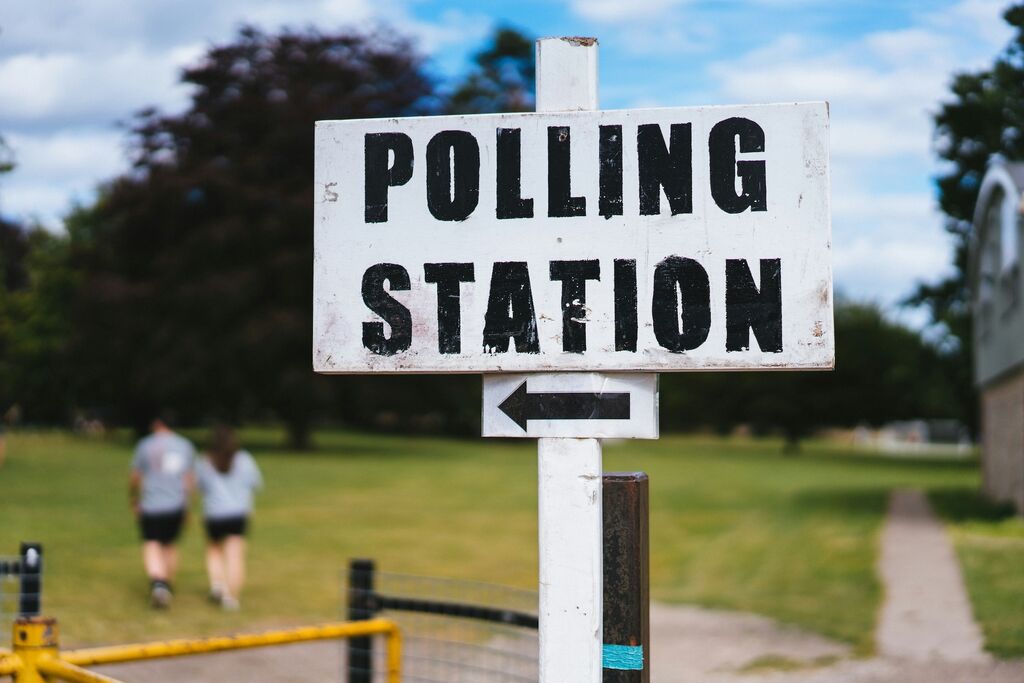
In April 2017, a retired secretary called Brenda from Bristol became an overnight celebrity. Interviewed by BBC News about her response to Theresa May calling an early General Election, she revealed her exasperation: “You’re joking?! Not another one? Oh…I can’t stand this. There’s too much politics going on at the moment.”
For all that politicos and the media get excited about early General Elections, the every-man (or woman!) in the street is not always so forgiving. Yes, some will leap at the chance to get the current lot out of Government. But for others…well, an election is just a distraction. What about the actual work of government? Why can’t our politicians make things better, or sort out the mess the country is in?
Of course, the two are very much linked: win a strong majority, and you ought to have both a mandate from the public, and the parliamentary numbers, to drive through the changes you want.
How did we get here?
There has been increasing speculation about the prospect of Andy Burnham calling an early General Election in the next few months; at the start, this came from the usual suspects, complaining that changing a PM without an election wasn’t particularly democratic, although of course, in an election, we’re not actually voting on the PM, but for our local MP.
Prior to the last few months, the prospect of an early election felt utterly fanciful. Labour were languishing in the polls, and Reform had long been forecast to be the largest party.
But as the scandals have started to bite, Reform’s popularity has been on the wane. They peaked at around 30%, but are now hovering in the low-20s. Nigel Farage’s own personal net favourability has fallen to -45. Labour, on the other hand, have experienced the traditional uptick which tends to occur when disposing of a leader who was widely disliked, in what media commentators are terming the ‘Burnham bounce’. The effect of this hasn’t been overly dramatic, but it has been enough to push them back into first place.
But perhaps these results are best illustrated by the MRP polls from this week: these models use census data and other sources of information to map polling onto results by constituency, giving a much more accurate reading than simple vote-share for what would actually happen in an election, and who will win what numbers of seats.
YouGov’s results show the dramatic shift from this time last year: in September 2025, Labour was forecast to win only 144 seats. Now it would be 241. Reform on the other hand, have seen their forecasted seats drop from 311 down to 123. Other models, which take into account the impact of tactical voting (an increasing trend in recent elections, where people are as much motivated by who they are voting against as who they are voting for), suggest Reform dropping back still further. In fact, research suggests that among Lib Dem and Green voters, between 63 and 68% would vote tactically for Labour to stop Reform winning their local seat.
Other stars also seemed to be aligning: back in the Spring, spurred on by the leadership of Zack Polanski, the Greens had almost drawn level with Labour. Now, beset by scandals of their own, they hae dipped and are polling much closer to their usual base of around 10%. The Conservatives have stabilised and seen some growth, but not yet nearly enough to win an election outright (with some historic voters having not yet forgiven them for their 14 years in government, and supporting Reform instead).
With all this in mind, you can see why some within Downing Street reportedly advised Burnham to go to the ballot-box early. New Prime Minister bounces rarely last, as the problems which beset their predecessor still exist (and are not usually easy to deal with). With tax-rises forecast in the Autumn budget, strain on the cost-of-living, and the war in Iran continuing to bump up fuel prices, now might be as good as it gets.
And of course, Burnham is himself constrained - to some extent at least - by Labour’s manifesto from the previous election, which isn’t necessarily the manifesto which he would have wanted. In particular, he has his hands tied around the economy, and Rachel Reeves’ red lines and rules around fiscal headroom, which prevent him from being too radical in his solutions.
One government source explained to ‘The Telegraph’: “There are lots of things we can do within the red lines of the manifesto, but that is not the Prime Minister’s manifesto. I am sure there are lots of things Andy would want to include in a manifesto that he wouldn’t be able to do at the minute.”
Of all the reasons to call an election, this is perhaps the best. Present a bold new vision for the future of the country, and without an election or a mandate, people will understandably question who voted for it. But at CARE, we have repeatedly stressed the importance of manifestos, and of keeping promises, because as Christians, we believe in a God who keeps his promises. We want to commend politicians who “let their yes be yes and their no be no” (Matthew 5:37).
Situations like this are not without precedent; when Gordon Brown became Prime Minister back in 2007, speculation was rife that he was about to call an election, 11 percentage points ahead of his closest challengers (the Conservatives). However, spooked by David Cameron’s strong performance at Conservative Party Conference, he let the moment slip, and saw his own ratings slip back as people criticised him for his indecision. They never recovered.
Kemi Badenoch suggested this week that she thought we might have an election in December. Nigel Farage said there was a 25% chance of one before Christmas and a 50% chance of one by next spring.
However, this afternoon, Burnham himself categorically ruled out the prospect of one, saying that his priority was working on the cost-of-living, rather than "throwing the country into a backward-looking process...I see all the speculation and it just races ahead...No election anytime soon. I'm focused on the job as prime minister, doing what I said I would do."
So was Andy Burnham right to rule it out, or is he missing an opportunity? Here are three reasons why it is sensible to be cautious...
Power must be stewarded wisely
Andy Burnham’s Catholic faith may be dormant at best, but even non-Christian politicians still talk about the idea of public service: that power is not to be pursued for its own ends, but to make the lives of other people better. And as Christians, we know that power is not something which any leader - whether voted for or not - has inherently, but is something which is given by God. Paul reminds us in Romans 13: “there is no authority except that which God has established. The authorities that exist have been established by God.” There is no good gift which does not first originate with Him (James 1:17).
But if power is a gift, that means that it is something which must be stewarded, rather than used unthinkingly or irresponsibly. Jesus shows us in the Parable of the Talents about how one day we will have to give account to the one from whom all blessings flow. Similarly, when he teaches his disciples about the faithful and wise manager in Luke 12, he finishes by saying: “From everyone who has been given much, much will be demanded; and from the one who has been entrusted with much, much more will be asked.” Leaders have a particular responsibility, for whether they use their power for good or for ill makes a disproportionate difference to the lives of those around them.
If you have the ability to effect positive change, then that is not something lightly cast aside. A risk-taker might judge that they could defeat Reform, the Conservatives, and any challengers on the left in a snap-election (and maybe they could), but there are no guarantees in politics even at the best of times. It doesn’t take a long memory to recall Theresa May’s ill-fated attempt to increase her majority in 2017 against Jeremy Corbyn’s extreme leadership of the Labour Party, only to end up losing the majority all together and to have to rely on being propped up by the DUP.
That is all the more apparent when the polls are as they are. 241 seats is trending in the right direction for Labour compared to polling in the Starmer days, but it is hard to see how losing a majority in a snap-election would be seen as anything more than a humiliating embarrassment for a sitting Prime Minister.
The current projections suggest they wouldn’t even have the numbers for a coalition if they teamed up with the Liberal Democrats (78 seats), and would probably have to bring in the SNP. The price, of course, for such arrangements, would probably be another attempt at electoral reform and the end of first-past-the-post (as red meat for the Lib Dems, although Burnham is reportedly open to the change himself), and another independence referendum for Scotland (for the SNP).
The reality is Labour still has a majority of 158, comfortably enough to push almost any policy through, unless you really mishandle things and ignore your backbenchers as Keir Starmer did. If you can’t govern the country with that, you’ll never be able to…
The danger of false hope
It’s the Labour Party Conference this weekend, and the chosen slogan for this year is ‘Hope Again’. It’s been a big theme of Andy Burnham’s so far since coming into office. Whereas Keir Starmer was criticised as being dour, drab and down on the UK’s prospects, Burnham has so far sought to strike a different tone. When he gave his first speech on becoming Prime Minister, he closed by saying: “Let’s build a new national sense of unity, of common purpose and positivity. Let us make this the moment when Britain starts to believe again. The moment we bring back hope.”
And if there is ever a time to talk about hope, it is during an election. There are reasons why PMs tend to avoid calling elections in the winter and save them for the spring, when the days get longer and warmer. Some pollsters even talk about the effect of the England football team upon people’s opinions of the Government!
Hope can be an election-winner, particularly if it comes at a time when people feel like the country is broken and not working for them. But false hope can be swiftly exposed.
Back in January 2024, Keir Starmer said this, as he prepared for a General Election: “If you’ve been serving our country, whether in scrubs or the uniform of your regiment and what you want now is a politics that serves you, then make no mistake - this is your year. The opportunity to shape our country’s future rests in your hands. And that is a new year message of hope: the hope of democracy, the power of the vote, and the potential for national renewal.”
It is not a coincidence that Reform’s big rise came during the first few months of the Starmer premiership: it represented the dissatisfaction at a hope that had failed to materialise, at promises broken, and at problems which were not (and probably could not have been) fixed, particularly around immigration and integration.
General Elections may change Parliamentary arithmetic, but they don’t solve our problems (many of which have been years in the making) in and of themselves. Think about our stagnant economy, the spiralling welfare bill, our crisis in social care, or a solution to the small boats: successive governments have tried and failed.
Andy Burnham is not naive about all of this. Winning an election might provide another honeymoon period, but honeymoons don’t last forever (and nor should they). Already he is being criticised for offering little more than good vibes.
We read in Proverbs 25:14: “Like clouds and wind without rain is one who boasts of gifts never given.”
The promise of a new dawn might play well with your audience. Elections feel like the chance for a major reset: a new Parliament, a new Cabinet, a new intake of MPs. But raise expectations too high, and the cure can be worse than the disease…
Even the best-laid plans…
Political parties are always looking ahead to the next election and the path to power, whether it be after a full five years or not. They consider their voter-base, whether they should tack left or right, where to use political capital, and where to play it safe. Sometimes (as has happened with this Labour Government) so much energy can be expended thinking about the journey to Government, that there is no time left to actually think about what you would do if you were in Government.
And this short-term thinking means that successive governments avoid making the really tough calls, for fear of the damage it will do to our election prospects. Consider the Triple Lock: all of the parties know that it is (sadly) unsustainable, particularly with an ageing population. None of them are willing to do anything about it, because they know that it will cost them votes. Difficult discussions and tricky decisions are avoided, and the can is kicked down the road for some future government to sort out one day.
And when exactly is the best time to call an election? Back in 2024, everyone was trying to predict when Rishi Sunak would summon the nation to the ballot-box. He chose a time when the economy seemed to be on the mend. I’m sure he believed it was his best chance at the time. But his election campaign will be remembered not for any successes, but for that image of him standing in the pouring rain outside Downing Street, becoming increasingly drenched. Clearly it wasn’t the right time (or afternoon, at least!) after all…
Political strategists agonise over when exactly is the right moment to strike. But it is difficult to predict what will happen in the upcoming months with any confidence. According to ‘The Telegraph’, “supporters of an early election said Mr Burnham would only be able to call one if the crisis in the Middle East could be resolved, pushing down the cost of energy, and the Government was perceived to have delivered popular policy changes.” That’s rather a lot of pretty big ‘ifs’!
Christians know the dangers of planning ahead with too much certainty. James writes, “Now listen, you who say, “Today or tomorrow we will go to this or that city, spend a year there, carry on business and make money.” Why, you do not even know what will happen tomorrow. What is your life? You are a mist that appears for a little while and then vanishes. Instead, you ought to say, “If it is the Lord’s will, we will live and do this or that.”
But even non-Christian politicians have had sombre reminders of the dangers of planning too far ahead, or imagining they should shape events to their will. David Cameron would surely never have called a Brexit referendum if he thought there was any chance he could lose it (and subsequently resigned the morning afterwards). Boris Johnson and Dominic Cummings’ grand plans to reshape British government were halted within months by a global pandemic. Andy Burnham is already talking about a ten-year-plan…at a time when we’ve had six prime ministers in seven years!
Our politicians would do well to heed the words of Proverbs 16:9: “In their hearts humans plan their course, but the Lord establishes their steps.”
Andy Burnham has ruled out a General Election this afternoon.
Is that the right move? I'm inclined to agree with him. Now is the moment to spend less time on politics, and more time on actual government…