Votes at 16? What it means to be a good citizen...

In many respects, the obvious storyline this week has been the fortunes of our Prime Minister - questions about his judgement and speculation about his future. That matter is likely to run for some time further and often there are important questions raised by the stories further down the news agenda. One such story caught my eye this week.
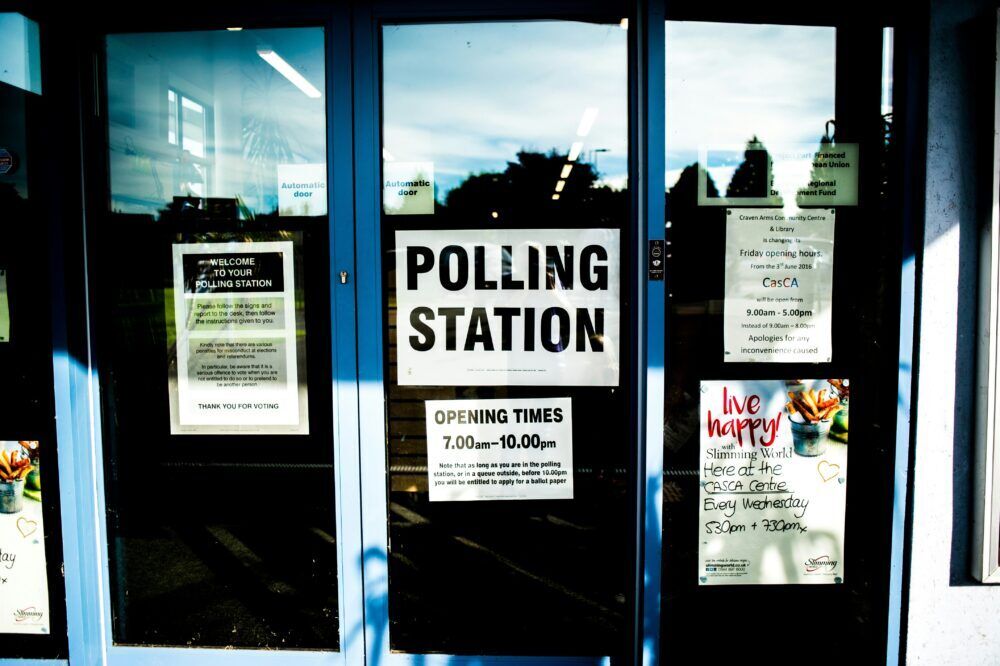
Parliament has begun considering legislation that would allow 16- and 17-year-olds to vote at the next general election. Supporters argue it could energise democracy and give young people a say in decisions that shape their future. Critics question whether teenagers are sufficiently prepared for the responsibility, and whether such a reform is driven more by political calculation than any constitutional principle.
Christians will reach different conclusions on the policy itself. But before deciding whether lowering the voting age is wise, we should pause and ask a deeper question:
What actually makes for good citizens? And what sustains a healthy democracy?
Scripture does not prescribe a voting age or electoral system. Democracy is not commanded in the Bible. Yet Christian conviction has profoundly shaped the moral foundations from which democracy emerged, and most Christian traditions see voting as an important civic responsibility.
As Tim Farron has observed:
“Democracy is not in the Bible. But it is a logical outworking of Christianity, which teaches that all human beings, made in God’s image, have dignity and equal value. It seems right, therefore, that all should have an equal say in the running of our country. We might also argue that, since we are all sinners, it is dangerous to concentrate too much power in the hands of too few.”[1]
There is something deeply biblical here. The doctrine of the image of God affirms human dignity and moral agency. The doctrine of the Fall insists that power must be limited and accountable. Democracy, at its best, reflects both truths: dignity and fallenness.
That brings us back to votes at 16.
Could it be a good thing
It could be.
Sixteen- and seventeen-year-olds work, pay taxes, and are affected by long-term public policy. If civic education were strengthened and young people formed in habits of discernment rather than mere political consumption, extending the franchise might encourage responsible engagement.
But that “if” matters.
Lowering the voting age will not, by itself, renew democratic culture. A larger electorate does not automatically produce healthier politics. Democracy depends not simply on participation, but on virtue.
It is tempting to believe younger voters will revitalise our public life by sheer generational energy. Yet cynicism, misinformation and tribalism are not confined to any age group. Digital culture has intensified those pressures for all of us.
The real question is not simply whether 16-year-olds are ready for democracy. It is whether we are.
Democracy and the Fall
C.S. Lewis once offered a bracing defence of democracy. It is long quote but insightful and wise.
“I am a democrat because I believe in the Fall of Man. I think most people are democrats for the opposite reason. A great deal of democratic enthusiasm descends from the ideas of people like Rousseau, who believed in democracy because they thought mankind so wise and good that everyone deserved a share in the government. The danger of defending democracy on those grounds is that they’re not true. And whenever their weakness is exposed, the people who prefer tyranny make capital out of the exposure.”
“I don’t deserve a share in governing a hen-roost, much less a nation. Nor do most people—all the people who believe advertisements, and think in catchwords, and spread rumours. The real reason for democracy is just the reverse. Mankind is so fallen that no man can be trusted with unchecked power over his fellows. Aristotle said that some people were only fit to be slaves. I do not contradict him. But I reject slavery because I see no men fit to be masters.”[2]
Lewis exposes the weakness of naïve political optimism. Democracy is not justified because people are so wise and good that everyone deserves power. It is justified because people are fallen and no one should have too much of it.
This sober realism should shape how Christians think about constitutional reform. Democracy flourishes not because citizens are perfect, but because systems distribute authority, enable accountability, and allow peaceful change.
Yet systems alone are not enough.
Democracy depends on citizens who care about truth. Who accept losing. Who refuse to dehumanise opponents. Who recognise limits - including limits on their own side. It requires work at an individual and societal level, because without it we can be susceptible to allure of false hope and false gods.
Therefore, before we ask whether teenagers are sufficiently mature, we might ask whether we are modelling maturity ourselves. Do we verify before sharing? Do we treat those we oppose as neighbours rather than enemies? Do we undermine institutions when outcomes disappoint us? Do we pray for those in authority, even when we strongly disagree?
Voting is not merely the expression of preference. It is an act of stewardship - one way we seek the welfare of the city (Jeremiah 29:7). It belongs within a wider biblical vision of citizenship: respect for authority (Romans 13), courage when conscience demands resistance (Acts 5:29), and the call to do justice, love mercy and walk humbly (Micah 6:8).
Resisting false hopes
Christians must resist three temptations.
The first is quietism - withdrawing because politics is messy. The second is political idolatry - placing ultimate hope in electoral victory or party dominance. The third is becoming political hobbyists, happy to consume and criticise from the sidelines without the cost of sacrificial incarnational engagement and commitment.
Our primary citizenship is in heaven. That does not make earthly citizenship irrelevant. It does, however, relativise every manifesto and every movement. We are called to seek faithfulness above winning, integrity above influence, and truth above tribal loyalty.
That means being willing to oppose what must be opposed.
We cannot lend support to voices - from any quarter - that promise strength at the cost of truth, security at the cost of justice, or stability at the cost of accountability. Democracies rarely collapse overnight. They erode slowly when truth becomes negotiable, when opponents are caricatured as enemies of the people, and when constitutional guardrails are dismissed as obstacles rather than safeguards.
The language of power can be seductive. We are told that only decisive leadership can deliver order. That compromise is weakness. That scrutiny is sabotage.
Scripture warns us against such misplaced hope.
In 1 Samuel 8, Israel demanded a king “like the nations.” They longed for visible strength and political security. God warned them what concentrated power would bring. Yet they insisted.
The lesson is not anti-government. It is a warning about investing ultimate trust in political authority. The desire for stability can blind us to the dangers of unchecked power.
Because human beings are fallen, no leader is beyond scrutiny.
Because power tempts, it must be limited.
Because truth matters, it must not be bent for advantage.
If we defend democracy only when it delivers outcomes we prefer, we have already misunderstood it.
Protecting democratic life therefore requires more than extending the franchise. It requires citizens who reject falsehood, resist dehumanising rhetoric, and uphold the rule of law even when it constrains “our side.”
The Church’s Task
This is where the Church’s responsibility becomes clear.
If 16-year-olds are to vote well, they must be formed well. They must learn to discern truth from manipulation and understand that political authority is a trust, not a trophy.
But the same is true of 36-year-olds and 76-year-olds.
The Church cannot outsource civic formation to the state and then lament the results. If believers are shaped more by online outrage than by Scripture, our politics will reflect the culture more than Christ.
Perhaps the deeper issue raised by this debate is not whether the franchise should be extended, but whether the Church is equipping believers — of every generation — for faithful citizenship.
- Are we teaching a biblical understanding of authority and accountability?
- Are we cultivating humility in disagreement?
- Are we warning against the seduction of power?
- Are we modelling love of neighbour rather than fear of decline?
Democracy does not merely need more voters. It needs better citizens.
That begins not with constitutional reform, but with character. Not with demographic optimism, but with moral seriousness. Not with placing our faith in youth to rescue politics, but with placing our faith in Christ and allowing his lordship to shape our public life.
The votes-at-16 proposal deserves careful debate. Christians may, in good conscience, reach different conclusions about its prudence. But whatever Parliament decides, our calling remains unchanged:
- To care about truth more than advantage.
- To value faithfulness more than power.
- To seek the common good rather than party triumph.
- To protect democratic institutions even when they frustrate us.
Extending the voting age may alter who casts a ballot. It will not, by itself, renew our democracy.
That renewal — if it comes — will be shaped by citizens who understand that political engagement is not about securing ultimate control, but about serving our neighbours under the lordship of Christ.
And that is a responsibility that none of us can delegate.