Iran and living in a world of complexities

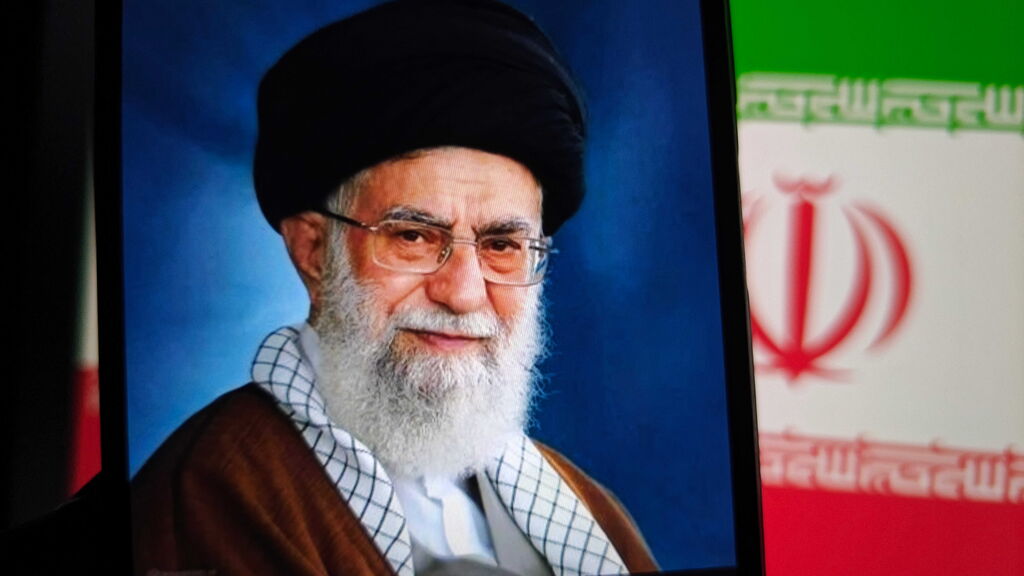
It was - officially - the final morning of winter. Spring stretches out before us: fresh, hopeful, brimming with colour and the prospect of new life. But as we woke up on the morning of Saturday 28th February, and checked the news, it was apparent that in another corner of the world, a very different story was developing.
I first heard rumblings about the death of Ayatollah Ali Khamanei on X in the early afternoon; hesitant to trust in it too early - given our troubles with fake news these days, particularly on Social Media - I only really felt certain when his death was announced by President Netanyahu of Israel. The assassination had been planned months in advance; the CIA had tracked Khamanei’s movement-patterns, and the air strikes were arranged to coincide with a meeting he was due to have with several other senior Iranian officials that day.
For weeks, it had felt like the Middle East was a powder-keg; pressure had been building, with increasingly inflammatory rhetoric from President Trump. Of course, the seeds of the conflict were sown long before. Iran’s proxies Hamas and Hezbollah have been wreaking havoc for years, most notably in the October 7th attacks on Israel in 2023. Iran and Israel were involved in military conflict in 2025 (the ‘Twelve-Day War’). At that point, President Trump declined to back the assassination of Khamanei, but he did authorise strikes to limit Iranian progress in developing nuclear weapons.
It was inevitable that Iran would not take these latest attacks lying down; if you’ve got the weapons, when are you going to use them if not now? But the scale of the Iranian response has been more widespread than many predicted, with missile-strikes and drone-attacks on a number of the surrounding regions, including the UAE, Bahrain, Jordan, Kuwait and Saudi Arabia, and even Azerbaijan, as well as bombarding Israel in retaliation. Earlier this week, Iran also fired at Cyprus, where the UK has an RAF base.
The UK, for its part, has been reluctant to get involved; initially Keir Starmer refused to give the US permission to use UK air-bases in the Middle East, and the UK did not participate in the initial strikes. Since then, Starmer has at least partially u-turned, and is willing to fly ‘defensive operations’ to protect British interests. His stance, however, has been extremely frustrating for Donald Trump, who has, in the last few days, unleashed a number of verbal attacks on the British Prime Minister, saying ‘This is not Winston Churchill that we’re dealing with’, calling Starmer ‘a loser’ (privately), and saying on Thursday, ‘I was very surprised at Keir. Very disappointed’.
Other reaction in the UK has been mixed; the leader of the opposition, Kemi Badenoch, has spoken quite strongly in favour of joining the US and Israel in their attacks on Iran, and Nigel Farage said that Keir Starmer’s inaction and indecision was ‘frankly pathetic’. Elsewhere, figures on the left of the Labour Party, such as Emily Thornberry, were quick to suggest that America’s actions were in contravention of international law, and it is reported that in Cabinet, the decision to initially not get involved was heavily pushed by Ed Miliband in particular.
Of course, in a globalised world, international affairs also have a knock-on effect on us in Britain. The days when conflict in the Middle East only affected those living there are long gone. Iranian missiles might not be able to reach us here in the UK, but the impact of events absolutely will do, whether it is in the impact upon oil prices due to the lack of shipping routes through the Straits of Hormuz, or even eventual terrorist-attacks inspired by the ‘martyrdom’ of the Iranian President.
It is just a few weeks since I wrote another piece about international affairs, about interpreting world events by looking at the Psalms. Back then, President Trump had just seized the Venezuelan Dictator Nicolas Maduro, and was threatening to annexe Greenland. Much of what I wrote then - about God’s sovereignty, and God’s justice - applies just as much to today, and this blog-piece can read in combination with that one.
But the big lesson I have been reflecting on this week has been a straightforward one: how complex the world we live in actually is.
Of course, that’s not a new discovery. If the Christian story is imagined as a play with four acts (Creation-Fall-Redemption-Consummation), we haven’t yet reached the final act yet, where Jesus puts everything right again. We look forward to the day when “They will beat their swords into ploughshares and their spears into pruning hooks” and when “Nation will not take up sword against nation, nor will they train for war anymore” (Isaiah 2:4), but we are not there yet.
We live in a Fallen world, where things don’t work out the way we intend. As Christians, we should be used to living with tensions; we know that there is no human being, no human philosophy, and no human nation which is unaffected by the Fall.
That is not to relativise matters, for of course, we believe that some people are more or less moral than others. Although we are all created in God’s image, we do not reflect His character equally. But it is to say this: we are so flawed that we don’t even deal in shades of grey, we deal in shades of black.
And that means that I, and I suspect many others, really don’t know quite how to process the events of the last week.
One simple reality
Let’s start with the simple one. I am glad Khamanei is dead. The Islamic Republic of Iran has been a repellant regime, responsible for all sorts of human rights abuses. Just this January, street protests (about the failure of the Iranian economy) were met with a brutal crackdown, which has left, at minimum, over 7,000 protestors dead. Some estimates place that figure at over 30,000. Some of the headlines have been sickening; I read one particularly horrid story about how women arrested in the recent protests have been sexually assaulted; to cover it up, the Iranian military have then subsequently cut out their wombs.
The recent protests were hardly the first; there were student protests in 1999, protests after the presidential ‘election’ in 2009, protests in 2011-12, 2017-18, 2018-19, 2019-20, and 2022 after the death in police custody of Mahsa Amini, a 22-year-old woman who was accused of failing to wear the hijab properly. These protests have been brutally suppressed.
I would be very pleased to see the entire regime - and those associated with it - fall. To give just a snapshot:
It has sworn to accomplish the complete destruction of Israel
It has supported multiple sectarian terrorist groups in the Middle East
It has attempted to organise over 20 lethal terrorist attacks in the UK within the last year
It has executed close to 5,000 civilians for being gay
It has attempted to acquire nuclear weapons
Yes, from a mere justice point-of-view, it is good that Khamanei is dead. And as Christians, even when we know that human justice can never be fully sufficient to compensate for someone’s crimes, we know that heavenly justice will one day follow. Every abuse, every assassination, and every atrocity has been seen by our God, who will one day return as judge of the world.
But…there are so many buts…
This President is complex
What can you say about Donald Trump which hasn’t already been written a dozen times over? He’s powerful. He’s proud. He’s volatile. He has done some things in office which have been good: the war on wokeism, and standing up for women’s rights in the gender debate. He’s done plenty of others which haven’t been: draconian immigration policies, tariffs, and the appalling treatment of Ukraine.
His actions in recent months resemble someone trying to redraw the world map; or even someone playing a game of Risk. Diplomacy has gone out of the window in favour of threats on Social Media. Long-term strategy has been abandoned for short-term shock tactics. America First has become America Only.
Old alliances are being put under scrutiny. It’s long been commented that, although here in Britain we like to talk about the ‘Special Relationship’, that is something which only really goes one way. Indeed, even with World War II, we only finished paying America back for its contribution in 2006! I’m not surprised at the pressure which has been brought upon Keir Starmer (indeed, the one thing which I am surprised at is the way in which Starmer initially stood up to Trump!).
Perhaps the trickiest thing with Trump is this: you never really know what he’s going to do next. One day he’s criticising Putin, then he’s sympathising with him. One day he says he’s going to take Greenland and then you don’t hear about it again for months. Tariffs were on, then they were off, then they were back on again.
It’s much easier to start a war than to end one. The real question I have to ask is this: do I really think that Donald Trump is the person to bring about a just, lasting peace in Iran? Is he actually going to stick it out during that process, or does he think that his work is done having dropped a few bombs?
As a Christian, I believe in the importance of justice: I believe in a God who cares about evil and wrongdoing, and who loves the widow, the orphan, the foreigner and the poor. I believe that he will one day make all things new, and right every wrong. He sends His people out into the world to enact justice: “Learn to do right; seek justice. Defend the oppressed. Take up the cause of the fatherless; plead the case of the widow” (Isaiah 1:17).
Justice matters. Khamanei is dead, and so are many of his officials. But in this case I feel uneasy; uneasy that we’ll end up with Donald Trump’s version of justice, rather than with God’s.
A war doesn’t end when a President puts out a tweet in capital letters. It’s not done just because he says it’s done. Which takes us to…
War is complex
If there is anything in this world which is complex, it is war.
In this case, the first question about military intervention was around its legality. This is partly behind Keir Starmer’s reluctance to join, after being presented with evidence from the attorney general Lord Hermer that it would be illegal. The only belligerency which the UN Charter permits without authorisation is self-defence.
Having said that, just as all our other institutions have been affected by the fall, so it is with international law too. The reality is that in today’s world of global alliances (and counter-alliances), if the US and Israel were to try and seek permission to attack a region (and probably any region!), they would be forbidden from doing so by Russia and China. Back in 1999, Serbian troops attempted the ethnic cleansing of Muslims in Kosovo; the UN Security Council would have been prevented from authorising military intervention, because Russia would have intervened.
There are foreseeable situations in which breaking a law is the right thing to do. Indeed, as Christians, we know this to be true; our allegiance is to God first, and to government second, as we see when Peter and John stand before the Sanhedrin. For anyone who wants to think about this question in more detail, I found this article on international law by the theologian and Anglican priest Nigel Biggar to be very helpful.
But war is particularly complex because of its impact on people. This was something the Bible-writers knew well: one only needs to read the book of Lamentations to read about the impact it can have upon civilians. Indeed, Jesus himself alluded to it during Passion Week, as he predicted the fall of Jerusalem: “How dreadful it will be in those days for pregnant women and nursing mothers! Pray that your flight will not take place in winter or on the Sabbath. For then there will be great distress, unequaled from the beginning of the world until now—and never to be equaled again” (Matthew 24:19-21). Of course, we no longer live in a world of pitched battles between opposing armies, but one where fighters can disguise themselves among civilians (as happened in Gaza) and essentially use them as human shields.
Yesterday the BBC published some quotes from civilians living in Tehran. Some have already fled the capital, leaving their homes and livelihoods behind them. One man in his 20s said: "I’d never seen an explosion up close before. I actually saw it with my own eyes from inside the house. I saw a light suddenly shoot up into the sky. All the windows in the house started shaking. My family was so frightened you wouldn’t believe it."
Others have found themselves stuck there. Another man in his 30s commented: "It is tiring and I’m feeling trapped. It feels tiring and entrapping because I have to stay mostly at home to avoid getting caught in the middle of an attack, just to save my life. And the sound of ongoing blasts is fatiguing in some sense. Each one just swallows a chunk of your energy."
In the West today, we are largely outliers in human history: the vast majority of us have never had to live through a real conflict, and memories of World War II and the Blitz are beginning to fade away. This week, we have already heard about the (accidental) bombing of a girls’ school in Tehran, which killed 165 students.
War should never be entered into lightly: Christians have debated questions around it for hundreds of years, and we have explored those when writing about the war in Gaza. Traditionally, there are seven conditions which have to be met to declare a conflict to be a ‘just war’ (a term not found in Scripture, but coined by Augustine). John Stott, in ‘Issues Facing Christians Today’, helpfully boils this down to a primary three:
Its cause must be righteous.
Its means must be controlled
Its outcome must be predictable.
And it is the third of those which is the most debatable in this case…
The future is complex
What is the end-game here? Donald Trump, for his part, has made it clear that American actions will only be limited to air-strikes, and Keir Starmer himself referenced the lack of a long-term plan when justifying the UK’s lack of involvement.
President Trump addressed the Iranian people this week: “Finally, to the great, proud people of Iran, I say tonight that the hour of your freedom is at hand…when we are finished, take over your government. It will be yours to take. This will be probably your only chance for generations."
I was very struck by some analysis from the Former Deputy Supreme Allied Commander Europe, Nato General Sir Richard Shirreff in an interview on Sky News yesterday. He commented: “Yet again, we have an American President who has gone to war - a war of choice, a war of hubris, frankly - without any clear idea of how the war ends, and without any clear strategy…unless they’ve thought through the impact of what they are doing upon the minds of the Iranian people, this things is going to go south very quickly…
“[Khamanei] was the religious symbol for Shiites worldwide. Assassinating him during the month of Ramadan, frankly, is about as subtle as murdering the Pope on the steps of St Peter’s in Holy Week. It will inflame the Shiite world, and what you’re doing by doing that is probably pushing large numbers of Iranians who might have been reconcilable, who might have thought about rising up, back into the folds of the irreconcilable.”
On Thursday night, the BBC published their analysis of the war so far, concluding that “Given the technological superiority, intelligence capabilities and advanced military hardware of the US and Israel, it would be naive to think Iranian strategists were planning for a straightforward battlefield victory. Instead, Iran appears to have built a strategy around deterrence and endurance.”
The future is complex. The Bible-writers caution us about planning too far ahead; we read in James 4:13-14: “Now listen, you who say, “Today or tomorrow we will go to this or that city, spend a year there, carry on business and make money.” Why, you do not even know what will happen tomorrow. What is your life? You are a mist that appears for a little while and then vanishes.”
We have seen in other conflicts in our lifetimes the way in which Western countries have become embroiled in conflict in Iraq, Syria and Libya, and have swiftly moved on, leaving hurt, broken shells-of-countries behind them (indeed, it’s been interesting to see how frequently the word ‘Iraq’ has appeared in discussions within the Labour Party). That was with American Presidents - the likes of George Bush and Barack Obama - who, regardless of whether one liked their policies, were credible, thoughtful public servants, who genuinely believed in what they were doing.
And even if the US and Israel secure a resounding victory (as opposed to the Islamic Republic just outlasting them), something which is far from guaranteed, what will happen with those left behind? It’s difficult to feel liberated and grateful to a foreign power bombing you from the sky…
So what can we do?
It’s a truism to say that the world has felt far more uncertain in the last five years than at any other point since the end of the Cold War. The period after the end of World War II was known as ‘The Long Peace’; with wars in Ukraine and Gaza, regime change in Venezuela, bombings in Iran, and all-manner of other regional conflicts which do not get reported on on the 10 o’clock news, it feels like a very different world to the one we had begun to take for granted.
But although we might not have seen it coming, nothing takes God by surprise; He is still sovereign, even “though the earth give way and the mountains fall into the heart of the sea” (Psalm 46:2).
So we pray.
We pray for wisdom for leaders at home and abroad; pray for the Prime Minister as he discerns whether or not the UK should be involved (and to what extent), and pray for Donald Trump and leaders in the US and Israel, that they might persevere in making decisions which are just and right.
We pray for comfort and safety for those affected by war, and in particular, for civilians in Iran, many of whom did not support Ayatollah Khamanei. We pray too for those in the surrounding regions, who did not ask to be involved in this conflict.
We pray for peace; not a superficial peace which sweeps wrongs under the carpet, but a just and lasting peace, which judges wrong-doing, protects innocent lives and allows Iran to rebuild as a fair, democratic society.
And we pray, above all, for Jesus to return, Jesus who is both the Judge and the Prince of Peace. We read in Psalm 46: “He makes wars cease to the ends of the earth. He breaks the bow and shatters the spear; he burns the shields with fire.” One day violence will be brought to an end, suffering will be no more, and tears will be wiped away.
And so we pray, using what are almost the final words of the whole Bible: “Amen. Come, Lord Jesus.”