The death of two-party politics: what's next?

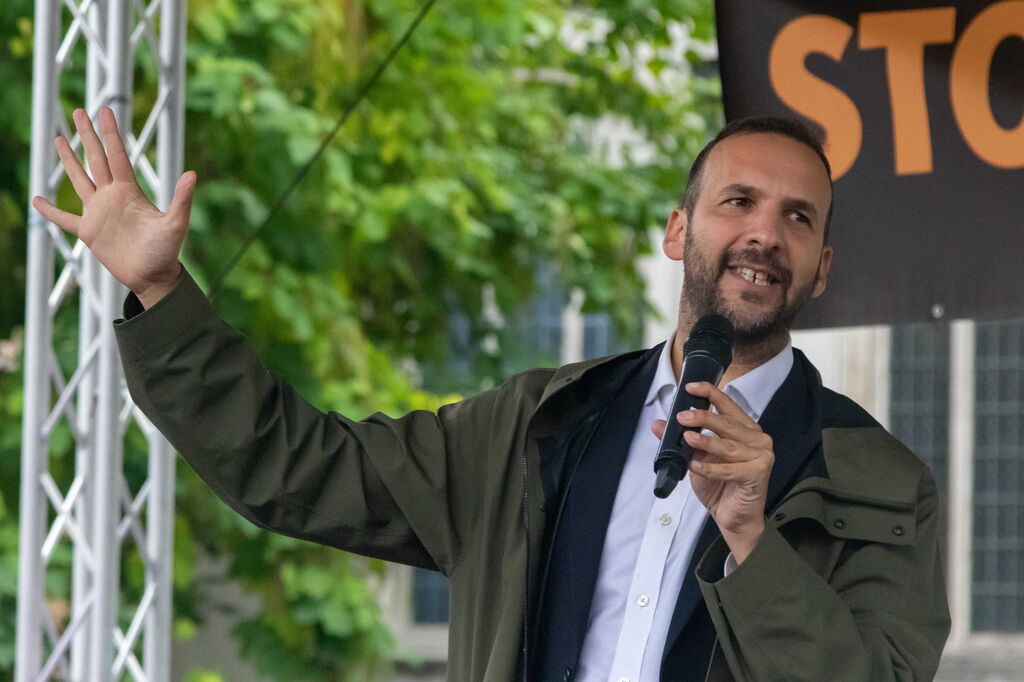
As the local election results began to filter through this morning, the leader of the Green Party, Zack Polanski, declared two party politics “is not just dying, it is dead and buried”.
Who knows whether 7th May will come to be seen as a turning point within UK political history? Few would have predicted a Conservative collapse after the dizzying electoral heights achieved in 2019. Fewer still would have bet on Labour entering government with a majority of 180 MPs in 2024 after the depths of the Corbyn years.
Politics is a famously unpredictable beast.
Yet it seems the Green Party leader is on to something. As results trickle in from across the council elections in England, and the Scottish and Welsh parliamentary elections, British politics looks like it has placed yet another nail in the coffin of the Labour-Conservative duopoly.
At the time of writing, 61 of 136 council results have declared, with huge gains for Reform (512 new seats), moderate gains for the Greens and Lib Dems (50 and 28 seats respectively), and significant losses for both the Tories and Labour (-226 and -346 seats respectively), though it seems Labour are likely to fare worse than the Tories overall.
Whilst few results have emerged from the Scottish and Welsh elections as I write this, the nationalist parties of the SNP and Plaid Cymru are widely expected to perform well – amounting to a further rejection of both Westminster and the traditional two largest parties.
It is too soon to authoritatively predict where the dust will settle, but it does not feel like an exaggeration to suggest that a comprehensive realignment of British politics is underway.
What will happen next?
Of course, this will not come as a shock to many. The warning signs have been there to see for a long time. Declining party membership. The withering of traditional support in historic strongholds. A rise in nationalism in the UK’s regional assemblies and parliaments. The emergence of identitarian voting blocs returning independent MPs largely over single-issue concerns. And most famously, the profound rejection of the status quo that characterised the Brexit referendum in 2016.
Politics has been changing for a while, and yet it has taken time for politicians itself to realise it. And it has taken longer still for those changes to be seen in unignorable electoral shifts.
But no more. What many said couldn’t happen because of First-Past-the-Post is happening – credible political alternatives have emerged and are taking significant votes from the two main parties. The problem has always been these votes haven’t been concentrated enough or significant enough to translate into electoral success. The times they are a-changin’.
It remains to be seen where the final destination of all this change will be.
Will it be terminal for Labour and/or the Tories, much like the former political big shots, the Whigs? This is now being openly discussed by senior figures in the Labour party. Will politics rebalance around a different duolopy? A Reform vs Green pivot perhaps? Does this election signal the beginning of the end for the United Kingdom and an undeniable momentum towards national independence? Can the rise of the small and new parties survive the sustained pressures and challenge of holding political office? Will the electorate simply grow disillusioned with them too in time?
It also remains to be seen whether all this change will be a ‘good’ thing or not.
Obviously, for those fed up with the state of things (and that is seemingly a good portion of the country) a shake-up of the status quo is likely to be welcomed.
Indeed, a changing of the guard might be a healthy thing. The Bible clearly establishes that power is granted as a serious responsibility; it is not an automatic right. In Romans 13, we read that the governing authorities are established by God and accountable to God for how they use their power.
Accountability is something wired into the fabric of the universe. Each one of us, Romans 14:12 says, will have to give an account to God, who is the judge of the living and the dead (1 Peter 4:5).
Whilst the electorate is not God, that accountability is a good thing.
Theologically-speaking, positions of responsibility and power are given to be stewarded well and are always given within limited parameters (see for example the limits placed on the power of the King in Deuteronomy 17). The only one to whom the Bible grants and entrusts unlimited power to is Jesus (Colossians 2:10).
Neither Labour nor the Conservatives have an untrammelled right to power in the UK. Elections are one of the mechanisms by which our constitution holds political authority to account – the lesson being that if you wield your power badly, if you take your position for granted, and if you fail to achieve what was promised, you will be held accountable and voted out.
Is it just politics which is broken?
If nothing else, the rise of challenger parties will cause much soul-searching and raise questions about some of the shibboleths and neuroses of the two main parties.
New parties, new politicians, new ideas – regardless of what one thinks of the replacements - will spark new conversations and approaches which may be just what is needed to address intractable and long-standing problems that have been kicked into the long grass for too long. It is all too easy for political parties to get stuck in a rut, in which the electoral mathematics prevents unpopular but necessary decisions being taken, to the detriment of the country in the long term.
Of course, challenger parties may fare just as bad or worse than the establishment. They may prove to be equally confounded by the scale of the issues in front of them. They too are likely to be subject to their own fair share of scandals. And they too will suffer their own problems with communications, party management, governing acumen, and policy delivery. “Better the devil you know”, some will say.
And indeed, change isn’t always a good thing. Terrible things have been done in the name of progress.
And there are signs that our electoral realignment is not simply an indictment on our two main parties, but an indictment upon the electorate itself.
It can be easy to blame the political establishment for our present situation. But the electorate are not without a say, that after all is the beauty of democracy. And our political class are not some distant other, for they are drawn from among our ranks.
In recent months there has been a growing chorus of voices (see for example here, here, here, or here) wondering whether the problems we face as a nation rest not merely with the Labour-Conservative establishment. In short, is Britain becoming ungovernable?
Our politics is fragmenting. No party at present can command more than 30% of the vote. Any one of five parties could form the largest party in the next Parliament, and in all likelihood, it will take a combination of the five to form a government.
Voter blocs are shifting with identity politics playing an increasing role. Each party is appealing to specific blocs within the electorate and seemingly none of them can command respect from across a broad cross-section of society.
This is destructive and erodes trust and unity. The young are pitted against the old. The poor against the rich. And that’s to say nothing of the state of conversation regarding the role of Islam, immigration, and Israel/Palestine.
We lack a coherent national story. We hear platitudes about British values, yet no one defines what they are or where they come from. “Diversity is our strength” and yet it is increasingly hard to pretend that we even agree on what the problems are, let alone the solutions.
We are easily cynical and there is an almost unceasing appetite to see those in public positions torn down. We lack the patience to stick with an elected government for an electoral cycle. We want contradictory things – lower taxes and a bigger state for example, or more houses and better infrastructure but not where I live for another.
We have a media landscape that fixates on Westminster navel-gazing, on scandals and debates that have very little to do with the most pressing issues of the day, and even less to do with the day-to-day realities of vast swathes of the country.
Christianity is bluntly realistic about humanity’s problems. Maybe it isn’t just politics which is broken. Maybe it’s us.
Times change
Times change. Seasons come and go. Every era has its challenges. Leaders come and go. Parties rise and they fall. This is the nature of things.
We live in a time of war, an era of great economic challenges, and deep moral and philosophical disagreement.
When the dust settles, we may conclude that a new leader has risen to the challenges of our times. That the accountability of the ballot box has been effective.
Or we may conclude that this realignment is not a positive act of democratic accountability, but the result of a politics captured by nihilism, division, and cynicism.
The years ahead may be hard and our political leaders and systems may be unable to deal with the world before them. Just as the Conservatives and Labour cannot take power for granted, nor can we take stability, prosperity, and peace for granted.
As politics realigns itself, for better or for worse, we would do well to examine ourselves and our part in the shifting of the sands.
And we would do better still to look to the one who loves righteousness and justice, whose counsel stands forever, who gathers the water of the sea into a heap.
No king is saved by the size of his army;
no warrior escapes by his great strength.
A horse is a vain hope for deliverance;
despite all its great strength it cannot save.
But the eyes of the Lord are on those who fear him,
on those whose hope is in his unfailing love,
to deliver them from death
and keep them alive in famine.
We wait in hope for the Lord;
he is our help and our shield.
In him our hearts rejoice,
for we trust in his holy name.
May your unfailing love be with us, Lord,
even as we put our hope in you.
Psalm 33:16-22