The death of the Assisted Suicide Bill

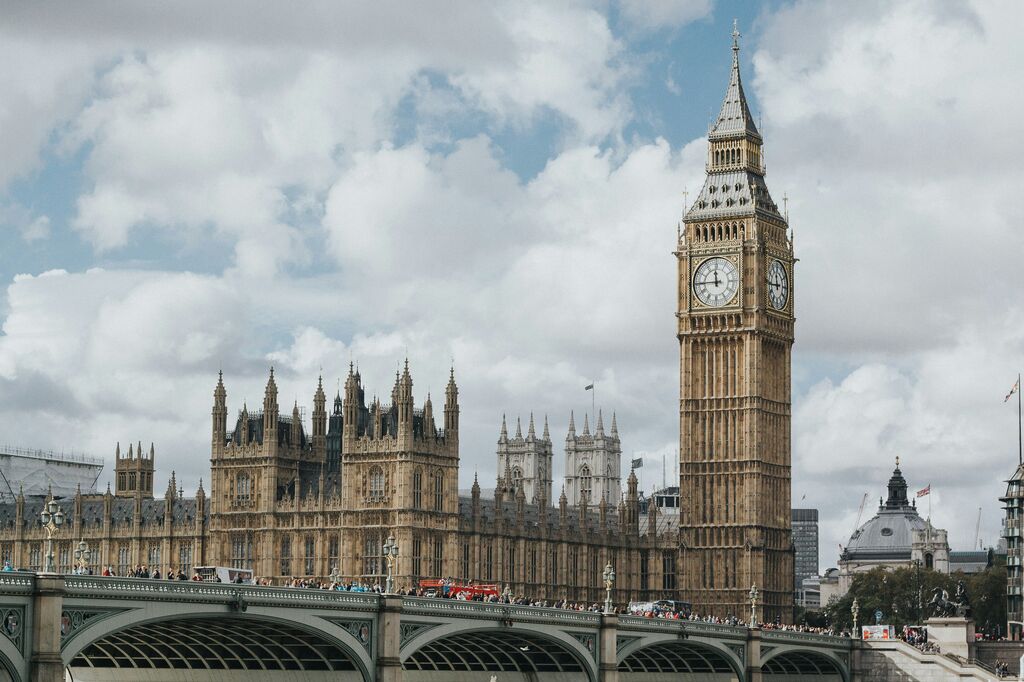
It is just under a year and a half ago that I found myself writing a piece called ‘A Black Friday’.
MPs had just voted, for the first time ever, in favour of an Assisted Suicide Bill in the House of Commons. Kim Leadbeater’s Terminally Ill Adults (End of Life) Bill passed at Second Reading by 330-275.
It was a bitter blow, and felt like a watershed moment; Second Reading is typically the moment where MPs register their opinion on the principle of a Bill, with opportunities to amend it later down the line. I remember speaking in the aftermath with a well-known Christian doctor and ethicist, who told me that he feared that that was it: the Rubicon had now been crossed and there would be no turning back.
And certainly the tide seemed impossible to turn back: Kim Leadbeater (as was her right) packed the committee amending the Bill with supporters, reasonable amendments which would have protected the vulnerable were ignored, and although some MPs did change their mind in the months which followed, the Bill edged its way through Third Reading and passed into the House of Lords, where it has been debated for the last 6 months.
Today marked the final day of debate, at which Lord Falconer, the Bill’s Sponsor in the House of Lords, gave up on debating amendments to improve the Bill, and instead used the day to lambast the Bill’s critics for (in his eyes) wasting time, when what they really provided was much-needed scrutiny on a damaging and unworkable piece of legislation.
On Wednesday, Parliament will be prorogued, and it will be official: the Terminally Ill Adults (End of Life) Bill will have failed to pass.
While we have a moment’s respite from picking apart legislation, debating amendments, and invoking Royal Colleges, it’s worth reflecting now just on what has happened, but what it all means. What is the story behind the story? And how can we respond as Christians?
Be thankful
If 29 November 2024 was a Black Friday, this is quite the opposite: it is a day to be thankful, as legislation which would have endangered the lives of so many people is finally consigned to the scrapheap, for now at least.
For those with terminal illnesses to those who didn’t want to be a burden, those who simply could not afford to live (the Bill never specified the reason for accessing lethal drugs, just the requirements one needed to meet) or those in coercive relationships, or even those who were not technically within the scope of the Bill, but who feared its expansion (such as many of those who are disabled), today will mean an enormous sigh of relief, as existing safeguards are preserved. There will be relief too for many hospices, who would have been forced to provide Assisted Suicides or risk being defunded.
Lord Moore rightly said today in the final debate, “This bill has not failed on its merits. It has failed on its demerits.”
Back when the Bill was passed at Second Reading, I wrote this: “We do believe in a God of miracles. If Jesus can defeat the power of the grave, and overturn death, He is more than capable of intervening on an ‘Assisted Dying’ law.”
And so it has proved: overturning the Leadbeater Bill might have seemed like an impossible task, but yet here we are. For each of us who have prayed, lamented, and interceded for our nation, we have so much to give thanks for.
We give thanks for the many Peers who have raised awareness of the problems of the Bill, some of whom have been mocked, abused and vilified by our opponents.
We give thanks for all the expert groups who have maintained their opposition or registered their concerns with the Leadbeater Bill, including: the Royal College of Psychiatrists, the Royal College of Physicians, the Association for Palliative Medicine, Disability Rights UK, the British Geriatrics Society, MIND, and BEAT and other eating disorder charities, to name but a few.
We give thanks that public opinion has been shifting over the last two years. Polling this week has revealed that only 10% of the public believe that assisted suicide should be legalised if there were not the safeguards to make it safe, and the lead in polling, James Johnson, summarised the findings as showing that “the British voter wants nothing to do with [assisted suicide]”.
We give thanks for the gradual ebbing away of support even among MPs, which means that it is now far from guaranteed that a similar Bill would pass in the House of Commons.
We give thanks for the failure of a similar Bill in Scotland, which after passing at First Reading, then failed at Second Reading after a number of MSPs switched sides. It would have been difficult to maintain a situation where Assisted Suicide was legal in Scotland, but illegal elsewhere in the UK.
And above all, we give thanks for God’s mercy upon our nation. When reflecting on this blog piece, I read Psalm 52. It begins with David lamenting over those who boast about their evil deeds:
“Why do you boast of evil, you mighty hero? Why do you boast all day long, you who are a disgrace in the eyes of God? You who practice deceit, your tongue plots destruction; it is like a sharpened razor. You love evil rather than good, falsehood rather than speaking the truth. You love every harmful word, you deceitful tongue!”
Although its proponents wouldn’t have recognised it, the outcome of an Assisted Suicide Bill would have been “evil” and “destruction”, and much of the debate has been characterised by “deceit” and “falsehood”.
But David recognises that evil will not go unchecked, because he trusts in a God of justice: “Surely God will bring you down to everlasting ruin: He will snatch you up and pluck you from your tent; he will uproot you from the land of the living.”
He concludes the Psalm, “For what you have done I will always praise you in the presence of your faithful people. And I will hope in your name, for your name is good.”
The Psalms are full of other similar stories, about a God who rescues, even when enemies seem to close in around us. The Psalter closes with Psalm 150, a great chorus of praise to wrap up everything which has gone before. Verse 2 feels particularly apt today:
“Praise him for his acts of power; praise him for his surpassing greatness.”
Be watchful
Assisted Suicide bills are a bit like a hydra; you cut the head off one, but they always seem to grow back again. So it is likely to be again.
The inquest over this Bill has already begun, with fingers being (unfairly) pointed at Peers in the House of Lords for supposedly blocking the Bill through foul means.
Consider these words from Alastair Campbell, the former Labour spin-doctor, just this afternoon: “The conduct of a tiny minority in the House of Lords who have used every tactic imaginable to make sure the Assisted Dying Bill fails has been awful. I have long believed the Lords is simply not fit for purpose as a second chamber. This has cemented my view hard, and I imagine will make others realise just how ludicrous our legislative systems are. Sad day.”
The reality, of course, has been very different. A number of MPs back in the Commons debate cited how they were voting through the Bill even at Third Reading on the principle, and were content for the Lords to sort the details out (so they can’t really complain now, when the Lords actually attempt to do that!).
The Bill saw one thousand amendments put forward in the Lords, but this was not a sign of foul play, but of the countless problems with it in the first place, and no-one who has actually watched the debates as they have unfolded over the past few months could truthfully characterise them as having been conducted in bad faith.
No doubt, the arguments of why the Bill failed will rumble on (with plenty of bad blood) over the coming weeks, and at CARE we will continue to shine light on why the Bill was simply not fit for purpose.
And make no mistake, the Bill’s proponents will not take defeat lying down. Even today, when being interviewed on Sky News, Kim Leadbeater said “It is a choice, it's a bit like gay marriage isn't it? Marry who you want to marry, love who you want to love. It's nothing to do with anybody else”, prompting widespread derision on social media. Indeed, later on the same interview, she had the temerity to say: "I reject the suggestion there's anything wrong with the Bill".
We have written elsewhere about what is likely to happen next; for months now, there have been threats to create a new Bill, or to invoke the Parliament Acts to force this one through, largely unamended.
When Jesus sent his disciples out into the world, he warned them, “I am sending you out like sheep among wolves. Therefore be as shrewd as snakes and as innocent as doves. Be on your guard.” (Matthew 10:16-17)
Let us not be naive. Assisted Suicide will return to Parliament, whether under this guise or another (just think how many Bills we have had to battle against even in the last couple of decades!).
Be thankful, yes, but be watchful as well.
Be hopeful
At CARE, we have three values which govern how we work: we are for people, we are for truth and grace, and we are for hope-filled solutions.
The last of those is particularly relevant at a time like now. Over the last couple of years, we have repeatedly spoken out about what we are against: we do not provide that providing lethal drugs to people who are approaching the end of life is right.
But we also want to speak hope: what are we for? The Bible is full of God’s wisdom for life (and death), and, we believe, can lead us to flourishing. That’s why at CARE we often use the phrase ‘A better story’; we believe there is a better way forward than Assisted Suicide.
I found the words of Baroness Prentis (who just last year received a diagnosis of aggressive cancer) in the debate today to be helpful: “My Lords, we owe the dying better than this bill. We owe them the best deaths we can manage; real effort and enthusiasm put into palliative care, and all facilities, including temporary nursing where necessary to help people die at home, surrounded by their families. We need to really integrate physical and mental care and not just talk about it. We owe the dying love, care and respect.”
Assisted suicide is the wrong answer to the right question. Yes, we all want to see those who are at the end of life being cared for, and being treated with love and compassion. And yes, we want to reduce suffering for anyone who is in pain. But, as John Wyatt writes, “Biblical thought always draws a distinction between removing suffering and removing the sufferer. In biblical thinking, human life is sacrosanct. We are not at liberty to destroy innocent human life, however noble may be the motive.”
We believe in a different way of walking through pain and suffering. How often do we hear those who are dying saying that they do not want to be a burden? And yet, in Galatians 6:2, we read, “Carry each other’s burdens, and in this way you will fulfill the law of Christ.”
In particular, we want to advocate for palliative care, which was first pioneered by the Christian, Dame Cicely Saunders, who first trained as a nurse, and then as a medical social worker in the 1940s, at a time when medicine placed little weight on care for those who were dying, many of whom were neglected in their final weeks. Having been profoundly affected by her experience of caring for a terminally-ill man for two months, she gave her life to the care of those who were dying, and at the age of 33, began training as a doctor at St Thomas’ Hospital, London.
Today she is considered the founder of the modern hospice movement: in 1967, she founded St Christopher’s Hospice. The latest research into painkilling medicine was combined with meticulous attention to detail, caring for symptoms like dry mouth, nausea and itching. Patients had access to human contact and were encouraged to enjoy hobbies and their own interests. Family members were encouraged to be present as often as possible. All patients were invited to simple worship services, often attending in their beds or wheelchairs, in the chapel which stood in the middle of the hospice.
Her biographer, Shirley du Boulay, wrote that she proved that “it was possible to live a lifetime in a few weeks; that time is a matter of depth, not length; that in the right atmosphere and with pain controlled so that the patient is free to be herself, the last days can be the richest, they can be a time of reconciliation that makes the dying peaceful and the mourning bearable.”
For some of us, it might be worth considering whether we might volunteer at our local hospice? Or could you provide pastoral visits?
Others might want to consider donating. The All-Party Parliamentary Group on Hospice and End of Life Care wrote in a report in January 2024 described palliative care provision “postcode lottery”: there are more than 220 hospices in the UK, and they rely upon charitable donations to exist, receiving more money from the charity sector than they do from the government. In more economically-deprived areas, people were less likely to be able to donate to their local hospice.
The Leadbeater Bill might have fallen. But the questions it raises - about how we can look after those who are suffering or in pain - still remain. There will always be hard cases in a fallen world where disease and sickness exist.
One battle might be coming to a close. But as Dame Cicely herself repeatedly said, “there is so much more to be done.”