Can Christians Trust Burnham and Streeting?

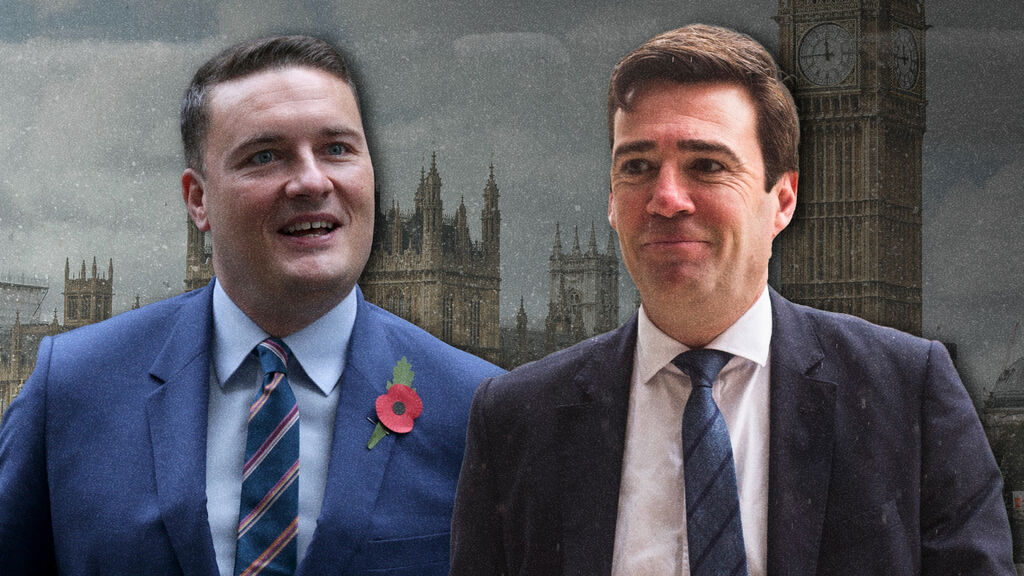
Another week in Westminster and Keir Starmer carries on as Prime Minister. Meanwhile, his former Health Secretary, Wes Streeting, is making big interventions from the backbenches, including setting out plans for a wealth tax and calling Brexit a 'catastrophic mistake'.
Meanwhile, his biggest rival for the crown, Andy Burnham, has found a route back to Parliament. He is running as the Labour candidate in the by-election in Makersfield, which was triggered after MP Josh Simons stood down. Victory for Burnham is by no means guaranteed. Reform came a strong second in the seat in 2024 and at the recent local elections, swept to control over its council.
What about Keir Starmer? According to media reports this week, his allies are insisting there is a way their man can stay in post until 2027….but regardless of how it will all happen, nearly every commentator is agreed that Starmer’s time as prime minister will end, even if the end-game drags on for some months to come.
At the present time, only Wes Streeting has said openly he will run in a leadership contest. But the fact Burnham is running to become an MP tells us he will run as well. Since it is not clear at this stage who the other candidates may be, I will confine myself solely to analysing Burnham and Streeting. We'll look at how they got to this point, what they think about the church and where they stand on some key issues (the list is self-selective, but I've gone for issues that are currently very salient and on which I think the Bible is clear).
If other candidates declare, we will provide a similar look at what they have said about faith, politics and different key issues.
Andy Burnham
How did he get here?
Burnham was born in Aintree, a suburb of Liverpool and raised in Cheshire. He attended a Catholic high school before studying at Cambridge. He has been in politics nearly all his working life, first as a researcher for Tessa Jowell, then as a special advisor from 1998-2001 to the secretary of state for culture, media and sport.
In 2001 he was elected as the MP for Leigh in Greater Manchester. In 2005, he was promoted to the government by Tony Blair and became a Parliamentary under-secretary of state for the Home Department. In 2006, he became Minister of State for Health. And then in 2007 he was promoted to Chief Secretary to the Treasury, and followed this with roles as Secretary of State for Culture, Media and Sport and Secretary of State for Health.
He stood as a candidate for Labour leadership in 2010, losing out to Ed Miliband. He served as Shadow Secretary of State for Health until late 2010, when he moved to the shadow education brief. He then returned to the shadow health brief in 2012. In 2015, he ran again for leader, losing out to Jeremy Corbyn. He served as shadow home secretary under Corbyn before standing down as an MP in 2017 so he could run as Labour’s candidate for the Manchester mayoralty, which he won.
As Mayor of Greater Manchester, he is credited with overseeing an infrastructure boom, with new skyscrapers seen as a visual symbol of his effectiveness as a leader and administrator. During the covid-19 pandemic he was dubbed ‘King of the North’ because of his robust advocacy for Manchester.
What has he said about Christianity?
In 2015, he gave an interview for Huffington Post where he said he had lost his Catholic faith because of the Church’s ‘obsession with sexuality’.
He said: “I’m a Catholic by upbringing, but I’m not particularly religious now. But because of my background, when I voted it always caused a kind of tension in terms of people I know, friends, family so I do find it fairly hurtful when people accuse me of lacking commitment [to gay rights – he once voted for an amendment seeking to put a named father on IVF registrations].”
He also said, “Catholic social teaching underpins my politics, we did have the read the catechism at school, but it is powerful and strong and right.”
What are his views on some key issues?
He has identified as a socialist and is generally seen as being on the soft left of the party. He has talked about being in favour of an ‘aspirational socialism’ which is redistributive, collectivist and internationalist.
More specifically, Burnham is in favour of assisted suicide for terminally ill adults. He abstained on the issue in 2015 when the Commons voted, but in 2024 said his stance had changed. Post-pandemic, he urged Manchester church leaders to work together in unity, with the civic authorities to help the region recover from the economic and social fallout thanks to covid-19.
On the issue of transgenderism, Burnham has been urged to clarify his stance. In 2022 he said a trans-man should be able to use a woman’s only space. He has, however, recently backed new Equality and Human Rights Commission guidance on single-sex spaces which says toilets and changing rooms must be used on the basis of sex. On an issue like gambling, he has led coalitions calling for tighter regulation of the gambling industry and he has also said he supports an age-limit of 16 for social media use and a ban on phones in schools.
On immigration, Burnham is reportedly set to back the current changes made by the Home Secretary Shabana Mahmood. He has spoken about the need for the UK to take a ‘tougher grip’ on immigration. On child poverty, he has called the two-child benefit limit the 'worst of Westminster'.
Wes Streeting
How did he get here?
Wes Streeting was born in Stepney, London. He read history at Cambridge and was president of the Cambridge Students’ Union from 2004-05. He led the National Union of Students and worked for Progress, a Labour-Party related organisation, during which time he advocated for gay rights. In 2010, he was elected to Redbridge London Borough Council and became deputy leader in May 2014. In 2015, he won the Illford North constituency and was returned to parliament in 2017 and 2019.
In 2020, under Keir Starmer, he became shadow Exchequer Secretary to the Treasury, then Shadow Minister for schools in October 2020. In November 2021, he became shadow Secretary of State for Health and Social Care. In 2024, following Labour’s election win, he became Secretary of State for Health and Social Care, before resigning in May 2026 following the party’s poor results in the Senedd, Scottish parliament and local council elections. It is also worth noting that Streeting nearly lost his seat at the last election and currently has a tiny majority of just 500 votes. This could be his last chance to become leader.
What has he said about Christianity?
As a practising Anglican, Streeting has been open about his faith and the struggles to reconcile traditional church teaching on human sexuality with his own same-sex-attraction, and has been in a relationship with his partner since 2013. He has said his faith is ‘about compassion, not walking by the other side.’ He has also said ‘my faith was a really big obstacle to accepting myself… I spent years choosing not to be gay.’ At the same time, he has defended classical Christian doctrines like the virgin birth and the bodily resurrection of Christ.
In an interview with Theos ahead of his memoir being published, Streeting refused to denounce Anglicans and other Christians who do not accept same-sex attraction as being consistent with biblical teaching. In an interview with Premier Christian Radio, he said: “Well, I thought: Fundamentally, I'm a Christian. I believe in God, and I subscribe to the fundamental tenets of our faith. So just because I've got a difficulty in one area, it doesn't mean I'm going to junk the rest.
"I've got to a place now where I can finally reconcile my identity with my theology. I have some sympathy with the view that says: "You can't pick and mix which bits you follow and which bits you don't." You can't say: "I think eight out of the ten commandments are terrific, but these two I'm not down with." That's not how this works. But we're made in God's image. I think God created gay people, that we are accepted and our relationships are valid and important."
What does he think about some key issues?
Streeting is judged to be on the right of the Labour Party although he personally rejects being labelled a ‘Blairite’. He was a strong critic of Jeremy Corbyn, accusing him of a ‘flat-footed and lackadaisical attitude’ to tackling antisemitism. In recent weeks he has said the UK should rejoin the European Union and has called for a wealth tax as well.
In recent years, Streeting has been a vocal opponent of Kim Leadbeater’s assisted suicide bill. He publicly warned that there was no new money to pay for assisted suicide services and therefore, funds would need to be transferred from other frontline NHS services if parliament voted for assisted suicide legislation and it received royal assent.
On trans issues, at one time he was publicly very supportive of trans rights and said, ‘trans women are women and trans men are men’. However, in more recent times his position seems to have shifted. In May 2024, when asked if a transgender woman is a woman, he said “men have penises, women have vagina’; here ends my biology lesson”. He said it was wrong to call those who believe biological sex is fixed as bigoted. Streeting has reportedly been criticised for his association with the Bayswater Support Group which advocates for parents who reject their transgender children’s identity.
On immigration, Streeting has said he finds elements of the Labour government’s plans uncomfortable, especially deporting families, but overall seems to support the tougher approach taken under Shabana Mahmood. In his resignation speech, Streeting set out his fears about rising nationalism and the need for the UK to remain an outward looking country. On child poverty, Streeting has called the two-child benefit cap a 'terrible policy' and supported it being scrapped.
Some brief reflections
CARE is politically neutral and so takes no position on who the right candidate is. We will urge all Christians to pray and to engage, faithfully and hopefully in politics, regardless of who the next prime minister is.
Actually, what emerges from the research is that each of the two main candidates have their strengths and weaknesses.
For example, from an evangelical Christian perspective, Burnham’s change of mind on assisted suicide is deeply disappointing. However, his recent shift in thinking on the issue of single-sex spaces is broadly positive and he clearly recognises the need for tougher gambling laws and stronger controls at the border.
Streeting is a complicated option for Christians not least because of how his sexuality clashes with historic, orthodox Christian teaching. Jesus lays out God’s pattern and design for humanity and for human sexuality in Matthew 19 as being within the covenant of marriage between one man and one woman.
At the same time, I urge you to look beyond this issue, as important as it is. We must not fall into the trap of defining someone solely based on their sexual activity. Wes Streeting is a man made in God’s image. We are all sexual sinners in one way or another and therefore for Christians to purely focus on Streeting on the basis of his sexuality is, I think, judgemental and unfair.
As Christians pray about the upcoming contest, I would also urge them to look at the characters on display. The Bible lays great stress on honesty, integrity and a commitment to justice. I think we can see traces of these characteristics in both men. Neither is perfect, but then on this the Bible is so clear that only Christ is the perfect man.
Above all, I think it is important we do not give in to a spirit of fear and cynicism. Your politics might not be the same as Burnham or Streeting. Whoever becomes our next PM will no doubt enact policies that are wrong. We should speak out when that happens. But we should do so from a place of love for truth, love for our neighbours, not a place of anger and hatred. We should not expect nor demand they get everything right and we should honour and respect them when they do good (Rom. 13:1-7).
As my colleague Dan wrote at the end of his article last week:
“We need to pray for wise and godly leaders, who will direct our country in ways which honour God. They have these matters in their hands. When they lead in good directions, we should stand with them, saying: “Rise up! We will support you, so take courage and do it.”