Why leadership challenges are harmful… and necessary

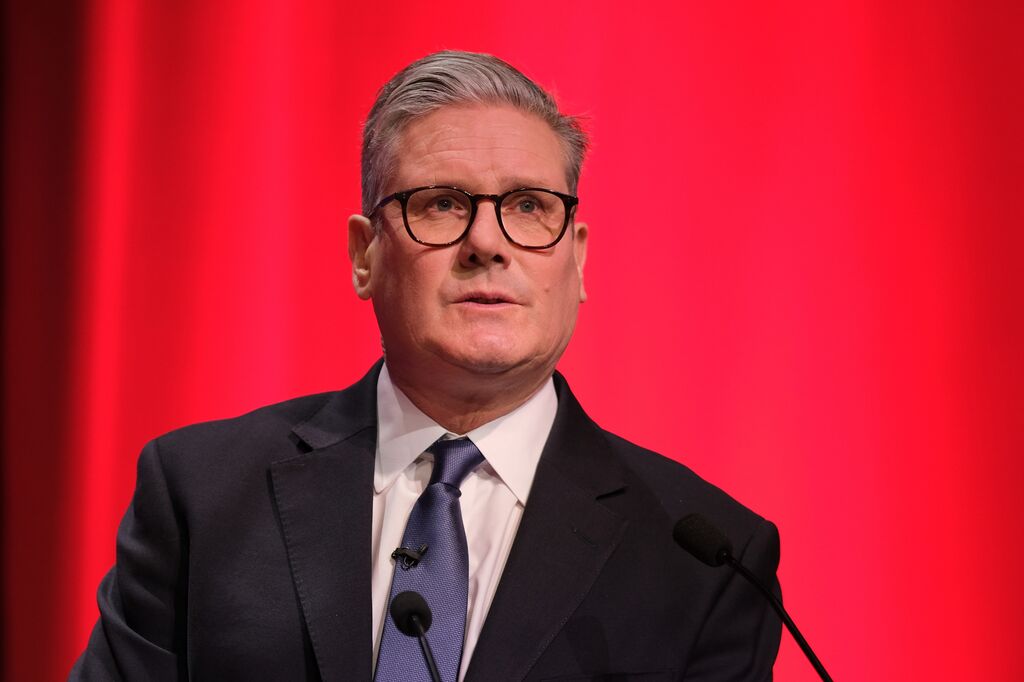
It has been a chaotic week in UK politics. Just seven days ago we were getting election results which, as my colleague Tom wrote at the time, did not look good for Labour. This led to a week of turmoil as the position of the Prime Minister became more and more precarious. While Sir Keir Starmer still holds that position at the time of writing, it seems inevitable that a leadership challenge will be coming in the upcoming weeks or months.
Although the election results are partly to blame, the pressure on Starmer’s premiership has been mounting for some time. The mess surrounding Peter Mandelson’s appointment (and sacking) as U.S. ambassador has not reflected well on the Prime Minister, and a sequence of government U-turns over winter fuel allowances, grooming gangs inquiries, and benefit cuts has further undermined his authority. All of which led to the chaos of the past week.
How did we get here?
Last Friday saw devastating electoral results for Labour. Almost 1,500 council seats were lost by the party, mostly to Reform, but also to the Green Party and to a lesser extent, the Liberal Democrats. Labour broke a century of winning elections in Wales, coming third to Plaid Cymru and Reform, and suffered its worst result ever in the Scottish elections. As the results were coming in, some Labour MPs were already voicing concerns about Starmer’s leadership and calling for him to stand down.
On Saturday, the North London MP, Catherine West, called for a cabinet minister to challenge the Prime Minister, saying that if they did not, she would. In response, Keir Starmer said that he would give a speech on Monday to ‘reset’ his premiership and save his political career.
The Prime Minister’s speech on Monday recognised that things needed to change and he took responsibility for election defeats, but rejected calls to resign. Despite being a personal as well as political speech it failed to rally those within his own party and pressure continued to mount. By Tuesday, there were reports that the cabinet was split, with the Home Secretary privately calling on Starmer to step aside, four ministers resigning, and over one-fifth of the party’s MPs publicly saying he should quit.
Wednesday was the State Opening of Parliament, a day which should have been focused on trumpeting the Government’s programme for the next session of Parliament. But even as the King read his speech in the House of Lords, it was unclear who would be Prime Minister to lead the legislative agenda. The Health Secretary, Wes Streeting, had met briefly with Starmer that morning, and was widely expected to launch a leadership challenge the next day.
On Thursday, Angela Rayner entered the fray, announcing that HMRC had cleared her of any tax issues, thus also clearing her for a possible leadership run. Streeting resigned as Health Secretary, claiming to have the support to challenge the Prime Minister, but declining to do so. Meanwhile, Josh Simons, the MP for Makerfield, announced that he was stepping down to make way for a by-election. The popular mayor of Greater Manchester, Andy Burnham, expressed a desire to stand. If elected, it would open the door for him to challenge Keir Starmer for leadership, which many Labour MPs favour.
Currently, the situation is still unclear. For anyone to challenge a sitting Labour Prime Minister they need to gather support from 81 Labour MPs. Streeting says he has enough support but is waiting for the “best possible field of candidates” which almost certainly means waiting for Burnham to be elected and enter the running. Rayner may have support as well, but is likely to support Burnham’s candidacy. Other names have also been mentioned, but so far nobody has made an official move against Keir Starmer.
Almost certainly we will face a leadership challenge in one form or another over the coming months. It is possible that Starmer will choose to resign, or at least set a timetable to step aside. That would mean a leadership contest among the likes of Wes Streeting and Andy Burnham. It seems the PM is minded to continue, so at some stage a leadership contest with Keir Starmer in the mix as well might occur. Housing Secretary, Steve Reed, summed it up this morning by saying, “We’ve had a dreadful week,” and adding: “We’ve looked appalling to the country.”
Some of us will be fascinated by all this political intrigue and turmoil; others will see echoes of past in-fighting among Conservative governments. It all might make us disillusioned with the idea of politics at all. At CARE, we want to encourage Christians to engage in political life and see government as something good, given by God. So how should we view leadership challenges as followers of Jesus Christ?
Leadership challenges can be harmful
We don’t yet have an official leadership challenge to Keir Starmer as Prime Minister. However, even the speculation around the possibility of someone launching a leadership bid can be unsettling.
On Wednesday evening, the Prime Minister spoke to Labour MPs and ministers in Parliament to tell them: “We cannot let a leadership contest plunge us into chaos - a challenge would 100% do that.” If the past week has shown anything, it is that leadership challenges distract from the business of governing. The King’s Speech should have been an opportunity for the government to lay out their priorities, accompanied by debates about the content of the speech. It is a time for the country’s leadership to set out their vision for government and their strategy for making it happen.
Instead, we become distracted by the political intrigue going on behind the scenes. In the ancient ceremony of the State Opening of Parliament, Black Rod calls the members of the House of Commons into the Lords to hear from the King. His way is blocked by members of parliament shutting the door in his face to signify the independence of the Commons. He then knocks loudly on the door three times – to which on Wednesday one wag within the chamber shouted out, “Not now, Andy!” in reference to Andy Burnham’s leadership ambitions.
Sir Keir Starmer and Wes Streeting shared the front bench during the Commons debate after the King’s Speech, but many of the comments from other MPs speculated about what had gone on between them earlier in the day, and what they really felt about each other.
None of this is helpful for the purpose of passing good laws that help those in need. Paul tells the Romans that “the authorities are God’s servants, who give their full time to governing “(Romans 13:6), not to vying for political power.
In particular, leadership contests promote instability. We are now in a political climate that makes short sell-by dates for Prime Ministers normal. This does not enable the government, or the country, to remain on a stable footing. We live in a time of great global instability, with wars in Ukraine and the Middle East, uncertainty over jobs, and cost of living increases, to name but a few. Government ought to bring steadiness, rather than uncertainty.
The Bible often compares instability to being tossed about like a ship during a storm. Paul tells the Ephesians that their aim should be to “no longer be infants, tossed back and forth by the waves, and blown here and there by every wind of teaching” (Ephesians 4:14). Jeremiah describes God’s enemies as “disheartened, troubled like the restless sea” (Jeremiah 49:23), while Isaiah tells us that “the wicked are like the tossing sea, which cannot rest” and so “‘There is no peace,’ says my God, ‘for the wicked.’” (Isaiah 57:20-21)
To be politically ambitious is not wicked in and of itself. We hope that anyone wanting to be Prime Minister will be doing so to help others and serve the common good. Bobbing around like a boat on the restless sea, however, is not a good way to live.
Jeremiah speaks to God’s people who are looking in different directions for leadership, saying: “Why do you go about so much, changing your ways?” he asks (Jeremiah 2:36). You might ask the same of our political parties. Changing leaders or Prime Ministers every five minutes is not a sign of a healthy organisation, nor does it promote a healthy government.
Leadership challenges also demonstrate impatience. If something goes wrong there is always a temptation to try and look for a quick fix. This is true in politics as much as any other area of life. One ‘quick fix’ that politicians can run after is changing their leader, as if having a new Prime Minister will solve all the issues they are facing. Unfortunately most of the time they find that they have the same problems just with a different person in charge.
“The end of a matter is better than its beginning,” writes the author of Ecclesiastes, “and patience is better than pride” (Ecclesiastes 7:8). This may have even been written by King Solomon who knew a thing or two about the pressures of leadership! It is much better to have patience than pride, to look for leaders for the long term rather than pushing for power now only to be ousted in a leadership contest not long afterwards.
At CARE we are about hope-filled solutions and part of that is recognising that effective change takes time. CARE has been instrumental in pushing forward legislation for online safety, including age verification, but this has taken around ten years of work to achieve. It is worth noting that the UK has had at least five Prime Ministers during that time!
“The end of a matter is better than its beginning,” says Ecclesiastes; it is much better to see something through to completion than be impatient and look for easy fixes to difficult problems. In Biblical terms, the quality we should look for in our leaders is perseverance. James bookends his letter by highlighting perseverance, noting that testing and trials can be good because they produce perseverance (James 1:2-3), while examples from the Old Testament show that “we count as blessed those who have persevered.” (James 5:11)
We don’t want leaders who give up when things get tough, nor do we want political parties that give up on their leaders when things get tough either. Leadership contests demonstrate impatience when perseverance for the long haul is what really gets things done in politics.
So leadership challenges can cause harm to the political process and to the parties who participate in it. They fuel chaotic uncertainty, promote instability, and demonstrate impatience. But are there circumstances where leadership challenges might be necessary?
Leadership challenges can be necessary
Leadership challenges can be necessary because it is important that leadership can be challenged. No leader is perfect, and no leader should hold on to power simply because they have it in the first place. There ought to be a mechanism whereby people can voice concerns and question whether this is still the right person to exercise leadership. Leadership contests can happen too quickly and too often, but it is important that they can happen when the time is right.
One of the reasons why leadership challenges are necessary is for leaders to be accountable. The best leaders take responsibility for their mistakes and learn from the things they have done wrong. A leader who does not change when change is needed, and does not listen to criticism, is not someone who will be a healthy leader.
The book of Proverbs tells us: “Whoever conceals their sins does not prosper, but the one who confesses and renounces them finds mercy”(Proverbs 28:13). The writer of Ecclesiastes counsels: “It is better to heed the rebuke of a wise person than to listen to the song of fools” (Ecclesiastes 7:5).
Of course, it is relatively easy to say you take responsibility for your mistakes; it is much harder to learn from failures. In his speech on Monday, Keir Starmer acknowledged responsibility for electoral defeats, saying: “I get it, I feel it, and I take responsibility.” Yet many within the Labour Party felt that the rest of the speech failed to learn from earlier mistakes, calling the speech “woeful,” and “a waste of our time”.
If a leader fails to deliver on what they promised, it is right that they are held accountable. God tells Moses: “When a man makes a vow to the Lord or takes an oath to obligate himself by a pledge, he must not break his word but must do everything he said” (Numbers 30:2). Paul echoes the same sentiment when he says “it is required that those who have been given a trust must prove faithful” (1 Corinthians 4:2). If you promise to do something, you must follow through.
Politics depends on the ‘consent of the governed,’ a Christian idea that goes back to Tertullian in the second century, and Dun Scotus in the thirteenth century. Those in power do not have an absolute right to that power, but there is a social contract of trust between a leader and the electorate. When that trust is broken, by a leader failing to do what they said, by a politician making bad decisions, or by a Prime Minister who does not listen, then power can be taken away. A leadership contest is one way in which this can happen (another is through elections!)
We need to be cautious when holding our leaders to account, however, since we all have things we have failed to do. No leader is infallible, including Prime Ministers. Jesus tells us: “Do not judge, or you too will be judged. For in the same way you judge others, you will be judged, and with the measure you use, it will be measured to you” (Matthew 7:1-2). Holding our leaders to account is not an opportunity to see ourselves as superior. We hold our leaders to account because each one of us are accountable to God.
Along with accountability, leadership contests also protect vision. The work of government is not the work of one man or woman. A failure to deliver is not always a failure of the leader at the top.
However, the Prime Minister is the person who sets the direction for government and dictates the tone for political discourse. They give the vision for the policies that are put forward and the actions that departments will take. The Prime Minister leads the path that the rest of government follow.
If that vision is wrong, or is absent, then it may be necessary for a new leader to step into their place. They won’t be able to solve everything, or do everything, but they may be able to move others to follow them in the direction they set.
The writer of Ecclesiastes once again has wise words to offer. Ecclesiastes chapter 10 says: “The heart of the wise inclines to the right, but the heart of the fool to the left. Even as fools walk along the road, they lack sense and show everyone how stupid they are.” (Ecclesiastes 10:2-3)
I don’t think we are to take these verses as an endorsement of right-wing politics and a condemnation of those on the left! Rather, what the writer exposes is the foolishness of walking on the wrong path. The wise set the right course, but the fools set out in a different direction, showing themselves to be unwise in due time.
Some who wish to see Starmer gone as Prime Minister are doing so simply to change the person at the top. They don’t necessarily disagree with his vision or direction. This would seem an unwise use of a leadership challenge. Others, however, disagree with Starmer’s direction, or lack of it. In his resignation letter, Wes Streeting pointedly writes: “Where we need vision, we have a vacuum”. These are not words that you want describing a Prime Minister of the United Kingdom.
One of the key roles of a Prime Minister is to set the vision for us as a country, and for the government that they lead. If that vision does not exist (as Streeting suggests), or is foolish, then leadership challenges are necessary to correct the direction.
What now?
Nobody quite knows what will happen over the coming days, weeks, and months. For all the talk of leadership challenges over the past week, there might not even be one, and if there is, it likely won’t be until late summer or early autumn.
Should there even be a leadership contest? That depends on your view of Keir Starmer’s premiership and the points raised above. If there is a lack of vision and a need for accountability, then a contest might be necessary. Those involved need to weigh that carefully against the impatience and instability that leadership contests bring. We will see how that plays out in the Labour Party in the weeks to come.
When the dust settles, whoever ends up as Prime Minister will need our support. They don’t take responsibility for the government, or the country, alone. They set vision and direction, and we cheer them on or challenge them as needed.
In Ezra chapter ten, Ezra speaks to the people about their disobedience and unfaithfulness to God. It is a clear message which would have been uncomfortable to hear. When he finished, and after taking responsibility for his own part in the sinfulness of Israel, a large group gather. They say:
Rise up; this matter is in your hands. We will support you, so take courage and do it.
We need to pray for wise and godly leaders, who will direct our country in ways which honour God. They have these matters in their hands. When they lead in good directions, we should stand with them, saying: “Rise up! We will support you, so take courage and do it.”