The complexities of a social media ban for children

Disclaimer: CARE is strictly politically neutral. The views in this article are those of the author, and should not be taken as those of the organisation.
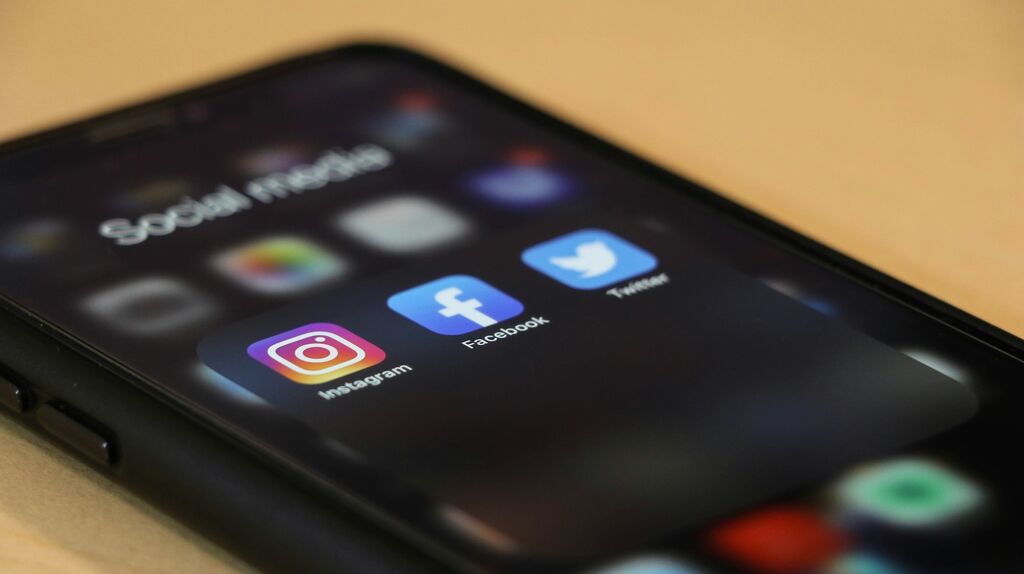
Imagine waking up, picking up your smartphone and finding that Instagram no longer works. No more pictures of smiling family on holiday, no pictures of food your friends have ordered, and no more videos of your next-door neighbour’s dog. It’s not just Instagram – Facebook, X, YouTube, Snapchat, Reddit and Tiktok have all gone dark.
If you are under 16 and in Australia, you don’t need to imagine this. On 10th December 2025 the world’s first social media ban for children and teenagers began there. The world has been watching closely to see what effect the ban has, both positive and negative. Many other countries are actively considering whether they should take similar steps, and this week, the UK stepped closer to implementing their own ban on social media for under-16s.
Proposal
On Monday, the Government announced that it would be launching a consultation about a potential ban on social media for children and teens. Their consultation, which would be accompanied by a ‘national conversation,’ would get views from parents, young people and the general public. It would aim to report back in time for the Government to respond to the findings in the summer.
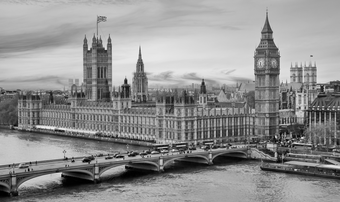
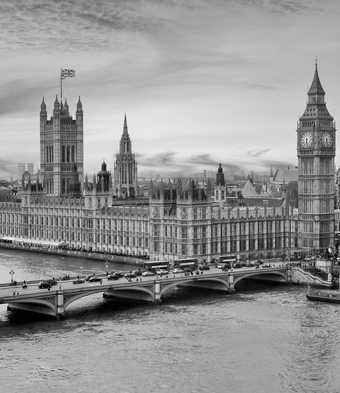
On Wednesday, the House of Lords voted on an amendment to the Government’s Children’s Wellbeing and Schools Bill, which would implement a social media ban. The proposal would give the Government a year to decide which online platforms would be unavailable to under-16s, and those platforms would need to implement highly effective age checks, similar to those required in the Online Safety Act. It has been supported by crossbench peers, as well as Conservative and Liberal Democrats, and two from the Labour Party.
The idea of a social media ban in the UK has gained support in various quarters. Actor Hugh Grant voiced his support for the ban saying that parents are in an “impossible position” regarding online safety and that he was “looking for leadership from Westminster”. He signed a letter urging the Lords to back the amendment which was also signed by singer Peter Andre and actor Sophie Winkleman, and supported by organisations such as Parentkind and Mumsnet. Esther Ghey, whose 16-year-old child Brianna was murdered in 2023, said that a ban would be “a vital step in protecting children online,” commenting that Brianna had a “social media addiction”.
The outcome of the Lords’ vote was clear: Peers voted 261 to 250 in favour of the amendment and the implementation of a ban on social media. The legislation will now move to the House of Commons, where the Government have said that they will try to overturn it in favour of their own consultation. Overturning the amendment might be difficult, however, with 60 Labour MPs calling for such a ban. The Conservative leader, Kemi Badenoch, has said that she would implement a social media ban for under-16s if they won the next election.
On Thursday, Prime Minister Keir Starmer announced a concession to the Labour supporters of the ban, following the Government’s defeat in the Lord’s. Along with the three-month consultation, the Government is willing to fast-track the relevant measures as secondary legislation, meaning it can be passed within months of the end of the consultation, bypassing the normal and lengthy process of consideration.
It seems that some kind of social media ban for children and teenagers is on its way to the UK. But is that a good thing? How do we assess such a move from a Biblical perspective?
Protection
Supporters of a social media ban do so because they want to protect children and young people from harm. That is a fundamentally good – and godly – thing to do.
Proverbs 31:8 is an important verse for us here at CARE: “Speak up for those who cannot speak for themselves, for the rights of all who are destitute.” Children and teenagers do not have a voice in the public square in the same way that adults do. It is important for us to speak up for them and for what will keep them safe and protected from harm. Kemi Badenoch wrote in The Guardian: “We know that a child’s early years shape the trajectory of their entire life. Yet our political system has too often focused more on repairing damage in adulthood rather than preventing it early on”.
Jesus has stern words for anyone who causes harm to a ‘little one’:
“If anyone causes one of these little ones—those who believe in me—to stumble, it would be better for them to have a large millstone hung around their neck and to be drowned in the depths of the sea.
He goes on to tell his disciples the right way to approach protection: “If your hand or your foot causes you to stumble, cut it off and throw it away. It is better for you to enter life maimed or crippled than to have two hands or two feet and be thrown into eternal fire” (Matthew 18:8). If something causes us to sin, we are to cut it out. If something causes others to stumble and sin, surely we have a responsibility to remove it too?
One supporter of the Lords’ amendment was Baroness Cass. She likened the action needed on social media to the response given to children with a nut allergy. “When children died, their families demanded action to protect others,” she said. “We did not tell grieving parents we needed more data.” Lord Nash, a former schools minister, called use of social media by children a “societal catastrophe”.
Parents would seem to agree. Polling has found that 93% of parents say that social media is harmful to children and young people. While scientific research has not moved as fast as the development of technology, evidence links social media use to depression, reduced attention spans and ‘acquired ADHD’, as well as issues like radicalisation and online abuse. It is perhaps not surprising, then, that Parentkind’s research found that 58% of parents supported a smartphone ban for under-16s, with that number rising to 77% for parents of primary age children.
While a blanket ban might seem harsh, boundaries on our habits and actions is part of living in a world under God’s rule. Right at the start of the Bible, before sin entered the world, God gave humanity boundaries:
And the LORD God commanded the man, “You are free to eat from any tree in the garden; but you must not eat from the tree of the knowledge of good and evil, for when you eat from it you will certainly die.”
God puts a good boundary in place, and sin arrives through Adam and Eve’s wilful disobedience and breaking of that boundary. A social media ban is another boundary brought in for the good of our children and young people. Enforcing such boundaries is never pleasant, but it is necessary:
No discipline seems pleasant at the time, but painful. Later on, however, it produces a harvest of righteousness and peace for those who have been trained by it.
As Christians we want to speak up for the voiceless and prevent harm toward those who are vulnerable. Online safety is a key area where we can work to prevent harm toward children and young people. This is the reason why CARE has worked hard to advocate for the Online Safety Act which brought in robust age-verification for pornographic websites, and other measures to keep children safe. Surely a social media ban for under-16s is the next measure to put in place?
Parenting
Quite honestly, that is where I thought this article would end. Protecting children from harm is such an important part of being a Christian in the public square, that I expected to be fully in favour of a ban on social media. But the situation is more complex, and we need to be careful to fully consider the effects of legislation like this, rather than respond with a knee-jerk reaction.
Proposing a social media ban for under-16s raises a lot of questions. Are we removing something that has potential good as well as potential harm? Parents have attested to the connection that social media has brought for teenagers, especially for neurodiverse children and those who are unable to attend school. If we want to ban some platforms, we need to think about where we can direct those who are lonely or isolated to instead.
While there is evidence that social media has negative effects for individuals, there is very little scientific evidence about the ways in which smartphone use shapes children’s development. Australia’s social media ban is still in its infancy, so it is difficult to draw specific conclusions about its effectiveness at this point. Studies have been started to consider the effects of social media on teenagers, such as one being conducted at Cambridge University, but the results are not expected until 2027.
One of the biggest worries about a possible ban is that it gives people a false sense of security. A letter from the NSPCC, Molly Rose Foundation and other organisations and experts argued that a blanket ban was a blunt response and the wrong solution. They said:
Though well-intentioned, blanket bans on social media would fail to deliver the improvement in children’s safety and wellbeing that they so urgently need…Banning children from social media risks an array of unintended consequences. It would create a false sense of safety that would see children – but also the threats to them – migrate to other areas online. Children aged 16 would face a dangerous cliff-edge when they start to use high-risk platforms, with girls particularly being exposed to a range of threats from misogyny to sexual abuse.
Ian Russell, whose daughter Molly took her own life aged 14 after viewing harmful content online, founded the Molly Rose Foundation to help suicide prevention. While campaigning for the removal of harmful content from social media, he is not in favour of a total ban. “We can build on what we've got far better than simply implementing sledgehammer techniques like bans that will have unintended consequences and cause more problems,” he told the BBC.
The responsibility of parents
Age-verification for pornography is right because we recognise the harm that comes from exposing under-age children to such material. Social media is more complex and can be used for good as well as harm. As Rowan Pelling notes in The Telegraph:
The fact is that blanket bans of things most adults indulge in almost never work and all sane legislators know this… In similar vein, it’s absurd to treat all social media like it’s heroin, when older teens and parents are using it daily to access news, comedic diversion and insights into the world at large. I may erupt like Versuvius when I catch my younger son in teen-zombie TikTok mode, scrolling through influencer brain-rot until his eyes glaze over. But it’s my and his father’s job to read the riot act and limit online access.
A ban on social media would stop the conversation about the right way to use technology and risk leaving these issues unaddressed until later in life. Jodie Lopez, a parent and former teacher, said to The Independent newspaper: “I would much rather work with my children to teach them about social media when they are young enough to still need to listen to me, rather than seeing 16-year-olds suddenly get full access without any prior experience at an age when they are most likely going to try and keep it all well away from parents”.
God’s word gives us a charge to teach and train the next generation well, specifically how to navigate the world in a way that honours God:
These commandments that I give you today are to be on your hearts. Impress them on your children. Talk about them when you sit at home and when you walk along the road, when you lie down and when you get up. Tie them as symbols on your hands and bind them on your foreheads. Write them on the doorframes of your houses and on your gates.
We are to talk about God’s word with our children, at home and when travelling, in the morning and the evening. We also need to talk about how God’s word shapes our life in the world, including how it informs our use of technology.
There are very real dangers in the online world. This is precisely why we have robust legislation like the Online Safety Act to prevent illegal and immoral material reaching our children and young people. We have these laws, which we need to enforce robustly. Social media platforms have age-limits already, and these should be enforced too. There will be ways in which legislation can be expanded to further tackle online harm in all its dimensions. But speaking personally I am unsure whether a social media ban is the answer.
As with many decisions in government there is a delicate balance between freedom and restriction. How much can we give people freedom to act, and how much do we limit their choices when they might choose harm? As Christians we recognise the need for this balance, knowing that people are made in the image of God, but also knowing that each person is capable of sin.
For every law that is passed, we have to ask: has the balance shifted too much? Have we given too much freedom? Have we been more restrictive than we need to be? In our right efforts to protect our children and young people from harm, a social media ban might just be a step too far.