Shrewd leadership or a PM in crisis? Analysing Labour’s rejection of Andy Burnham

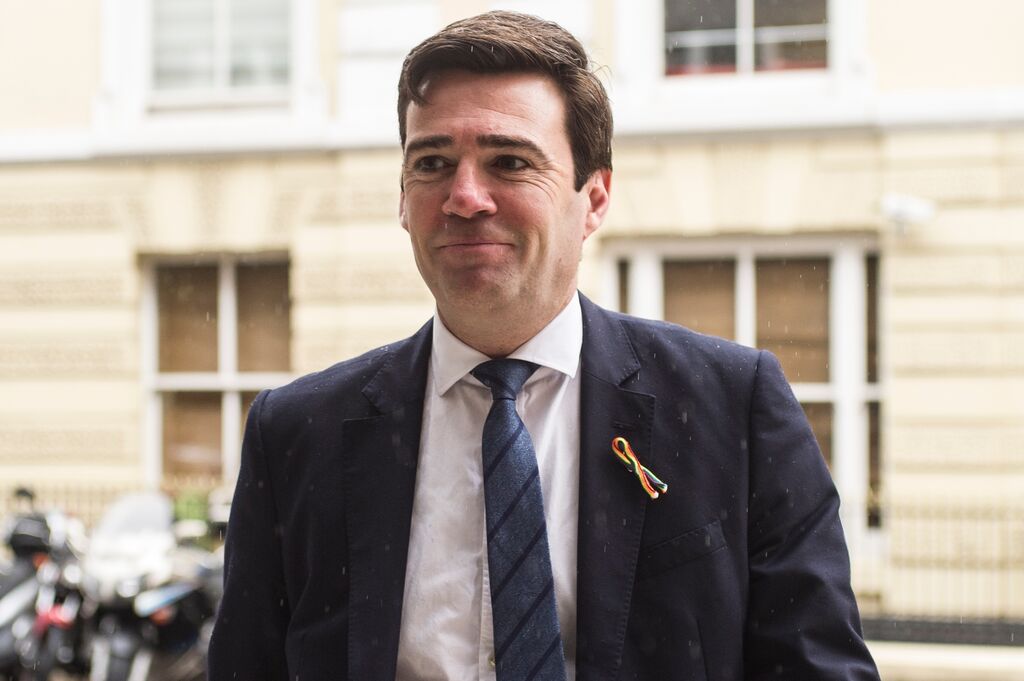
They say a week is a long time in politics, let alone a few months. But the Labour NEC’s (National Executive Committee) decision to block Andy Burnham from standing for the Parliamentary party in the upcoming by-election in Gordon and Denton clearly exposes one thing for everyone to see: the Prime Minister feels that he is under threat.
For context, Andy Burnham is the current Mayor of Greater Manchester, having previously been an MP from 2001-2017. During New Labour’s years in power, he held several Ministerial positions, including as Chief Secretary to the Treasury, Secretary of State for Culture, Media and Sport, and Secretary of State for Health. He has run for the leadership of the Labour Party twice, first in 2010, and then in 2015, in which he finished a distant second behind the unexpected sensation that was Jeremy Corbyn. He stepped down at the General Election in 2017.
Since then he has won three Mayoral elections, and is widely perceived to have done an excellent job: Manchester’s economy has been the fastest growing in the UK behind London, at an average of around 2% every year; he has brought Manchester’s bus service back into public ownership; and he secured additional money for northern communities during the Covid-19 pandemic, leading to him be titled the ‘King of the North’ by the press. His current plans include developing the Greater Manchester Baccalaureate in collaboration with local businesses, to provide young people with a skills-based alternative to university.
Burnham has long been thought to harbour ambitions to run the Labour Party; despite having initially backed Keir Starmer in the 2020 Labour Leadership contest, by 2021, rumours were already swirling that Burnham had his eye on replacing him after a series of defeats in by-elections. By August 2025, polls suggested that Burnham was now the most popular senior Labour figure. An Opinium poll the following month showed that Starmer had a net -40 approval rating: Burnham’s was +10. A further poll revealed that Burnham would comfortably defeat Starmer in a head-to-head contest (62%-29%).
It was initially felt that Burnham’s big chance to make a move was at the Labour Party Conference in September, and that he had potentially missed his moment; but things have not improved for Keir Starmer, with Labour still languishing behind Reform in the polls (and depending on the pollster, sometimes behind the Conservatives and even, occasionally, the Greens). To lead the Labour Party, Burnham would first have to become an MP: it is within this context that his decision to seek nomination, and then the NEC’s decision to block him from standing, are such watershed moments.
Of course, Burnham is not the only prospective challenger to Keir Starmer: the Health Secretary Wes Streeting has long been mooted as a potential Labour leader: indeed, a 2018 video which asked MPs to name who they thought would be PM in another ten years’ time famously featured Mr Streeting saying ‘I think it will probably me’! Streeting, who is an excellent communicator, was at the centre of a briefing war back in the Autumn, in which a source in the Cabinet Office claimed he was plotting against the Prime Minister (Streeting compared the claims to a scene off the hit BBC show ‘The Traitors’). However, being on the right of the party, he is likely to struggle to win over certain elements of the Labour membership.
Ed Miliband is also touted as a potential Starmer replacement (and remains highly popular with the members). There has even been talk that Angela Rayner might run for the leadership, despite only being forced to resign from her role as Deputy Prime Minister a matter of months ago.
Both Miliband and Rayner (who are on the left of the party), incidentally, supported Burnham’s attempt to be selected as a candidate. However, the NEC is primarily made up of people who are loyal to the Prime Minister, and indeed, the Prime Minister himself (who voted to block Burnham). Ultimately, the vote was not close, with an 8-1 margin. The only vote in support of Burnham came from the Deputy Leader of the Labour Party Lucy Powell, who is a known critic of Starmer having been sacked from her role as Leader of the House of Commons in last year’s Cabinet reshuffle.
Why does any of this matter? We have all experienced plenty of party in-fighting in recent years, after the topsy-turvy twists of the Tory Government. The events of the last week have certainly had the politicos out in force (for an excellent explanation of quite what has been going on, it is worth reading the summary from Beth Rigby at Sky News).
But as Christians, it is worth reflecting on what lessons we can draw from what has been going on. Time will tell whether Starmer’s decision to block Burnham represents much more than a temporary stay-of-execution (the big rumour has been the Labour Party will give him until after the local elections in May), but here are some wider reflections that I think we can draw from the last few days…
1. Good leadership strikes the right balance between naivety and paranoia
The Bible tells plenty of stories about how people dealt with ambitious individuals, particularly within the Old Testament.
Consider two episodes from the life of David. Early in his career, David had been anointed by Samuel, became a highly successful military commander, and was popular with the people. Saul began to perceive him as a threat: we read in 1 Samuel 18:19: “Saul became still more afraid of him, and he remained his enemy the rest of his days”. And yet David was loyal to Saul: when given the opportunity to kill him (even when he was being pursued), David passed it up (twice!).
Saul shows how damaging paranoia can be for a leader, as he descends ever increasingly into a vendetta, and loses his focus on the work of ruling: he begins to see threats everywhere, killing the priests at Nob in 1 Samuel 22, and even driving David into the ranks of the Philistines. Most of chapters 18-28 are taken up with Saul’s pursuit of David, until the reader hears that “The Philistines assembled and came and set up camp at Shunem, while Saul gathered all Israel and set up camp at Gilboa. When Saul saw the Philistine army, he was afraid; terror filled his heart.” (1 Samuel 28:4-5). He dies in battle shortly afterwards.
On the other hand, when David is king himself, he is blind to the growing power of his son Absalom. In 2 Samuel 15:1-6, we read about how Absalom works to undermine him. We read about how people came to Jerusalem seeking justice from the king: Absalom would get up early each morning to greet them at the city-gate, in order to build up his support, and would say: “Look, your claims are valid and proper, but there is no representative of the king to hear you.” And Absalom would add, “If only I were appointed judge in the land! Then everyone who has a complaint or case could come to me and I would see that they receive justice.”” (2 Samuel 15:3-4)
Some people are ambitious; some subjects do plot against their leader. Absalom openly behaves as if he were a rival king. We read: “Also, whenever anyone approached him to bow down before him, Absalom would reach out his hand, take hold of him and kiss him” (2 Samuel 15:5). With his behaviour not kept in check, ultimately, “he stole the hearts of the people of Israel”. Absalom continues to build up his power-base in Hebron (which he convinces David to allow him to visit by deception): “Two hundred men from Jerusalem had accompanied Absalom. They had been invited as guests and went quite innocently, knowing nothing about the matter. While Absalom was offering sacrifices, he also sent for Ahithophel the Gilonite, David’s counselor, to come from Giloh, his hometown. And so the conspiracy gained strength, and Absalom’s following kept on increasing.” Ultimately, David is taken by surprise.
Jesus himself was not naive about the opposition he would face: we regularly hear about his debates with the Pharisees and how he bested the teachers of the law with arguments (and miracles) that they simply could not answer. But nor was he paranoid either: he told his disciples three times that the Son of Man would be crucified and rise again on the third day, and instead of seeking to avoid it, we read: “As the time approached for him to be taken up to heaven, Jesus resolutely set out for Jerusalem” (Luke 9:51).
It is important for any leader to strike the right balance in dealing with threats to their leadership. Refuse to give opponents any airtime and it looks like you are running scared; give them too much, and you risk naivety, as people openly conspire to replace you.
Andy Burnham, for his part, has tried to emphasise that he was not looking to enter the Parliamentary Party to challenge Keir Starmer, saying that he "wasn't coming in to undermine him or the government, I was coming in to see if I could contribute". It is up to the Prime Minister to determine whether or not that promise is genuine.
2. Good leadership unites a wide range of people
People often say about political parties (including the Labour Party) that they are designed to be a ‘broad church’, holding together not only different personalities, but different political traditions. In some ways, it is a rather ironic description, because the Bible has much to say about how you hold a church together!
Within the world of the New Testament, the perhaps the most obvious divide in God’s Church was between Jews and Gentiles, Of course, Christians are united by far more than political allegiance (Paul writes at length in Ephesians 2 about how Jesus “himself is our peace, who has made the two groups one and has destroyed the barrier, the dividing wall of hostility”), but much of the wisdom about how to bear with one another would be well-heeded by political groups!
In Romans 14, Paul writes to the Church about questions like whether to eat meat with the words: “Accept the one whose faith is weak, without quarreling over disputable matters.” Paul writes later: “Let us therefore make every effort to do what leads to peace and to mutual edification.” Often it feels like political parties are engaged more in a battle for ideological purity than in seeking unity. Good leadership will involve keeping different groups in harmony, rather than breeding resentment.
Indeed, when we read about some of the big projects which were undertaken in the Bible, we are struck by the wide range of people who were involved. Just think of the wider range of personalities Jesus balanced among his disciples: Simon the Zealot and Matthew the tax collector; the sons of Thunder and ‘Doubting’ Thomas. Twelve disciples, some with their own opinions about what Jesus ought to be doing (eg. Peter trying to tell Jesus he couldn’t go to the cross!).
In Nehemiah, Nehemiah has to lead a team of people from a range of backgrounds as he tries to rebuild the walls of Jerusalem. Chapter 3 contains a long list of people from different places and backgrounds who were involved in the project: consider some of the differences between people in the following (non-exhaustive list).
“Eliashib the high priest and his fellow priests rebuilt the Sheep Gate.”
“Men from Gibeon and Mizpah—Melatiah of Gibeon and Jadon of Meronoth—places under the authority of the governor of Trans-Euphrates” rebuilt the section next to the Jeshanah Gate
“Uzziel son of Harhaiah, one of the goldsmiths, repaired the next section; and Hananiah, one of the perfume-makers, made repairs next to that”.
“Shallum son of Hallohesh, ruler of a half-district of Jerusalem, repaired the next section with the help of his daughters.”
“repairs were made by the Levites under Rehum son of Bani.”
“Pedaiah son of Parosh and the temple servants living on the hill of Ophel made repairs up to a point opposite the Water Gate toward the east and the projecting tower.”
“between the room above the corner and the Sheep Gate the goldsmiths and merchants made repairs.”
The list contains both men and women. It contains people of different rank: both rulers and servants. It contains people in different occupations: priests and goldsmiths, perfume-makers and merchants. And it contains people from different areas: Gibeon, Mizpah, Jerusalem and the hill of Ophel! Completing a big project - and Keir Starmer’s stated aim of ‘national renewal’ is certainly that! - will involve people of all descriptions.
It was striking that within less than an hour of the announcement of the decision not to let Burnham stand, many of those on the left of the party were openly commenting about their dismay:
Jon Trickett, MP for Normanton and Hemsworth, posted on social media: "Strong leaders don't hide from talent, they make common cause."
Neil Duncan-Jordan, MP for Poole said "this stitch-up puts control before country".
John Mcdonnell, MP for Hayes and Harlington, wrote: "Do not underestimate the depth of anger people will feel about this disgusting decision? If you think it strengthens you, I tell you it will simply strengthen your demise. You could have shown magnanimous leadership but instead it's cowardice."
Of course, there is a balance to strike again, and at times Keir Starmer has been (with good reason) accused of kow-towing to his opponents within the party and backtracking on what he thought was the right thing to do. But if a leader cannot keep different types of people happy, they are unlikely to be successful. As Jesus said: “Every kingdom divided against itself will be ruined, and every city or household divided against itself will not stand.” (Matthew 12:25)
3. Good leadership serves others before itself
As Christians, we believe that good leadership is not primarily about power, but about humility. True greatness is not to be found in position, but in service.
We have the best example of this in Jesus himself. When James and John ask Jesus whether they can sit at his right hand, Jesus replies: “You know that the rulers of the Gentiles lord it over them, and their high officials exercise authority over them. Not so with you. Instead, whoever wants to become great among you must be your servant, and whoever wants to be first must be your slave— just as the Son of Man did not come to be served, but to serve, and to give his life as a ransom for many.” (Matthew 20:26-28)
We do not worship a King who came in power and majesty, but who rode into Jerusalem on a donkey. We worship a Jesus who washed the feet of his disciples and “loved them to the end” (John 13:1), and who laid down his life for his friends. We follow a God who laid aside all his power and majesty and came down to earth in humility, and was obedient to death on a cross. Indeed, it is not an accident that in John’s gospel, the cross is described as the hour of Jesus’ glory. True leadership is always about service of others.
When explaining the decision not to let Burnham stand for Parliament, Labour said: “The NEC believes that causing an unnecessary election for the position of Greater Manchester mayor would have a substantial and disproportionate impact on party campaign resources before the local elections and elections to the Scottish Parliament and Welsh Senedd in May." They also "could not put Labour's control of Greater Manchester at any risk".
Some may take those words at face value, but ultimately, Keir Starmer’s actions in the last few days look more like an act of self-preservation than serving others. I suspect it’s not likely to change very much in the long run: Starmer has long been unpopular on the left of the Party, and every month seems to bring about new headlines about how he is the most unpopular leader ever (beating his own rating!). It’s likely that unless something remarkable happens, he will just run out of road.
But as we’ve seen in recent years, both at home and abroad, leaders are often keen to cling onto power even when the game is up. There is a difficult balance here to strike for leaders: on one level, it is understandable that leaders have confidence in themselves and their own ideas, and if they don’t think they are the best person to run the country, why should anyone else? However, there also comes a point - and we may not be at that point yet in the Labour Party - when any leader has to reflect on whether they are still the right person to lead the team.
In some ways, being Prime Minister is quite unusual, in that there are at least three teams you are supposed to be leading: the Government, the political party, and the country. In theory, politicians state that they believe in country before party, even if it often doesn’t feel like that. True leadership will go one step further: country before self.
As Christians, we know that we are all fallen people, and that it is very difficult - amid our inherent sinfulness and selfishness - to separate out our motivations. How easy it is to convince myself that what is the best for others is also what is the best for me!
Things may yet turn around for Keir Starmer, who by almost all accounts, is a decent man. But if they don't, it will be fascinating to observe what happens next…