The surprising subversiveness of Christmas

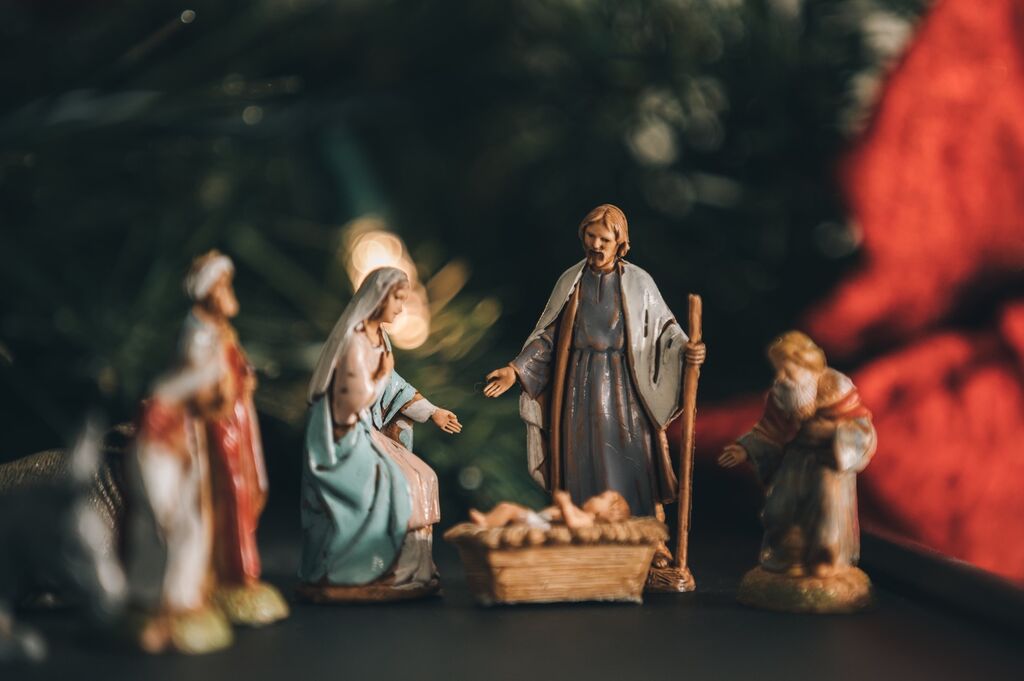
Christmas is upon us, and with it all the familiar sights and smells of the season. We take solace in the traditions of this time of year, singing the same carols, eating the same food, and putting up the same decorations in our homes. The familiarity of Christmas warms our hearts and comforts us.
Yet, Christmas is far from comfortable. Imagine Mary and Joseph’s journey to Bethlehem which would not have been a smooth ride. Imagine finding no room for them in a packed town, eventually being relegated to accommodation with the animals. Imagine giving birth in the straw without midwife, hospital or epidural. Far from comfortable!
Christmas is uncomfortable in other ways too. It may seem familiar, cosy and safe, but Christmas is actually deeply subversive. It challenges us on many different levels, including what we think and believe about politics and government. Christmas issues a challenge to what we believe about government, and what we think about control, power and importance.
Control
Luke opens his account of the birth of Jesus not with the glories of heaven, or the fulfilment of Scripture, but with a note about government taxation:
In those days Caesar Augustus issued a decree that a census should be taken of the entire Roman world.
Censuses are important for governments to ensure that they have an accurate record of the resources available to them. From that they can tax those under their rule and increase the public finances.
No doubt Caesar Augustus felt completely in control when he issued his decree to conduct the census. It was his decision, and his decision alone. He chose to measure the extent of his influence. He put his plans in place.
Luke, however, wants us to see how the actions of Augustus were actually bringing about God’s plans and purposes. The machinations of the Roman emperor some 1,400 miles away brought about what God had decided beforehand. Over seven hundred years before Caesar’s decree God spoke through the prophet Micah, saying that the Messiah would be born in Bethlehem (Micah 5:2). The census moved Mary and Joseph from Nazareth to Bethlehem, the town of David, to fulfil God’s promise.
Governments are good, and given by God to bring order and structure to society (Romans 13:1). But Christmas reminds us that the control of governments is limited. They can make decisions and issue decrees, but their authority comes from God. He is the one who ultimately decides the times and seasons for events to unfold, not the leaders in Downing Street, Moscow or Washington D.C.
The Christmas story contains another example of leaders and governments attempting to exert their control. As news of the birth of a new king reaches King Herod in Jerusalem, Matthew tells us: “When King Herod heard this he was disturbed, and all Jerusalem with him.” (Matthew 2:3)
Herod lies, and manipulates the visiting Magi, to try and control the situation. Eventually it leads to a murderous rampage as Herod tries to remove the threat by killing baby boys in Bethlehem. But it does not work. Even the most evil of schemes cannot take control away from God.
Dietrich Bonhoeffer, who knew something of the evil schemes of governments having resisted the authorities in Nazi Germany, writes:
For the great and powerful of this world, there are only two places in which their courage fails them, of which they are afraid deep down in their souls, from which they shy away. These are the manger and the cross of Jesus Christ. No powerful person dares to approach the manger, and this even includes King Herod. For this is where thrones shake, the mighty fall, the prominent perish, because God is with the lowly.
Christmas shows us that the control of governments – from benign taxation to horrific killing sprees – is limited. Governments are there to do good, to protect those under their charge and to care for the most vulnerable. But they do not have the freedom to do whatever they want, thinking that they are the ones in charge. God is the one in control, and he will bring about his agenda in the end.
Power
Politics is often driven by a pursuit of power. The more power and influence a person has, the more they can get done. Hopefully they use that power for good, to bring about ethical legislation and to campaign for the rights of the oppressed.
The measure of political power, however, is usually a measure of strength. It is how many friends and allies a politician has, how much sway they have over others in their party, how much influence they have and how high up in the ranks they have climbed.
Christmas, on the other hand, shows us a different approach to power; not one of strength, but of sacrifice.
The incarnation of Jesus Christ tells us that the creator of all things became a creature himself. It is the mystery of an infinite God giving himself over to be contained in a tiny baby. The ruler of the universe reduces himself to human flesh and bone, not in strength as a magnificent monarch or warrior, but as the smallest of all, sent to give his life as a sacrifice for many.
Dietrich Bonhoeffer writes about the wonder of Christmas, saying:
This is about the birth of a child, not of the astonishing work of a strong man, not of the bold discovery of a wise man, not of the pious work of a saint. It really is beyond all our understanding: the birth of a child shall bring about the great change, shall bring to all mankind salvation and deliverance.
Power in God’s kingdom comes not through strength, but through sacrifice. It is seen not in influence but in service. It is demonstrated not in improving one’s status but in giving one’s self to others.
The apostle Paul reflects on the wonder of the incarnation to the church in Philippi, probably quoting a Christian hymn of the time:
[Jesus], being in very nature God, did not consider equality with God something to be used to his own advantage; rather, he made himself nothing by taking the very nature of a servant, being made in human likeness. And being found in appearance as a man, he humbled himself by becoming obedient to death—even death on a cross!
Jesus did not grasp onto power, but emptied himself. He made himself nothing, humbling himself rather than building up his status and prestige. His ultimate act of sacrifice was going to the cross to offer up his life for his enemies.
What might politics look like if it was driven less by power and more by sacrifice? Where our ‘enemy’ is not the one we vilify or attack, but the one we serve? How would our actions change if we asked God for the power to do what Paul tells the Philippians to do: “In your relationships with one another, have the same mindset as Christ Jesus” (Philippians 2:5). Not chasing after power but seeking after service. It would lead to a different kind of politics and a different kind of government I am sure.
Importance
Christmas is a strange story of the birth of a king. If you drew a picture of the arrival of a new-born king, you would probably place it in a palace, in the centre of power, among the wealthy and influential of the land. That would make sense, and that is precisely what the Magi thought. Having seen the signs of the birth of a king, they came to the place you would expect: Jerusalem, to the palace of the monarch and the place of importance.
But Jesus was not there. He was not born in a palace, but in a stable. He was not born into wealth and privilege but placed in an animal’s feeding trough. He was not welcomed into polite society but found no room for his entry into the world.
The first visitors to Jesus were not the rich, powerful or famous. They weren’t politicians, leaders, influencers or captains of industry. They were shepherds, ragged and worn after a night of hard work.
Indeed, these shepherds, ordinary folk with no great status, were the ones specifically invited to visit the new-born Messiah. I am sure there were plenty of people who would have been eager to meet an angel or hear a choir of heavenly singers. But that privilege is reserved for the ones without privilege.
Dietrich Bonhoeffer writes:
And that is the wonder of all wonders, that God loves the lowly…. God is not ashamed of the lowliness of human beings. God marches right in. He chooses people as his instruments and performs his wonders where one would least expect them.
When the wealthy do come to Bethlehem in the form of the Magi, they come to kneel. They come not on the basis of their worth but on the basis of their humility.
Jesus’ birth sets an order of importance that turns the world on its head. Later, when his disciples end up arguing over importance, Jesus spells it out:
Anyone who wants to be first must be the very last, and the servant of all.
Jesus turns our view of importance upside down. The last will be first, and the first will be last. It starts with Christmas. There the king of the whole world is found as a tiny baby. The most important are the least important in the world’s eyes. The shepherds are invited in to the place where you would expect lords and ladies.
Governments can influence our view of importance. They can help us to see the value of the vulnerable. Or they can place importance where it often should not be: on the most wealthy, the most prestigious, and those who are well-connected. Christmas challenges each one of us to see the importance in the least and to resist placing undue value on the things that God does not.
Transfer of power
Government can be a force for good in our world. But only if it embraces the challenges that Christmas offers: challenges to our view of control, that God is in command of our world rather than us; challenges to our view of power, that weakness is actually preferable to strength; challenges to our view of importance, that the last shall be first, and the humble are of greater importance than the proud.
Above all, Christmas tells us that true government lies in a different place than Westminster or the White House. It lies with the baby in a manger, it lies with the man on the cross, and it lies with the Lord who will return in glory.
Isaiah looked forward to the arrival of Christmas with these words:
For to us a child is born, to us a son is given, and the government will be on his shoulders. And he will be called Wonderful Counselor, Mighty God, Everlasting Father, Prince of Peace. Of the greatness of his government and peace there will be no end.
Government is good, but government is only great when seen through the child born in Bethlehem. He is the one who carries perfect government on his shoulders, and who can bring us perfect peace. No earthly government of any political party can achieve this. We need the mighty God born as a tiny baby who challenges our view of government and turns our world upside down.