
There are plenty of faithful Christians who identify with at least part of the Christian nationalist agenda. But within any movement, there will be things to critique, and particularly with one which is so loosely defined, and encompasses such a broad range of people.
A number of people have expressed concerns about elements of Christian nationalism, including some who are very sympathetic to it. When concerns are raised, it is important to listen, and to weigh up whether we think they are valid. The points which follow certainly do not apply to everybody who supports Christian nationalism. But they can apply to somebody…
1. Lack of truth and grace
Words are important, and as Christians, we aspire to speak with both truth and grace, like Jesus did (John 1:14). Tim Keller writes, “Love without truth is sentimentality; it supports and affirms us but keeps us in denial about our flaws. Truth without love is harshness; it gives us information but in such a way that we cannot really hear it.”
At times, the speech and tone of figures on the right, backed by some Christians, has been unloving, and even harmful, particularly around immigration. While many of us have been sceptical about Britain’s immigration policies, it is not helpful when politicians speak about “stopping the invasion on our southern coast”.
Others who are on the fringes, such as Tommy Robinson, use the language of warfare, which can encourage people to act violently. He once said: “The reality is this is a war… These people are waging war on us.”
2. Democracy or dominion?
It is not intolerant to believe that Christianity is true and other religions are not, or to suggest that not all cultural values are equal. However, Jesus taught us to “love our neighbours as ourselves”: we cannot expect religious tolerance for Christians without freedom for other religions as well, within usual limits.
The Christian faith has never prospered by imposing belief by force and domination; we convince others by our gracious speech and transformed lives (1 Peter 3:16). The early Christians were a minority group without political power, and the Bible is more concerned with teaching us how to live under oppressive regimes like Babylon or Rome than with telling us to claim power for ourselves. Jesus says to Pilate that His followers do not fight to enact His kingdom, because it is not of this world (John 18:36).
Some Christian nationalists in America advocate for rule by a ‘Christian prince’,
a religious dictator who could enforce Christianity. A few have even suggested that such a figure could punish people using blasphemy laws (in the most extreme cases, even via capital punishment).
3. Racism or hostility
When you equate Christianity with national identity, it can become easy to view those of different nationalities with suspicion. For example, Rupert Lowe, leader of Restore Britain, has said that being white and British means that your parents were born in the UK. He was even unwilling to affirm that King Charles was really British! One Reform candidate for a mayoral election said the then-deputy Prime Minister, David Lammy, should “go home to the Caribbean” where his “loyalty lies”.
It may be necessary to enact stronger anti- immigration measures, but we must ensure they do not become a vehicle for enforcing a particular view of Britishness. It is also important to listen to the voices of non-white British citizens, some of whom describe feeling anxious or unsafe around certain rhetoric.
Racism can never be part of the kingdom of God, because Jesus is king over the whole earth and has created every person, white or black, in His image. The Church is made up of people from every country and culture, anticipating the day when we gather around God’s throne as people “from every nation, tribe, people and language” (Revelation 7:9).
4. Troubling company?
In any movement, we need to be careful with the company we keep. We might not stoke fear of immigration and Islam, but others might. We may not define Britishness by ethnicity or advocate violence, but others might.
One of the most prominent figures associated with the Christian nationalist movement is Tommy Robinson, who has organised the ‘Unite the Kingdom’ marches. Previously convicted of multiple assaults, fraud, using a false passport, and harassing journalists, he has expressed views which Christians should be very concerned about being associated with, and was described by Nigel Farage as a “thug” in 2018. He posted on social media in 2016, “I’d personally send every adult male Muslim…back tomorrow if I could”, and encouraged people to continue to riot during the Belfast riots in 2026.
Robinson was reported to have become a Christian while in prison in 2025. While only the Lord sees the heart, it is not unfair to be cautious about such claims. Faith will be backed up by actions.
5. Impact on Christian witness
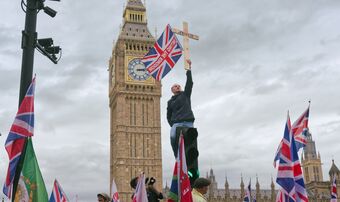
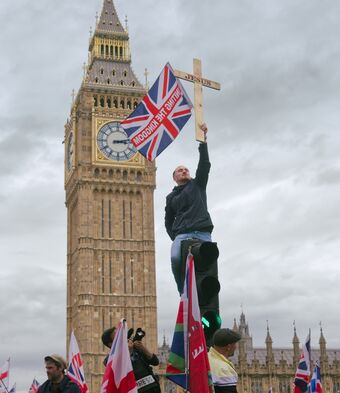
For better or worse, Christian nationalism will affect how some people view Christian faith. As the saying goes, ‘You will be the only Bible some people will ever read’. If people see videos of nationalists marching with Christian symbols and slogans, while speaking hostility, hate speech, or even advocating for violence, they might be left thinking that this is what Christians are like.
Christians are to be good citizens, in whom people can find no fault. Peter writes, "Live such good lives among the pagans that, though they accuse you of doing wrong, they may see your good deeds and glorify God on the day he visits us" (1 Peter 2:12). Our actions are to be attractive to the outside world, so that people may come to know Jesus. In the ugliest sections of the Christian nationalist movement, sadly, they can be anything but.
Does all this invalidate Christian nationalism?
Not in and of itself, no! Any political movement, whether left or right, will have its problems, because all are affected by human sin. But it should give us pause for thought, as we reflect on both the positives and negatives of a Christian nationalist agenda. Jesus advised us, “by their fruit you will recognise them” (Matthew 7:16).
This article has focused on the worst excesses within Christian nationalism. The reality is that most people who attend a march or vote for a particular political party would be appalled at them, and would call such behaviour out. The Bible tells us that “Faithful are the wounds of a friend” (Proverbs 27:6), and we are particularly grateful to those on the right who continue to highlight such abuses and challenge them.
The Christian nationalist movement has some goals many of us will agree with, and some people within it who we might respect. We hope that as it becomes more defined here in the UK, it will be able to promote what is good, and to curb what is not.