Walking through the valley of the shadow of death

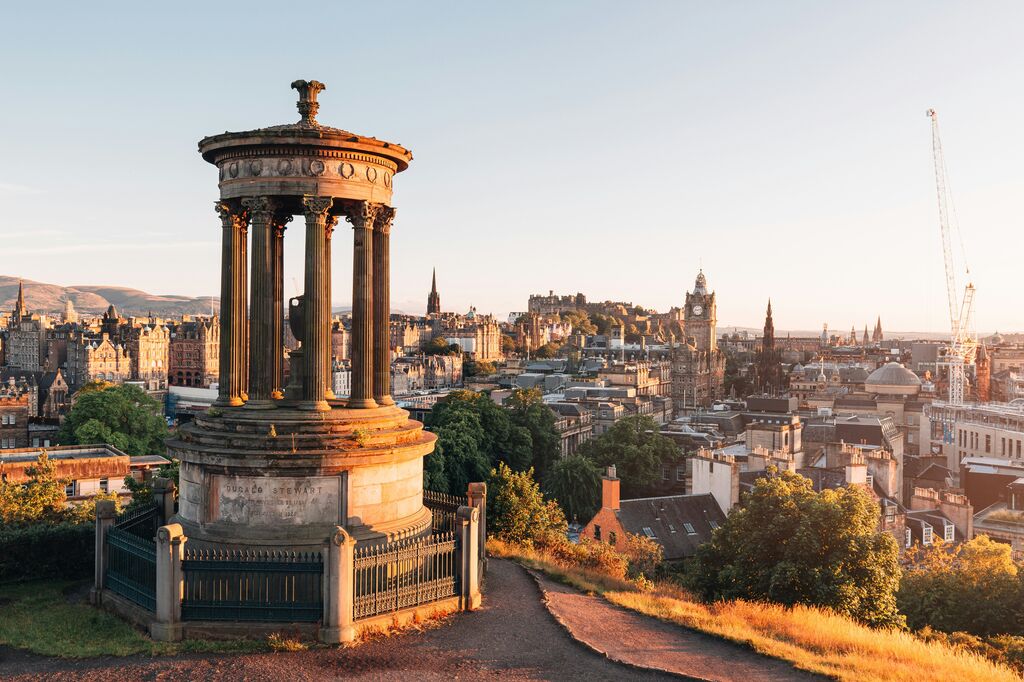
Perhaps it was mere coincidence that just as the blossom appeared on the trees and the spring sun began to poke its rays through the clouds, the McArthur Bill fell.
Yet it felt significant that as Britain emerged from the grey of winter into the season of new life, that this Bill, which would have introduced state-sanctioned killing of the vulnerable and infirm in Scotland, died a death of its own. Scotland chose life.
It had been a long and difficult fight. As my colleague James Mildred highlighted for Evangelicals Now, this Bill was first introduced back in 2021, and CARE has been fighting it ever since. If you would like to explore our work in this area, our Topic Guide explores a wide variety of perspectives and shows how legislation can never be made safe. We also have a range of web articles, and an excellent introductory video to the subject.
Defeat had seemed inevitable. This was now the third Bill seeking to introduce assisted suicide in Scotland. (The first came in 2010 and was defeated 85 votes to 16. The second came in 2015 and was rejected by 85 votes to 36.) Back in May 2025, at Stage 1 of the vote, the Bill passed with 70 MSPs in favour and 56 against. Holyrood, it seemed, supported the introduction of assisted suicide. Holding back the tide for any longer seemed impossible.
When this Bill was introduced, as Iain Macwhirter wrote in the Spectator, “the result seemed almost a foregone conclusion. Nearly all of the party leaders supported it, at least in principle, along with a clear majority their elected members. Around 80 per cent of Scottish voters approved the principle of ‘dignity in dying’.”
To overturn the initial result, at least seven MSPs needed to change their mind.
In the end, the vote flipped. Holyrood voted 69-57 to block the introduction of assisted suicide in Scotland. First Minister and leader of the SNP John Swinney opposed the Bill. So too did Anas Sarwar, leader of Scottish Labour, Russell Findlay, the leader of the Scottish Conservatives, and the former First Minister Nicola Sturgeon.
When it came to it, the flaws of the Bill proved too great. Standing face to face with a Bill that introduced the legalisation of death for the sick and the ill proved unworkable, and therefore, unpalatable.
Speeches against the Bill highlighted issues of coercion, funding, limited access to palliative care, conscientious objection, and the impact on the patient-doctor relationship. Others highlighted the opposition from professional medical bodies, a lack of sufficient safeguards, and the pressure placed on, and the fears felt by, those who are disabled and vulnerable.
The problems with the Bill were legion. But as we have long argued, the problem lies not just with this Bill, as bad as it is, but with the very principle. One cannot, by definition, make safe a Bill which permits the ending of life.
Proponents of such legislation have long used the term ‘assisted dying’, as though all that’s being talked about is an easing of pain and an increase in support as one dies. What is being discussed, in reality, is the deliberate and artificial ending of a life prior to its natural end.
There have been, and will continue to be, the inevitable complaints of undue interference and influence from religious groups, and yet the truth is that this Bill fell not because of some non-existent shady religious underworld, but because the Bill’s advocates could not address the problems baked into the heart of this legislation.
In Westminster, the same is true. Peers have been accused of filibustering but are “simply dedicating even more time to scrutinise many of the exact same issues as were debated in Scotland, and still managing to highlight new issues every week.” As a result, it seems likely that the Leadbeater Bill will also fall. Praise God!
A time for joy
The Bible speaks of their being a “time for everything”, “a time to weep and a time to laugh, a time to mourn and a time to dance.”
After years of hard work and the defeat of yet another assisted suicide Bill our team was understandably filled with joy this week. After all, it is weeks like these which demonstrate the value of what we do and why we do it.
To put it plainly, this week, lives were saved. A Bill that would have legalised and enacted death was defeated. This week MSPs chose to uphold one of the core functions of government, that is the preservation, promotion, and protection of life.
We live in an era in which ‘politics is broken’, where cynicism abounds, and where it is easier to tear down than it is to build. But the victory in Holyrood this week stands as a testament to the value of politics. Far from falling due to shadowy actors and religious tyranny, the Bill fell because MSPs were convicted of the Bill’s flaws: many who voted for the Bill at Stage 1, later changed their minds to vote against it now.
Well-informed, well-supported, powerfully-made arguments work. Building wide coalitions, effective campaigning movements, and publishing well-timed media pieces work. Extensive networking, relationship building, and engaging grassroots organisations like churches work. In effect, politics works.
It might not always feel like it and it might be tough going. But hard work can pay off. We might not always see the fruit of our labour, but it is possible to have a genuine impact.
The God of the impossible
At CARE we firmly believe that no matter how difficult the topic before us, there is a better story written into the fabric of the cosmos, that is understandable and good news for all. That is part of what it means to worship a God who is both Creator and perfect in goodness and wisdom. As explained in ‘Good News for the Public Square’ (ed. Timothy Laurence):
“We all inhabit the same moral order of the universe which is patterned on the same character of God. So it follows that when we say that truth is objective, we mean that there is a good design for humanity which we can seek for everyone’s benefit”.
We shouldn’t expect to win every campaign we are ever part of. Inevitably there will be losses. But change is possible. In a culture of cynicism and nihilism, which has taken root inside the church as well as outside, this is a particularly valuable lesson.
For if any people have reason to be hopeful, it is us as Christians! At the core of the gospel is the incarnation, death and the resurrection of Jesus Christ. We believe in a God who chooses to come near, so that we do not remain far away, without hope and without God (Ephesians 2:12-13).
Biblical hope is all-encompassing. Yes, there is hope for ourselves, but we also have hope that He is making all things new. That one day every sad thing will come untrue. That things don’t have to be this way. That change is possible. As resurrection-people, we must never surrender to despair, for in Christ all is not lost.
This is something we have been reflecting on as a team this week. The Bill had seemed like it was a done deal. Public opinion was favourable, parliamentary opinion was favourable, and yet events did not pan out that way.
Luke Bretherton writes, “any account of Christian political witness has to be open to the possibility of God's sovereign acts of grace in the world”. One of the reasons we run prayer events for supporters, is that we believe in a God who intervenes in our world.
It is no wonder that Paul urges Timothy as a core principle of worship in his church to pray: “I urge, then, first of all, that petitions, prayers, intercession and thanksgiving be made for all people— for kings and all those in authority, that we may live peaceful and quiet lives in all godliness and holiness. This is good, and pleases God our Saviour.” (1 Timothy 2:1-3)
Prayer is often undervalued when it comes to public engagement. It can make more sense to produce snazzy social media posts, or write a powerful speech, or turn up with a bright placard (and all of those can be valuable!). But too often our political engagement can rest on our power, our might, our worldly strength, rather than the Maker of Heaven and Earth who calls us to pray that His Kingdom might come “on earth as it is in heaven”.
When all feels lost, we commit things to the Lord who loves righteousness and justice, who gathers the waters of the sea into jars, who foils the plans of nations, and whose plans stand firm for ever (Psalm 33).
A time for mourning too
Whilst there has been much to rejoice in this week, there has also been much to mourn. And it is right to do so when confronted with the brokenness of this world.
Tuesday night was a great victory, but Wednesday saw a tragic loss. The House of Lords voted overwhelmingly for an amendment to the Crime and Policing Bill which would decriminalise abortion at any stage in a pregnancy. This means, as Neil O’Brien MP stated plainly, “you will be able to kill a baby the day before it is about to be born, and face no legal consequences”.
The Catholic Archbishop of Liverpool, John Sherrington, explained that “The clause decriminalises on-demand abortion up to birth in England and Wales in some circumstances. This move is likely to lead to more late-term abortions putting pregnant women and their babies at risk. Many women could likely also face even greater risks of isolation, coercion, and pressure.”
The Lords also voted down an amendment which would have reintroduced the requirement for a face-to-face consultation with a doctor prior to being proscribed abortion bills. This was only removed during the pandemic as a temporary measure but has now become permanent.
As a result, women will be dangerously exposed through limited medical oversight and left exposed to perverse exploitation, as in the case of Stuart Worby, who obtained pills by post in order to spike his girlfriend’s drink and induce an abortion against her knowledge.
This is the nature of politics; and it is the nature of being a Christian in this world of both the now and the not yet. One day, we celebrated as Holyrood chose life. The very next, we lamented as Westminster embraced death with open arms.
But it is here that CARE stands, as we seek to be faithful to our calling, to speak God’s better story to a broken world.
The fight goes on.