Iran: Is regime change ever right?

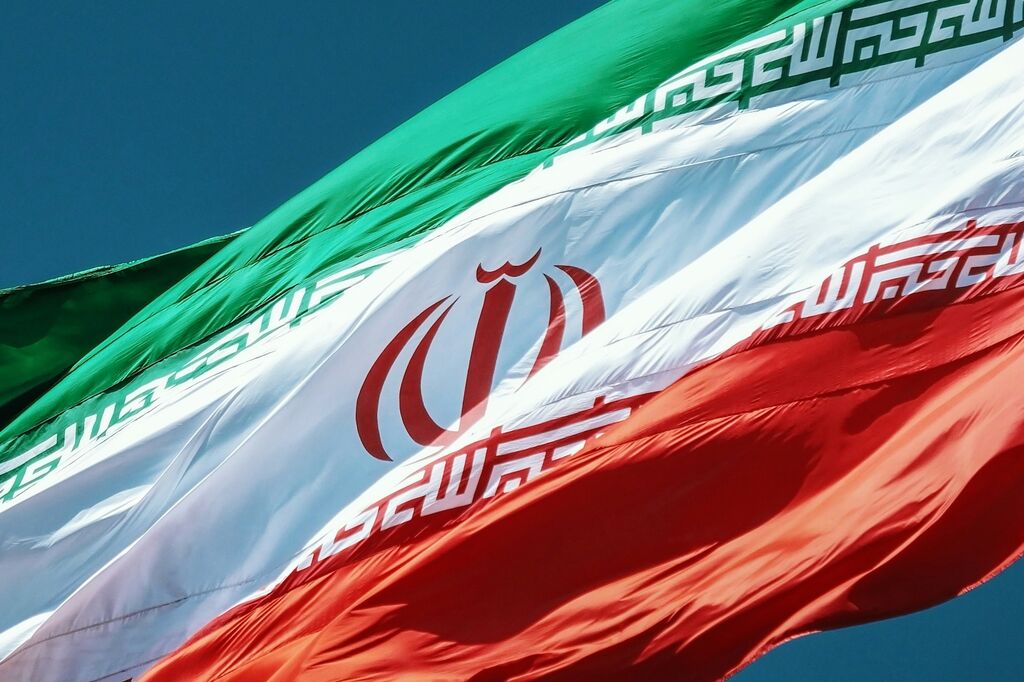
As the joint US and Israeli offensive in Iran prepares to enter its second week, President Donald Trump took to his Truth Social platform in the early hours of Friday morning UK time. Commenting on the leaders of Iran, he wrote: “They’vebeen killing innocent people all over the world for 47 years, and now I, as the 47th President of the United States of America, am killing them. What a great honor it is to do so!”
Many of Iran’s senior figures have indeed been killed over the past two weeks, most notably the Supreme Leader of Iran, Ayatollah Ali Khamanei, in the first wave of strikes on the country. His son, Mojtaba Khamenei, who was appointed to succeed him, has yet to be seen in public, raising suspicions that he has been injured, or perhaps even killed.
There has been much speculation about the aims of this war, and mixed messages from the US President and his team, but it seems that a change of regime in Iran is one of the desired outcomes. Speaking on Truth Social after US attacks on Iran last year, Donald Trump commented:
It’s not politically correct to use the term, ‘Regime Change’ but if the current Iranian Regime is unable to MAKE IRAN GREAT AGAIN, why wouldn’t there be a Regime change???
Secretary of Defence, Pete Hegseth, was quick to refute regime change as a reason for attacking Iran in the days after the initial strikes two weeks ago, but said: “This is not a so-called regime change war, but the regime sure did change”.
Régime change
President Trump spoke directly to the Iranian people on 2nd March, urging them to take this opportunity to overthrow the current system: “When we are finished, take over your government. It will be yours to take. This will be probably your only chance for generations. For many years, you have asked for America's help, but you never got it. No president was willing to do what I am willing to do tonight. Now you have a president who is giving you what you want. So let'ssee how you respond.”
As Politico magazine noted, “After decades of high tensions, tough recriminations and one-off attacks, Washington finally decided to try getting rid of the country’s government altogether — and it thinks ordinary Iranians will rise up and finish the job.”
A few days later, again writing on Truth Social, Trump claimed that there would be no end to the conflict without an unconditional surrender from Iran and a new leader who would be acceptable to, and selected with the help of, America and their allies.
Whatever the rhetoric over the past two weeks, it is clear that the US and Israel would like a change in leadership in Iran, and hope that this war is the way to make it happen.
Many people in Iran, and around the world, would be happy to see a change of rule in that country too. The current government is an oppressive regime which has threatened the destruction of Israel, supported terrorist activity across the Middle East and further afield, cracked down on protests, murdered its own people, and worked to produce nuclear weapons. It is difficult to see regime change in Iran as a bad thing.
But is it an ‘honour’ to kill the leaders of another country, as Trump claimed this morning? Death and devastation are awful things, even if you believe they are in the cause of eventual good. As Christians, can we ever justify the idea of regime change in this way?
It’s worth noting that regimes change all the time, even here in the UK. When a general election brings a new political party into power, electing a new government and appointing a new prime minister and cabinet, the ‘regime’ has changed. This happens across the world, including in the United States and Israel.
However, when we talk about ‘regime change’ as we are with Iran, we are talking about something different. Britannica defines ‘regime change’ as “the overthrow of a government considered illegitimate by an external force and its replacement with a new government according to the ideas or interests promoted by that force.” Regimes, in this sense, are those deemed morally or legally invalid, and change comes through force rather than democratic choice.
So, can a Christian support the idea of changing a regime by force?
Protecting the vulnerable
Imagine you were walking along a city street at night, and you see on the other side of the street someone being assaulted by another person. What would you do? Hopefully you would have the presence of mind to call the police, but if that were not possible, how would you respond? Would you engage with the attacker across the street? Might you interpose between them and their victim, taking the force of the attack? Might you even go as far as attacking the aggressor in order to stop their assault?
Scenarios like this help us to think about the ideas behind what is called ‘Just War Theory’. This is the framework by which warfare and conflict can be argued as ethical and justified, and has been developed by Christian thinkers throughout the centuries such as Augustine of Hippo and Thomas Aquinas.
My colleagues have written about these ideas in the context of the Middle East in previous articles about the conflict in Gaza, and just last week concerning Iran. In essence, Just War Theory argues that the cause of a conflict needs to be just, and the way in which that war is fought needs to be just as well. Proportionality, authority, intention, and likelihood of success all need to play their part.
Most Christians would affirm that there is a need to protect others. Jesus, quoting the Old Testament Law, tells us to love our neighbour as ourselves (Matthew 22:39 and Leviticus 19:18), and protecting our neighbour is part of showing love toward them. Psalm 82 tells us:
Defend the weak and the fatherless; uphold the cause of the poor and the oppressed. Rescue the weak and the needy; deliver them from the hand of the wicked.
We are to defend, uphold, rescue, and deliver those who are most vulnerable. As followers of Jesus, we are to cross the street and come to the aid of the one who is oppressed. We are to seek justice and protect the poor and needy.
The dangers of régime change
Jesus calls us to defend and rescue the weak, working to help the oppressed and deliver them from the hands of the wicked. But is regime change by force the right way to do this?
If you look at the track record of those who have sought to impose regime change on others, the outcomes are not good. In recent times we can look back on military interventions in Iraq and Afghanistan as examples of attempts to remove bad governments and install better ones. In most cases, the previous regime has fallen, but what has replaced it has not been objectively better than before.
In Afghanistan, the forces from the US, UK, and other countries could not permanently defeat the Taliban, resulting in a government which is increasingly oppressive. In Iraq, then-president George W. Bush declared ‘Mission Accomplished’ after the toppling of Saddam Hussein. But that conflict continued on much longer, leading to enormous casualties and devastation to that country.
Matt Fitzpatrick, writing for The Conversation, notes that “the historical record of imposed regime change, particularly as undertaken by the United States, is patchy at best. Things rarely go to plan, and the long-term consequences are often disastrous.”
When you remove one regime by force, you have to consider what will replace that which you have removed. Jesus tells us in Luke 11:
When an impure spirit comes out of a person, it goes through arid places seeking rest and does not find it. Then it says, ‘I will return to the house I left.’ When it arrives, it finds the house swept clean and put in order. Then it goes and takes seven other spirits more wicked than itself, and they go in and live there. And the final condition of that person is worse than the first.
When faced with taking out the ‘impure spirit’ of brutal rulers, we can be tempted to think that victory is simply removing the bad government. But we risk cleaning the house only for the same spirit to return to the place, making the situation worse.
President Trump has justified the current attacks against Iran as motivation for the people to rise up against their leaders. But the destruction and killing may work to fuel support for the current regime, bolstering people’s resolve to back those in power.
Even when the regime does change, it can go on to make the situation worse. In 1953, the Prime Minister of Iran, Mohammad Mossadeq, was overthrown by a joint US and UK operation. This led to the leadership of the Shah of Iran, Mohammad Reza Pahlavi, who ruled as an absolute monarch. His harsh rule led in part to the Iranian Revolution in 1979, which enabled the current theocratic government to take power. Ironically, it is the Shah’s son, Reza Pahlavi, who lives in exile in the US, that some see as the logical person to take over leadership in Iran.
When a country like the United States seeks to change a regime by force, they can become embroiled in a complex situation that lasts for many years. Former Secretary of State, Colin Powell, once articulated his ‘Pottery Barn rule’ for regime change. Mirroring the homeware store’s policy on damages, the rule states: “You break it, you own it”.
When a country tries to ‘break’ a regime, they end up owning it, having a responsibility to ensure the safety and prosperity of a foreign nation before they can withdraw. As Afghanistan has shown, this can be notoriously difficult to do.
We have to examine the motivations for attempting to install a new regime as well. While a desire to protect the vulnerable is good, our desires quickly get corrupted by our sinful tendencies. Glen Stassen in The Ethics of War and Peace-making warns that “lurking at the door are powerful drivers of revenge, hate, nationalism, racism, economic greed, power lust, hateful stereotyping of the enemy, ideological crusades, pride, and self-righteousness”.
One danger of regime change is to remake that country’s culture in your own image. Instead of freeing a nation from oppression, the goal becomes to make its culture like your own. Walker Larson, writing for the Catholic publication Crisis,notes:
With disregard for culture, history, and geopolitical reality, Trump and many Americans seem to hold the view that the only kind of successful country is one that mimics American democracy. This is the height of arrogance and ignorance. Iran, with its millennia-old Persian culture, is never going to look anything like America.
The United States has seen how a thirst for changing regimes can lead to a kind of addiction to making nations in their own image. Writing in The New York Times, Scott Anderson explains how Eisenhower, in the wake of the Second World War, set out to change regimes in numerous different countries. It did not end well:
It turns out that once one starts down the path of overthrowing and reconstituting foreign governments, it can get kind of addictive. Even for a disciplined military leader, it can be increasingly difficult to know when and where to stop. But like most addictions, sooner or later — and usually sooner — matters take a nasty turn… The real lesson of Eisenhower’s regime change addiction is that each intervention tends to produce the very crisis that justifies the next, with consequences that reach forward generations. Eisenhower… never found a way to stop. There is little reason to believe Trump will fare better.
So far we have seen President Trump intervene in both Venezuela and Iran, and he has identified Cuba as next. Addiction to regime change may be setting in.
Regime change by force is fraught with danger, leading countries into long-term conflicts with no exit strategy, bolstering support for the current regime or installing something even worse. Even if there is support for Christians to use force to protect the vulnerable, regime change does not appear to be a helpful route to take. So, what is the better way?
God changes regimes
A key verse for us at CARE is Romans 13 verse 1:
Let everyone be subject to the governing authorities, for there is no authority except that which God has established. The authorities that exist have been established by God.
We are reminded that God is the one who appoints and establishes leaders. This does not remove our responsibility as Christians to speak up for the oppressed and vulnerable, or to protest or even resist government when it sets itself against what is pleasing to God.
But this verse tells us that it is ultimately God who establishes governments, leaders, authorities, and regimes. Since God appoints regimes, he is also the one who can change them.
We see that played out in the life of the people of Israel throughout the Old Testament. Once they have entered the Promised Land, God appoints judges to lead the people, often against their enemies as military leaders. Not all of those judges are good and godly examples, but it is God who raises them up for their task.
When the people eventually plead with God through Samuel for a king, God appoints Saul to show them what a fallible, human king looks like. When Saul inevitably sins, God appoints David to replace him, a regime change that takes some time to take effect! God appoints and deposes the rulers of his people.
God’s power to change regimes is not reserved for Israel. The book of Daniel shows God’s sovereignty over all the nations, especially over the rulers and regime of Babylon. In chapter two, Daniel prays:
Praise be to the name of God for ever and ever; wisdom and power are his. He changes times and seasons; he deposes kings and raises up others.
Daniel goes on to show how “the Most High God is sovereign over all kingdoms on earth and sets over them anyone he wishes” (Daniel 5:21). Chapter five gives a compelling narrative of regime change, as the Babylonian empire is overtaken by the Persians (coincidentally modern-day Iran). Daniel’s dream later in the book demonstrates how God is in control of the empires of the world to bring the Persian empire under the Greeks and then Rome over the course of centuries.
God’s regime change will finally be complete at Jesus’ return. On that day, Paul reminds us that “at the name of Jesus every knee should bow, in heaven and on earth and under the earth, and every tongue acknowledge that Jesus Christ is Lord, to the glory of God the Father” (Philippians 2:10-11).
As Jesus ushers in the New Creation, his people are under his perfect reign and rule. The regime will change fully and finally for the better as:
The kingdom of the world has become the kingdom of our Lord and of his Messiah, and he will reign for ever and ever.
God moves through people
As we trust in the God who changes regimes, we pray that he would topple unjust and oppressive regimes. We also act to enable change, but not with force to overthrow governments.
As the Belfer Center at Harvard’s Kennedy School notes, regime change by force hardly ever works. For the reasons noted above, forced regime change doesn’t lead to more robust democracies, and ‘decapitating’ a regime by removing leaders is least likely to result in a good outcome.
The Cato Institute notes that “While regime-change operations might seem like a feasible policy solution… using armed force to achieve these goals often makes things worse… foreign-imposed regime-change operations produce insecurity, undermine democracy, and often have tragic humanitarian outcomes.”
So, what does make a difference among regimes that need to change? It is the work of people to bring change from the ground up rather than by force.
Erica Chenoweth from the Carr Center at Harvard has found that non-violent protests are twice as likely to succeed than armed conflicts. It only takes around 3.5% of the population to be active in protests for real and serious political change to be achieved.
Christians have seen this throughout history, not through violent force, but by living out their faith and, where necessary, standing up to the regimes of their day. God moves through his people. As Christians have loved their neighbour, fed the poor, and stood up for the rights of the oppressed, we have seen slavery abolished, education and health care become widely available, and governments changed for the better.
Christians will disagree on the use of military force and justification for war. Some will take the path of complete non-violence, while others will see how just war theory can merit warfare under certain circumstances. History shows that regime change by force rarely produces just and lasting change, but people trusting in God and acting for good can truly make a difference.
A heart for peace
As we follow the news about Iran and the Middle East, our hearts should break, whether we feel the use of force is justified or not. We hope and pray for a regime in Iran that honours God, cares for the most vulnerable, and promotes peace.
Augustine of Hippo was one of the key Christian thinkers about just war theory at the start of the fifth century AD. He recognised that when we consider the use of force, whether to effect regime change or for some other reason, what is important is the attitude of our heart. He wrote, “What is here required is not a bodily action, but an inward disposition. The sacred seat of virtue is the heart.”
When we consider Iran, Venezuela, Cuba, or numerous other places around the globe where regime change is happening, or might happen, our heart must be for peace. Conflict can, and does, happen, but our desire should be for true and lasting peace. That can only come through Jesus, and his peace won for us on the cross. It is that peace that we long to see in Iran and elsewhere. As Augustine wrote to his friend Boniface:
Peace should be the object of your desire; war should be waged only as a necessity, and waged only that God may by it deliver men from the necessity and preserve them in peace. For peace is not sought in order to the kindling of war, but war is waged in order that peace may be obtained. Therefore, even in waging war, cherish the spirit of a peacemaker, that, by conquering those whom you attack, you may lead them back to the advantages of peace; for our Lord says: “Blessed are the peacemakers; for they shall be called the children of God.”