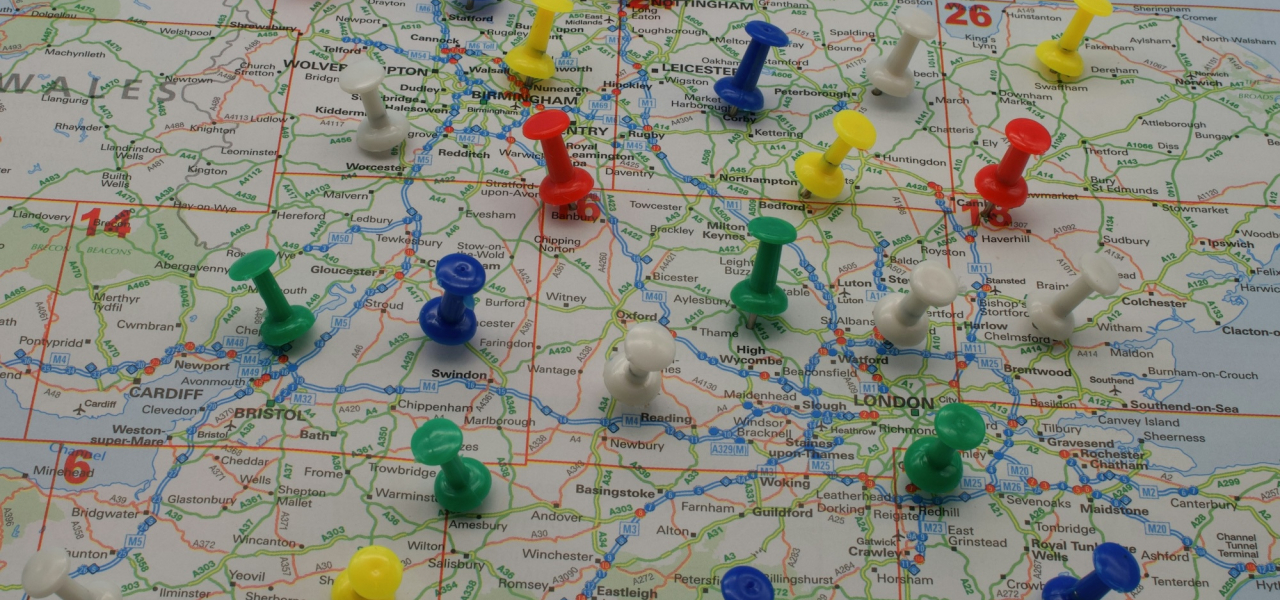

We might like to think that prostitution and sexual exploitation is rare in the United Kingdom. However, the evidence suggests that it exists in most towns and cities of Britain, and is far more prevalent than we might first think. From ‘pop up’ brothels, to Adult Services Websites, the sex industry in the UK is extensive and often in plain sight. As one report from 2018 notes: “The sexual exploitation of women by organised crime groups is widespread across the UK.”
The National Police Chiefs’ Council guidance on prostitution reminds us that “The existence of prostitution in our society is a highly emotive issue that often polarises opinion and prompts passionate debate, with a range of views and positions.“ So just what is the state of the sex industry in the UK today?
The sex industry today
It is very difficult to determine exact numbers of those involved in the sex industry. This is because research on prostitution tends to be small-scale, and usually has low response rates. Nevertheless, it is estimated that there are around 105,000 people involved in prostitution in the UK today. The vast majority of them are women, often from Eastern Europe or Asia. The Metropolitan Police estimate that 70% of women involved in off-street prostitution in the UK are foreign nationals.
According to a 2024 survey for YouGov, 9% of men in the UK have paid someone for sex, while fewer than 1% of women have done so. Almost two-thirds of men who were surveyed believe it should be legal to pay for sex, while only two-fifths of women agree. 15% of men have paid for a striptease or lap-dance, and 22% of men have paid for a pornographic magazine.
Between 85% and 95% of all women involved in prostitution want to leave it.“During my years in it,” said one survivor of prostitution, ”I didn’t meet one woman who enjoyed what she was doing. Everyone was trying to get out.” Most do not leave because they are reliant on the income for financial survival. A study in 2002 found that three-quarters of women in prostitution identify poverty as a key factor. The need to pay household expenses and support children are particularly strong motivators to stay in prostitution.
It is estimated that between 80% and 95% of all women involved in street prostitution are drug users, with many women trading sex for drugs, alcohol, or money to feed an addition. There are also strong correlations between prostitution and homelessness, sexual abuse, and domestic violence. One study found that a third of women in prostitution had left education at 14 or younger, and two-fifths had no formal qualifications. Up to 70% of those in prostitution have been involved in the care system at some stage, and 85% have been physically abused by a family member. Prostitutes are 60 to 100 times more likely to be attacked and murdered than the rest of the population.
One survivor of commercial sexual exploitation said: “Prostitution isn’t glamorous and fun. It’s scents and tastes and body fluids, pretending to enjoy (or at least endure) stuff you don’t want to do – stuff that hurts, stuff that’s degrading. I developed Post Traumatic Stress Disorder (PTSD). I got flashbacks and nightmares, when I could sleep. The addiction and the prostitution went together – I sold myself to fund my habit, and I couldn’t do it sober. It was a
vicious cycle.”
Around one in five victims of sex trafficking are children, the vast majority of whom have been trafficked by a family member. Three-quarters of the women in prostitution in the UK started being paid for sexual acts before the age of 18, with 15 being the average age of entry into prostitution.
What does the law say?
In England, Wales, and Scotland the selling and purchase of sex is currently legal. The Sexual Offences Act 2003 made more than 30 different activities related to prostitution an offence. These include soliciting for sex on the street, kerb-crawling, advertising via cards in telephone boxes, causing someone to become a prostitute, controlling prostitution for personal gain (i.e. pimping), and running a brothel.
Paying for sex from a person who has been trafficked, forced, or coerced is also illegal, but the law is very rarely enforced. Under the Modern Slavery Act 2015 a person commits an offence if they arrange for a person to be trafficked, or receive a trafficked person. The maximum penalty is life imprisonment.
Controlling another person in prostitution for personal gain (‘pimping’) is illegal under the Sexual Offences Act 2003, and carries a maximum prison sentence of seven years. Running a brothel is outlawed under the 1956 Sexual Offences Act, but there is no statutory definition of what a ‘brothel’ is. Two or more people occupying the same premises for the purposes of prostitution is the most basic definition. Many brothels are licensed as massage parlours or saunas, and are rarely inspected by the police.
The Crown Prosecution Services states: “In relation to soliciting sexual services, for instance, it may be that it is better that this takes place in well-lit and safe places rather than being displaced and therefore only anti-social soliciting is targeted. This is a decision for the police.” They note that the police have discretion to choose not to arrest, or to take no further action, toward those in prostitution and that “those who sell sex should not be routinely prosecuted as offenders”.
The Nordic model
The law on prostitution in Northern Ireland is different to the rest of the UK. Since the passing of Lord Morrow’s Bill in 2015, Northern Ireland has operated under the ‘Nordic Model’. This model is so-called because it was first adopted in the nordic countries of Sweden, Norway and Iceland, and has since been adopted in Canada, France, and Israel, as well as Northern Ireland.
The Nordic Model makes it illegal to purchase sexual services, but not illegal for someone to sell sex. This switch in the illegality of prostitution emphasises its exploitative nature, protecting the vulnerable (usually women) and providing an easier route to exit prostitution. Reports suggest that this approach reduces the amount of on-street prostitution and reduces the number of men reported to have purchased sexual services. It also acts as a deterrent against organised crime and human trafficking.
CARE was involved in drafting Lord Morrow’s Bill in Northern Ireland and campaigning for its adoption. CARE are calling for the same approach to be rolled out across the UK to allow for more women to find help and a route out of prostitution.
In 2026, MSP Ash Regan introduced a Bill to the Scottish Parliament to bring the Nordic Model to Scotland. In the debate, she said that the Bill “recognises prostitution for what it is – a system of exploitation and violence sustained by demand. It decriminalises those who are sold, recognising them as people constrained by vulnerability and not offenders.” The Scottish Government did not back the Bill and, although some SNP MSPs voted for it, it was defeated at Stage One by 64 votes to 54. The SNP said that they will bring the idea back to the Scottish Parliament if they gained a majority after the next election, which they did.
Subscription Services and OnlyFans
Internet pornography is not only a problem in its own right, it is also one of the ways in which women get drawn into prostitution. According to the US National Human Trafficking Hotline, pornography is the third most common form of sex trafficking. One report of women caught in prostitiution across nine countries found that almost half were forced to make pornography while being enslaved in sex trafficking. Sites like PornHub host user-generated content without verifying the age or consent of those involved.
The UK has the second highest incidence of internet pornography searches in the world, and Ofcom estimates that 29% of UK adults access online pornography each month. Incidents of aggression in pornography are high, fuelling aggressive behaviour toward women and girls in, and out, of prostitution. Nearly half of pornographic scenes on Pornhub features at least one act of aggression, and 97% of those were acts committed against women.
Recent years have seen the rise of subscription services for user-generated pornographic content, the most well-known of which is OnlyFans. OnlyFans has 4.6 million creators who upload photos and videos for those who pay to subscribe. While the platform is not exclusively pornographic, the vast majority of accounts deliver explicit content. OnlyFans, which is based in the UK, takes a 20% cut of all subscription fees.
A report by the UK’s Anti-Slavery Commissioner found that subscription services were used as a ‘first step’ into prostitution. Victims were lured by promises of wealth and glamour, only to find themselves controlled and pressured into in-person sex, as part of a wider criminal network. As one survivor said, “…how do you go behind a webcam to make sure that the woman isn’t being coerced?” Some of the women do not earn as much as they had hoped on the platform, leading them to take in-person opportunities for sexual services to increase their income.
The report also found that women were encouraged to sign up to these subscription platforms at school or university. They were even offered discount codes to encourage sign-ups. These platforms “acted as a gateway to normalising the sale of sexual access”, the report said.
A separate report from the Commissioner also revealed abusive behaviour from OnlyFans ‘agents’. These ‘managers’ were found to have used violence and intimidation to control women, which one agent has called the ‘pimping method’. “The harms uncovered are not simply about online content,” the Anti-Slavery Commissioner said. ”They concern real-world abuse and exploitation taking place offline against vulnerable individuals, many of them young women.”
Pimping Websites and Adult Services Websites
Where prostitution was once advertised through solicitation on the street or adverts in telephone boxes, websites are now an important part of the picture. Some of CARE’s recent work has been exposing sexual exploitation occurring under the guise of ‘Adult Services Websites’ (ASWs) and ‘pimping websites’. These are websites where women and girls are offered for sale, and sexual services advertised.
According to the UK Home Office, ASWs are “the most significant enabler of sexual exploitation linked to trafficking”. Three-quarters of women trafficked for prostitution are advertised online. A survey of twelve ASWs found up to 63,000 entries and over 41 million visits in one month, with UK nationals being the largest group represented on the sites.
Some of the women are listed on ASWs without their consent, and the sites have been designed to allow third-parties (i.e. pimps) to control profiles, bookings and earnings. A ‘menu’ of sexual services exerts pressure on women to perform increasingly extreme acts. ASWs are also very easily accessible, using a self-declaration rather than robust age verification, allowing children to access explicit material.
CARE has helped to produce ‘Hidden in plain sight’, a report into websites advertising prostitution by the Northern Ireland Assembly All-Party Group on Modern Slavery and Commercial Sexual Exploitation. The recommendation of the report is that websites advertising prostitution should be banned across the whole of the UK.
Conclusion
Almost none of the main UK political parties make any mention of prostitution, commercial sexual exploitation, or the sex industry in their policies and manifestos. The only one which does is the Green Party who have committed themselves to ‘decriminalise sex work’ entirely.
CARE believes that the best way forward is to adopt the Nordic Model and move criminality away from the victim of exploitation and onto those who pay for sex. This allows support to get to those who are victims and provides a pathway out of prostitution. Following the successful implementation in Northern Ireland, CARE is working to see this model adopted across the UK.