Politics and elections
What should Christians make of Andy Burnham?
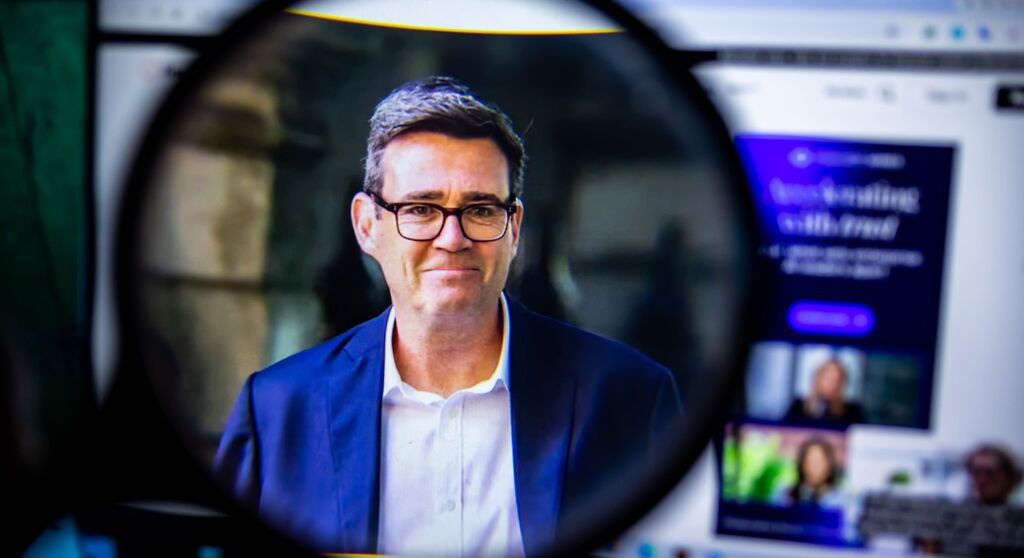
On Monday, Andy Burnham officially became Prime Minister of the UK. Where did he come from, how did he get here, and what should Christians make of the new leader of our country?
How did he get here?
Burnham was born in Aintree, a suburb of Liverpool and raised in Cheshire. He attended a Catholic high school before studying at Cambridge. He has been in politics nearly all his working life, first as a researcher for Tessa Jowell, then as a special advisor from 1998-2001 to the secretary of state for culture, media and sport.
In 2001 he was elected as the MP for Leigh in Greater Manchester. In 2005, he was promoted to the government by Tony Blair and became a Parliamentary under-secretary of state for the Home Department. In 2006, he became Minister of State for Health. And then in 2007 he was promoted to Chief Secretary to the Treasury, and followed this with roles as Secretary of State for Culture, Media and Sport and Secretary of State for Health.
He stood as a candidate for Labour leadership in 2010, losing out to Ed Miliband. He served as Shadow Secretary of State for Health until late 2010, when he moved to the shadow education brief. He then returned to the shadow health brief in 2012. In 2015, he ran again for leader, losing out to Jeremy Corbyn. He served as shadow home secretary under Corbyn before standing down as an MP in 2017 so he could run as Labour’s candidate for the Manchester mayoralty, which he won.
As Mayor of Greater Manchester, he is credited with overseeing an infrastructure boom, with new skyscrapers seen as a visual symbol of his effectiveness as a leader and administrator. During the covid-19 pandemic he was dubbed ‘King of the North’ because of his robust advocacy for Manchester.
As pressure mounted on Keir Starmer as Prime Minister, Burnham expressed a wish to stand as MP in the Gorton and Denton by-election in February 2026, but was blocked by Labour’s National Executive Committee. He stood in, and won, the Makerfield by-election in June, paving the way for him to stand for leadership of the Labour Party and Prime Minister.
What has he said about Christianity?
In 2015, he gave an interview for Huffington Post where he said he had lost his Catholic faith because of the Church’s ‘obsession with sexuality’.
He said: “I’m a Catholic by upbringing, but I’m not particularly religious now. But because of my background, when I voted it always caused a kind of tension in terms of people I know, friends, family so I do find it fairly hurtful when people accuse me of lacking commitment [to gay rights – he once voted for an amendment seeking to put a named father on IVF registrations].”
He also said, “Catholic social teaching underpins my politics, we did have the read the catechism at school, but it is powerful and strong and right.”
What are his views on some key issues?
He has identified as a socialist and is generally seen as being on the soft left of the party. He has talked about being in favour of an ‘aspirational socialism’ which is redistributive, collectivist and internationalist.
More specifically, Burnham is in favour of assisted suicide for terminally ill adults. He abstained on the issue in 2015 when the Commons voted, but in 2024 said his stance had changed. Post-pandemic, he urged Manchester church leaders to work together in unity, with the civic authorities to help the region recover from the economic and social fallout thanks to covid-19.
On the issue of transgenderism, Burnham has been urged to clarify his stance. In 2022 he said a trans-man should be able to use a woman’s only space. He has, however, recently backed new Equality and Human Rights Commission guidance on single-sex spaces which says toilets and changing rooms must be used on the basis of sex. On an issue like gambling, he has led coalitions calling for tighter regulation of the gambling industry and he has also said he supports an age-limit of 16 for social media use and a ban on phones in schools.
On immigration, Burnham is reportedly set to back the current changes made by the Home Secretary Shabana Mahmood. He has spoken about the need for the UK to take a ‘tougher grip’ on immigration. On child poverty, he has called the two-child benefit limit the 'worst of Westminster'.
Some reflections
From an evangelical Christian perspective, Burnham’s change of mind on assisted suicide is deeply disappointing. However, his recent shift in thinking on the issue of single-sex spaces is broadly positive and he clearly recognises the need for tougher gambling laws and stronger controls at the border.
The Bible lays great stress on honesty, integrity and a commitment to justice. I think we can see traces of these characteristics in Burnham. He is not perfect, nor is he the political messiah that some seem to view him as. On this the Bible is clear: only Christ is the perfect man and only Christ is the messiah we, and our country, needs.
Share