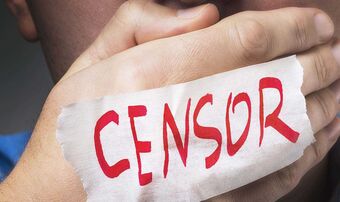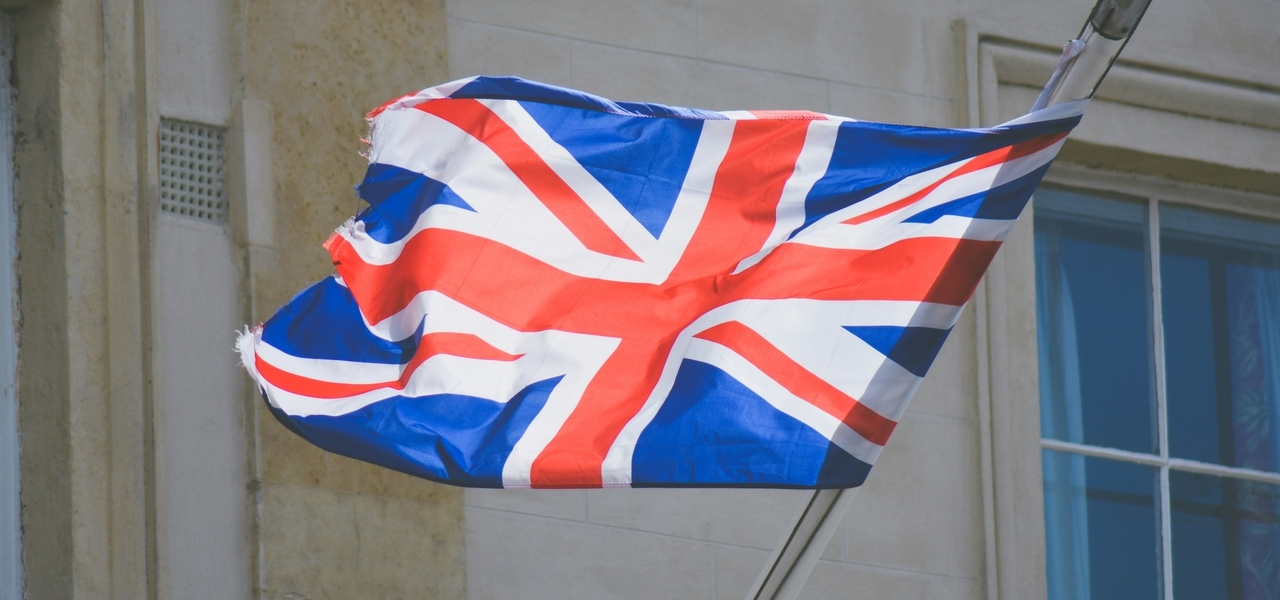

“Free speech is at the lowest ebb it has been in Britain since the eighteenth century,” according to the founder of the Free Speech Union, Lord Young. Concerns about freedom of speech in the UK have also been raised across the Atlantic, with the U.S. Vice-President, J.D. Vance saying that “there have been infringements on free speech that actually affect not just the British … but also affect American technology companies and, by extension, American citizens.”
Both Vance and Young raise serious questions about the freedom of speech in this country. But are they right to be pessimistic, and what is the state of free speech across the UK?
Free speech in the UK
The reality is that we have a great deal of freedom as Christians in Britain. Churches are free to meet and worship, it is not illegal to follow Jesus, and we are able to speak the gospel to our friends and neighbours. This is not the case in many countries across the world, such as North Korea, where being found to be a Christian means immediate imprisonment or execution for you and your family. Openly following Jesus is impossible in countries such as Somalia, Sudan, and Yemen. In many other countries only tightly-controlled state churches are allowed and evangelical Christians are persecuted. No country within Europe makes on to Open Door’s World Watch List of the top 50 most dangerous places to be a Christian.
The Human Rights Act 1998 established in UK law Article 10 of the European Convention of Human Rights. This states that “everyone has the right to freedom of expression.” This right includes freedom to hold opinions and to communicate them without interference. While there are some limits to this right, particular where it applies to libel and inciting violence, this law gives each person the ability to criticise and critique governments and religions. It allows us to speak the gospel with gentleness and respect, just as God’s word tells us to do (1 Peter 3:15).
Britain not only has good protections for freedom of speech, but it is a strong advocate for these protections in other countries too. The UK has a Special Envoy for Freedom of Religion or Belief, a post currently held by Labour MP David Smith. Smith is a long-standing member of Christians on the Left, and has worked for both the Bible Society and Tearfund. The Special Envoy’s role is to champion Freedom of Religion for everyone worldwide, alongside the UK’s other diplomatic and human rights work.
The UK has enviable freedom of speech for Christians, and much to be thankful for. Nevertheless, Christians should also be alert to the ways in which freedoms can be attacked and eroded, and the issues that cause people to wonder about a reduction in free speech.
The rise of cancel culture
Some of the criticism of free speech in the UK has come as a result of ‘cancel culture’. This is where someone expresses a view that is socially unacceptable (such as being critical of transgender ideology) leading to them being ‘cancelled’. Cancelling could involve un-inviting a visiting speaker to an event, refusing to cast or book an actor or entertainer, or even removing someone from their post. Many people have called on J.K. Rowling to be ‘cancelled’, for example, because of her views on gender, leading to people boycotting her works and even burning copies of the Harry Potter books.
Cancel culture threatens freedom of speech by only allowing those who agree with the cultural consensus to be heard. Those who have different views, which might be seen as offensive to some, are refused a platform. The term ‘cancel culture’ was first used by newspapers in 2018 and is increasingly part of the cultural landscape. Lawyer Jon Holbrook, who was cancelled from a 30-year legal career for speaking critically about Muslims, traces its start back to the first ‘hate speech’ laws in the UK in 1965. He advocates for the repeal of hate speech laws which he regards “as the skeleton around which cancel culture has grown” and only criminalise “speech that genuinely incites violence”.
Universities and free speech
Cancel culture has greatly affected universities, where certain lecturers have been refused speaking opportunities because of their views on various issues – a practice commonly known as ‘no-platforming’. Research by the Office for Students in 2025 found that many academics did not feel free to speak about controversial topics and a number self-censor. At the same time, students value protection from discrimination over unlimited free speech.
Gender-critical academic, Kathleen Stock, is one example of an academic who has been affected by no-platforming. She left her job with the University of Sussex after student protests over her book, where she questioned the idea of gender identity as more important that biological sex. The university was fined £585,000 over failing to uphold free speech, a fine which was later overturned at appeal. In 2023 students in Oxford protested Stock’s talk at the Oxford Union, saying that her views were transphobic.
In 2021 the Conservative government passed the Higher Education (Freedom of Speech) Act, which then got Royal Assent in 2023. Among other measures, it created the role of Director for Freedom of Speech and Academic Freedom, commonly known as the ‘free speech tsar’. Professor Arif Ahmed was the first person appointed to that role which oversees the performance of the Office for Students (OfS) with regard to freedom of speech. When he was appointed, Ahmed wrote in the Times newspaper: “Free speech for just one side is not free speech at all. Free speech for all sides benefits all sides.”
In 2026, the Labour Government introduced a new complaints system which comes into force in the next academic year. This allows university staff to take complaints over free speech directly to the OfS. Academic institutions could then be fined £500,000 or 2% of their income if the OfS finds they have failed to protect free speech.
Conversion therapy
In the 2026 King’s Speech, the Labour Government introduced a ban on forms of conversion therapy which was one of their 2024 manifesto commitments. The details of the draft legislation have subsequently been released, which aims to outlaw “abusive conversion practices”. Concerns have been raised about this legislation and how it applies to freedom of speech. While coercive and abusive practices should be opposed, the breadth of the draft Bill could criminalise people expressing gender-critical views, or speaking about Biblical teaching on sexuality. The law is currently in draft form, and will be considered by committee before coming before Parliament.
Abortion buffer zones
In 2024 the new Labour Government brought in ‘safe access buffer zones’ around abortion clinics in England and Wales. This made it illegal for “anyone to do anything that intentionally or recklessly influences someone’s decision to use abortion services, obstructs them, or causes harassment or distress to someone using or working at these premises” within a 150 metre radius of an abortion service provider.
Similar rules have been passed in Scotland and in Northern Ireland. Buffer zones are intended to remove harassment, abuse, and intimidation toward those using, or working in, an abortion clinic. However, they have been criticised for criminalising those involved in peaceful protest and even prayer. Isabel Vaughan-Spruce was arrested for simply praying silently within a buffer zone without carrying a sign or engaging in verbal protests. 75-year-old Rose Docherty has been arrested more than once for standing in a buffer zone silently holding a placard with the words “Coercion is a crime, here to talk, only if you want.“ MSP Gilliam Mackay, who drafted Scotland’s buffer zone law, said about the arrest: “This kind of intimidation has no place in a modern or progressive Scotland.”
Free speech and violence
In July 2024, in the wake of the Southport attack where three children were killed, childminder Lucy Connolly posted on the social media platform X: “Mass deportation now, set fire to all the … hotels … for all I care, while you’re at it take the treacherous government and politicians with them. I feel physically sick knowing what these families will now have to endure. If that makes me racist so be it”.
Connolly, whose husband is a Conservative town council member, pleaded guilty to inciting racial hatred and was sentenced to 31 months in prison. She was released after serving 40% of her sentence, and said that she felt she was the Prime Minister’s ‘political prisoner’. Some have questioned the harshness of Connolly’s sentence, with Kemi Badenoch saying that it was “harsher than the sentences handed down for bricks thrown at police or actual rioting”.
When Keir Starmer was asked about Connolly’s sentencing at Prime Minister’s Questions in May 2025 he said: “I am strongly in favour of free speech; we've had free speech in this country for a very long time and we protect it fiercely. But I am equally against incitement to violence against other people. I will always support the action taken by our police and courts to keep our streets and people safe.”
Free speech and gender
Gender-critical views are often called out in the press and on social media as unacceptable. Figures like JK Rowling, who has spoken out on gender issues, are labelled as ‘transphobic’ and boycotts have been organised against their work. Nevertheless the ability to speak critically about gender, and the view that sex is defined by biology rather than choice, is possible under UK law. In 2021 Maya Forstater won an employment tribunal that established gender-critical views are protected under the Equality Act 2010.
The writer and comedian, Graham Linehan, has frequently spoken out against transgender ideology. His stated aim is: “To reveal the havoc gender identity had wrought on society, expose those who had enabled it and help bring about its end.” His unapologetic gender-critical views have made him a target, and he has found himself cancelled in various ways.
In 2025, Linehan made a series of posts on the social media platform X expressing gender-critical views. One read: “If a trans-identified male is in a female-only space, he is committing a violent, abusive act. Make a scene, call the cops, and if all else fails, punch him”. As a result, Linehan was arrested by five armed police officers as he disembarked from a flight at Heathrow Airport. The police confirmed that he had been arrested on suspicion of inciting violence.
Linehan’s arrest caused some to raise questions about the legitimacy of policing social media posts, including the Home Secretary, Shabana Mahmood. “Some things cannot be legally tweeted just as they cannot be legally said,” she remarked, “But we should not be policing perfectly legal language in any individual’s tweets”.
The Metropolitan Police have subsequently apologised to Linehan after he initiated legal action against them. He was also awarded £25,000 in compensation. The Met Police have also stated that they will no longer investigate ‘non-crime hate incidents’ and the Home Secretary has said that officers will no longer be “policing tweets rather than the streets”.
Palestine Action
In June 2025, members of the group Palestine Action broke into an RAF base and spray painted two military planes. The Home Secretary at the time, Yvette Cooper, proscribed the group under anti-terror laws. This made membership and support of the group illegal, punishable with up to 14 years in prison.
The group challenged this decision in the High Court, and in February 2026 the High Court ruled the proscription unlawful. In June the Government won an appeal meaning that Palestine Action remained a terrorist organisation. Former Scottish First Minister Humza Yousaf said that the proscription was a “shameful abuse of anti-terror legislation” and an attempt "to intimidate and ultimately silence protestors". Labour MP Nadia Whittome said that it set a “dangerous precedent, which governments in future could further use against their critics.”
Organisations such as Amnesty International have condemned the outlawing of Palestine Action and the effect that this has on free speech. “Perfectly legitimate speech and discussion of - amongst other things - protest tactics, political analysis … and even legal action, will be chilled by the risk attached to saying something that could be construed as supportive of Palestine Action’s tactics” they say, adding that it “will stymie free speech around what are some of the most pressing political and moral issues of the day.”
What the parties have to say
The Prime Minister at the time, Keir Starmer, responded to J.D. Vance’s comments in February 2026 when speaking in the Oval Office with Vance and President Trump. “We’ve had free speech for a very, very long time in the United Kingdom, and it will last for a very, very long time,” he said.
During Donald Trump’s visit to the UK in September 2025, Keir Starmer went on to say: “Free speech is one of the founding values of the United Kingdom, and we protect it jealously and fiercely and always will. And we will bear down on any limits of free speech.” Starmer has also spoken about the boundaries of free speech, saying: “I draw a limit between free speech and the speech of those that want to peddle paedophilia and suicide (on) social media to children”. Speaking about non-consensual explicit images, he said: “Free speech is not the freedom to violate consent. Young women's images are not public property, and their safety is not up for debate.”
Incoming Prime Minister, Andy Burnham, has said little about free speech and it is not clear what policies he may pursue. He has said that he will work within Labour’s 2024 manifesto promises, which included a ban on conversion therapy.
Conservative leader Kemi Badenoch has spoken about how her views of freedom of expression were “formed growing up in a country where speech was suppressed, often violently, and sometimes by the state” as a child in Nigeria. She has argued that freedom of speech has been attacked and needs protecting, writing: “Free speech is not negotiable. It is the bedrock of a free nation and one of the values true liberals and true conservatives share. It is now the duty of all of us to defend it.” She went on to say that “Free speech is not a privilege granted by the state — it is the birthright of every citizen.” The Conservative Party state that they “believe in individual liberty and personal responsibility” and they have commissioned Lord Young to “examine threats to free speech in everyday life”.
Reform leader Nigel Farage has gone on the record saying “At what point did we become North Korea?” when asked by a US congressional committee about freedom of speech in the UK, and spoke about “the really awful authoritarian situation that the UK has sunk into”. Reform’s policies say that “Reform UK will defend free speech”, adding that “Religious freedom is a core feature of our culture, but our culture is built upon Christian values. Those will be protected and celebrated.”
The Liberal Democrats said in their 2024 manifesto that they “exist to build a free society where every person’s rights and liberties are protected.” However, they have also stated that they aim to ban “all forms of conversion therapies and practices” and enforce ‘safe access zones’ around abortion clinics. The Green Party also said in their manifesto that their MPs “will always defend our democratic and human rights” without spelling out how this will work in practice.
Conclusion
Whether free speech is at its lowest ebb is a matter for debate. What is clear is that there are still issues of freedom of speech to fight for. We have laws that protect free speech, but those laws can be changed or eroded. The ability for Christians to speak Biblical truth, whether about sexuality, gender, or the basic truths of the gospel, is something precious that is worth protecting. At CARE, we want to ensure that there is freedom of speech for all, including, most importantly, the freedom to speak about our glorious God.