
In February 2025, the American Vice President JD Vance stunned onlookers at the Security Conference in Munich by openly criticising the United Kingdom for its perceived failure to defend free speech, particularly for Christians. Mr Vance had been expected to speak about potential routes to end the war in Ukraine. Instead, he said:
“Perhaps most concerning, I look to our very dear friends, the United Kingdom, where the backslide away from conscience rights has placed the basic liberties of religious Britons, in particular in the crosshairs. A little over two years ago, the British government charged Adam Smith-Connor, a 51 year old physiotherapist and an Army veteran, with the heinous crime of standing 50m from an abortion clinic and silently praying for three minutes, not obstructing anyone, not interacting with anyone, just silently praying on his own.”
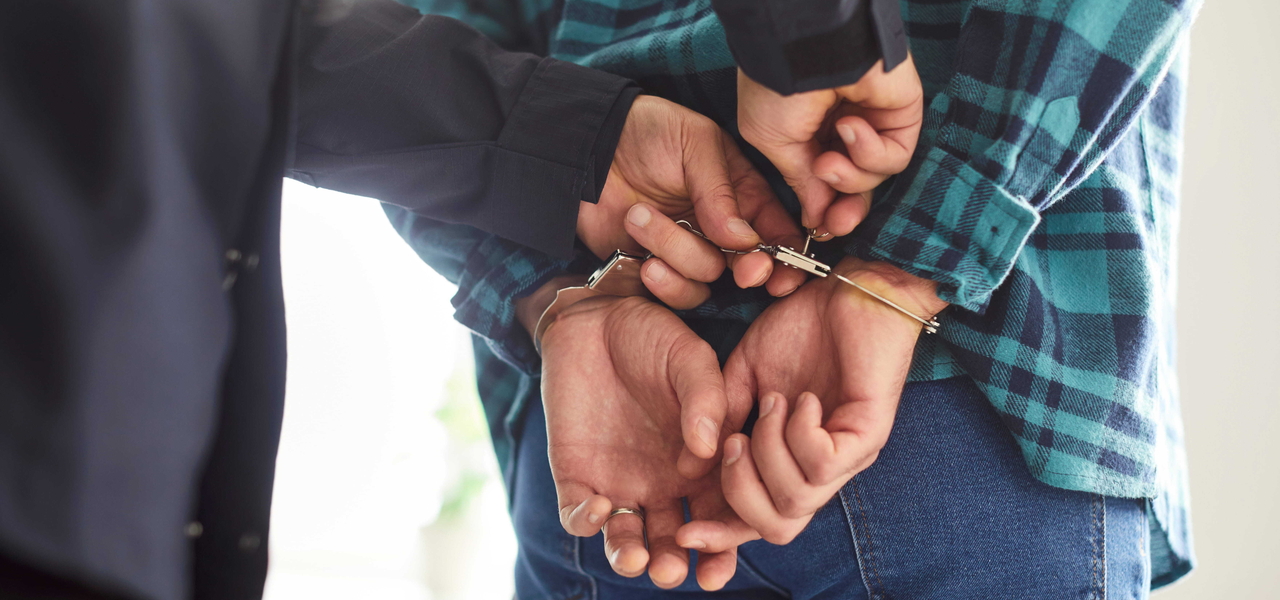
Adam Smith-Connor had been arrested in November 2022 by police officers who had asked him ‘What is the nature of your prayer?’. At the time, he had been standing in a buffer-zone area, a 150-metre area around an abortion clinic in which trying to influence a woman looking to access an abortion is banned. He was charged, prosecuted and convicted at Poole Magistrates Court in October 2024.
Smith-Connor’s case is not an isolated incident; in recent years, concerns have arisen around free speech in a number of contested areas, including in discussions around abortion, sexuality, gender, and the freedom to criticise Islam. Sometimes this has occurred within the context of street-preaching, or other public activity (such as prayer); in other cases, however, this has occurred within the workplace, resulting in the loss of jobs.
There is no Biblical right to freedom of speech. Jesus expects the values of Christians to clash with the values of the world, and for people to not like what Christians have to say. The New Testament in particular gives examples of people whose freedom of speech was curtailed as they tried to preach the gospel. But regardless of whether freedom of speech should be an expectation, it is generally agreed that it is a good thing for a society (including by non-Christians, who were themselves freed from the threat of persecution by the historic overturning of blasphemy laws).
So what does the evidence actually reveal? Here is a quick run-down of some of the key areas to be aware of in the quest to preserve Christian freedom-of-speech…
The right to free speech in the UK
In some countries around the world, it is illegal to be a Christian, or it is heavily suppressed: areas like North Korea, Somalia, Yemen, or parts of Nigeria are among the most difficult areas of the world to be a Christian. Of course, it’s not just Christian faith, or other religious beliefs, which can be banned. Autocratic regimes censor foreign media; dictatorships silence contrary viewpoints and imprison opponents; even peaceful marches can be brutally suppressed. The Ugandan dictator Idi Amin once warned ominously: “There is freedom of speech, but I cannot guarantee freedom after speech.”
Those are not the challenges we have in the UK. Freedom of Speech is guaranteed in Britain by Article 10 of the European Convention of Human Rights, which states that anyone has the right to “impart information and ideas without interference by public authority”. This is not an absolute right: there remain some limits to it, such as around libel or inciting violence, and we would support those limits. But by law, we are able to criticise governments, philosophies and religions here in the UK.
In fact, the UK is one of the most prominent defenders of the freedom to publicly be a Christian in the world, as a strong advocate for the right to freedom of religion, not just at home but across the world. The UK has had a Special Envoy for Freedom of Religion or Belief since 2018, a role which focuses on advocating for religious freedom globally, addressing issues like persecution and discrimination based on belief: the current special envoy is the Labour MP David Smith.
Street-preaching
Occasionally, there have been well-publicised cases where street preachers have been asked to move, or sometimes, arrested. It is worth recognising that this is rare: Section 29J of the Public Order Act makes it clear that it is lawful to urge people to change their religious beliefs, or to criticise other beliefs or religions.
In general, the most likely ways someone can fall foul of the law are under Section 5 (which prohibits using threatening or abusive words in the presence of someone who is “likely to be caused harassment, alarm or distress”) or under Section 4A (which criminalises “threatening, abusive or insulting words or behaviour” when someone has intended to cause a person harassment, alarm or distress, such as by singling them out). Of course, privately-owned land (such as shopping centres) may have specific guidelines in place.
When incidents have occurred, this has often occurred within the context of looking to protect other marginalised groups, or balancing competing rights. This has particularly been the case around the issue of human sexuality. Although the Bible has much to say about the subject of our sexuality, it is not necessarily wise - or a fair reflection of its place within the Gospel narrative - to put it at the centre of a public gospel presentation, rather than the story of the life, death and resurrection of Jesus.
However, the police will not always apply the law perfectly either: one client of the Christian Legal Centre, Michael Overd, was initially arrested while preaching in Taunton. At one point in his address, he pointed to two men, and said: “Even these dear men caught in homosexuality, if they ask God for forgiveness of sin can be forgiven their sin; God loves them that much.” When they complained to the police, he was charged under Section 5 of the Public Order Act for using words which allegedly caused harassment, alarm or distress, only to later be acquitted, as the magistrates found that he did not intend to cause harassment, alarm or distress.
Sexuality
Many of the worries around free speech being impacted in the UK are around Christian teaching on sexuality being criminalised, and in particular, around homosexuality. In recent years, successive governments have promised a full ban on conversion-therapy practices, which attempt to change or suppress someone’s sexuality or gender identity.
Historically, some conversion therapy practices have not only inflicted a lot of pain (not just mental, but in some cases, physical) upon LGBT people. In 2025, the BBC ran a story entitled ‘LGBT survivors tell of ‘barbaric’ NHS shock therapy’: the article tells of horrendous abuse which was inflicted upon more than 250 people in NHS hospitals between 1965 and 1973, as they were treated with electric shocks, to try and make them associate same-sex-attraction with physical pain. One survivor said that the shocks were so severe that they lost consciousness and woke up in hospital three days later.
Christians can and should speak out against abusive practices wherever they are found, and thankfully, the law has changed substantially in recent decades. Cases like the ones covered in the BBC article are already covered by existing legislation. However, some LGBT campaigners suggest that the law does not currently go far enough.
What counts as conversion-therapy today has proved difficult to define: while the term still has connotations of practices like electro-shock therapy for some, or physical violence or food deprivation, other campaigners associate it particularly with religious contexts, such as exorcism. Others are keen to expand it to cover activities like prayer, or talking therapies.
It is important for Christians to understand what the Bible does - and does not - say about sexuality and same-sex-attraction. In every area of life, Christians have generally drawn a distinction between temptation and action: no Christian (no matter how conservative) should ever condemn someone for simply being attracted to someone of the same sex. It is also important to stress that the goal for every Christian (including those who are homosexual) is not heterosexuality: it is holiness in every part of life (including how we use our sexuality), and to become more like Jesus. Although some people have spoken about how their experience of sexuality has been fluid, many others have found the experience of trying to change their sexual orientation to be painful, and the Bible does not tell people to do so.
It is completely legal to talk about the restrictions Jesus places around how we all (whether heterosexual or homosexual) use our sexuality. However, it is also right to be alert to potential dangers around free speech in this area.
Several religious groups have warned that a conversion therapy ban which would encompass any activity which could be interpreted as seeking to change someone’s sexuality would be unworkable and could undermine traditional teaching around sex being reserved for the context of marriage between man and woman. In the most extreme cases, people have warned that it could even potentially criminalise parents who are merely trying to have a conversation with their children. So far, no government in the UK has introduced such a ban.
Transgender
Currently, the debates around how to interact with transgender people are perhaps the most prominent area in which free speech has been called into question.
In one particularly well-known case, a Christian nurse was suspended following her use of the ‘wrong’ pronouns for a transgender patient, who was an inmate from a high-security men’s prison, and was listed as male on their medical record, but identified themselves as female. Ms Melle reportedly said to the patient: “Sorry I cannot refer to you as ‘her’ or ‘she’, as it’s against my faith and Christian values, but I can call you by your name”, only for them to respond by subjecting her to racial and religious aggravated assault, lunging at her and repeatedly using racial slurs.
Ms Melle was initially given a written warning by her NHS Trust, but after speaking to the press about the incident in March 2025, was suspended over concerns about patient confidentiality. She has since been told she will face no further action over patient confidentiality and been reinstated to her role, and is taking the NHS Trust to a tribunal in 2026, claiming that she has faced harassment and discrimination over her views on gender and her Christian beliefs.
But of course, it is not just Christians who have been at the centre of controversies in this area. In September 2025, a story broke about how Graham Linehan, the creator of the sitcom ‘Father Ted’, had been arrested by five armed police officers at Heathrow over three gender-critical social media posts. The arrest sparked widespread backlash: the Metropolitan Police Commissioner Sir Mark Rowley called for urgent reform, saying officers should not be tasked with policing “toxic culture wars”; Health Secretary Wes Streeting said that he wanted to “police streets, not tweets”; public figures like JK Rowling and Elon Musk condemned the arrest, with Musk calling it “totalitarianism” and labelling the UK a “police state.”
In a similar way to questions around sexuality, some LGBT campaigners have suggested that a ‘full’ conversion therapy ban ought to include attempts to change someone’s gender identity, but this is generally viewed as even more difficult to introduce, and could risk criminalising talking therapies, which is the treatment which the Cass Review in 2024 suggested would be most helpful for children and teenagers questioning their gender.
Although lobby-groups have tried to suggest otherwise, gender-critical beliefs (believing in the primacy of biological sex over gender identity) are protected by UK law, as confirmed by the Forstater case in 2021, and a number of employers have been successfully sued for discriminating against them.
The pendulum has swung in recent years back towards the primacy of biological sex: in March 2025, the University of Sussex was fined £585,000 by the higher education watchdog for failing to protect free speech in the case of gender-critical academic Kathleen Stock. The investigation, which lasted three-and-a-half years, concluded that Stock “felt unable to teach certain topics” due to the university’s policies. The Office for Students (OfS) found that the university’s transgender policy had a “chilling effect” on lawful debate, leading staff and students to self-censor.
Ultimately, in April 2025, the UK Supreme Court Judgement ruled that the terms "woman" and "sex", as used in the Equality Act 2010, referred to biological women and biological sex.
Abortion
As mentioned earlier, the creation of abortion buffer-zones has seen much criticism in the UK, particularly from the USA; in 2023, a national buffer zone law was passed in England and Wales to ensure that abortion facilities have exclusion zones in place, making it an offence to influence, obstruct or harass a woman seeking an abortion within 150 metres of an abortion clinic.
Peaceful vigils are not allowed within an exclusion zone, and the police have arrested people for silent prayer within zones, although cases are still being appealed and disputed. Similar laws were introduced in Northern Ireland in 2023 and in Scotland in 2024.
Although it may be seen as an overreach by the Government to introduce such rules around abortion clinics, it is important to recognise - whether we agree with the law or not - that it represents an attempt to balance the needs of competing groups: holding in tension the right of religious groups to free speech with trying to protect women who are undergoing what can be a traumatic procedure. Buffer zones do affect prayer within a particular, localised area: however, Christians remain free to pray about abortion in every other area.
However, it is also important to be aware of the ways in which this legislation could be abused: in one particularly extreme case (currently ongoing), a retired church minister was threatened with prosecution by the police over preaching an open-air sermon on John 3:16 within a buffer-zone on a Sunday morning, despite not mentioning abortion at all.
He is being supported by the Christian Institute, whose Deputy Director, Simon Calvert, commented: “Speech that has nothing to do with abortion should not be criminalised as if it is an anti-abortion protest. This is fundamentally unjust. If prosecutors succeed in getting a conviction against Clive for preaching about God’s love, what will that mean for other forms of non-abortion-related speech in these zones? Could people outside a hospital protesting health service cutbacks or junior doctors’ pay be prosecuted?...The authorities do not seem to have thought through the human rights implications of their decision to prosecute.”
How should we respond?
Ultimately, Christians are currently very well-protected by law in the UK, and although it can be easy to become nervous around certain sensationalist headlines, we have much to be thankful for, particularly in comparison with Christians in other parts of the world.
This does not mean, of course, that our speech will always be popular. Even though the legal rights of Christians are currently relatively secure, we should still expect opposition to our beliefs. In recent years, free speech has become a contested issue at universities in particular, where students have complained that they feel unsafe hearing certain beliefs, or protested loudly around certain speakers being invited; in particular, students often practice ‘no-platforming’: a controversial policy, where a distinction is made between someone being legally allowed to speak freely, and giving them a platform to speak freely, which has often resulted in speaking events being cancelled.
Nor does it mean that the law will always be followed accurately; in recent years, a number of organisations have found themselves in hot water for incorrectly applying guidance around freedom of speech. Felix Ngole was initially expelled from a social work course at Sheffield University for posting on Facebook that believed marriage should be one man and one woman (the university argued that this should disqualify him from the profession), only for the Court of Appeal to find in his favour four years later. Similarly, Kristie Higgs, who worked as a pastoral administrator and work experience manager, was sacked after sharing Facebook posts about LGBT+ teaching: she won twice at tribunal, and in their ruling, the judges said that it was not in dispute that her beliefs around gender being binary and around same-sex-marriage were protected by the Equality Act.
Of course, the freedom to speak does not mean we should abuse it. The freedom to speak also entails the freedom not to speak. In 1 Corinthians, Paul discusses the difference between what we are free to do, and what is good for us to do: “‘I have the right to do anything,’ you say—but not everything is beneficial. ‘I have the right to do anything’—but I will not be mastered by anything.” (1 Corinthians 6:12). Christians are called to speak with both grace and truth, as Jesus himself did. Our speech should be for the benefit of others, for their encouragement, and for loving challenge. We are not to seek to deliberately or needlessly cause offence: Paul writes in Colossians 4:6: “Let your conversation be always full of grace, seasoned with salt, so that you may know how to answer everyone.”
So is Christian free speech in the UK under threat? Ultimately, across a range of areas, Christians should not fall foul of the UK’s laws around freedom of speech: they are designed to only criminalise behaviour which is abusive or deliberately insulting. Instead, we are blessed to live in a country where freedom of speech is, by and large, protected. But that does not mean we should just speak whatever we like unthinkingly, without any regard for those around us. Let us make it our aim, in both our words, and in the setting and tone in which we deliver them, to imitate Jesus, in whose mouth no deceit could be found.