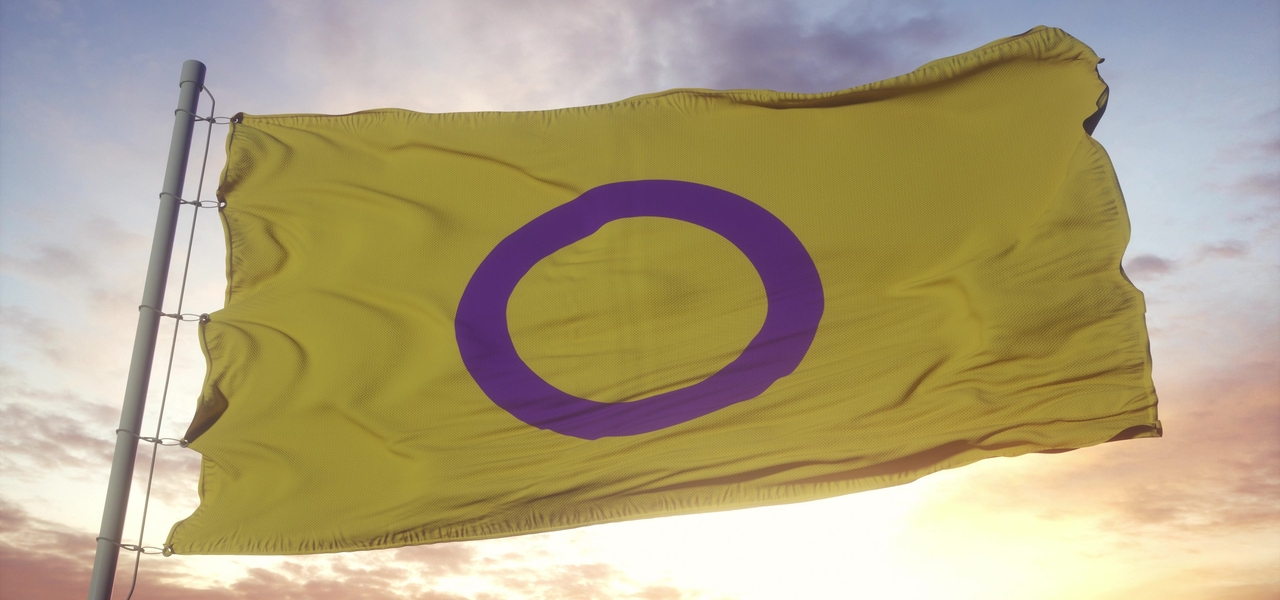

You may not realise it, but you have probably met someone who technically qualifies as intersex. But what might be even more surprising is this: they probably don’t know they qualify either…
Intersex people have been known about for thousands of years - the Greeks and Romans told a myth about the character ‘Hermaphroditus’, who was born with both male and female genitalia - but in recent years, the debates around how best to integrate them into society have become more prominent. The acronym ‘LGBT’ is often expanded to include them, sometimes being called ‘LGBTQIA+’. Intersex sportspeople, such as the runner Caster Semenya, or the boxer Imane Khelif in the Paris 2024 Olympics, have hit the news over their levels of testosterone and fairness in women’s sport.
This has particular significance when it comes to questions around gender ideology, in which the existence of intersex people can be held forward as a ‘gotcha’ argument to shut down discussion. If sex is not a simple binary, some activists claim that this proves the existence of a third category, and that this should be linked to the spectrum of people’s self-identification around their gender. If someone does not identify as male or female, or if their gender identity does not align with their birth sex, this should not come as a surprise, they say, for maleness and femaleness is all a spectrum (rather than being a choice of two), and spectrums can be fluid.
Although we have placed this article in the Transgender section of our website, this more reflects how the topic can be weaponised in that particular debate, as in reality, the two topics are different. One relates to observable, physiological differences, such as those rooted in chromosomes; the other, to inner, mental self-conceptions around identity. The intersex activist Claire Graham writes: “Stop using me as a weapon in your pursuit of a political, not scientific, ideology. You are not helping the intersex community. You do us more harm than good.” She continues: “Every single intersex org has been clear that intersex is nothing to do with gender nor identity”.
So what story does the Bible tell about sex and gender? Does the Bible recognise the existence of a third type of sex? And what guidance can it offer to people who are intersex, some of whom might feel understandably confused about their identity and their place in the world which God has made?
What does it mean to be intersex?
The term intersex actually refers to a range of genetic conditions experienced by people, which are known as Disorders (or Differences) of Sexual Development (DSDs). There are at least 16 types of DSD, and not all are equally severe.
People sometimes suggest that around 1.7% of the population is intersex (meaning that they experience one of these DSDs), as a way of normalising it. This claim originates with Anne Fausto-Sterling, in her book ‘Sexing the Body: Gender Politics and the Construction of Sexuality’, and has been repeated several times since.
By far the most common form of DSD (representing 88% of them) is Late Onset Congenital Adrenal Hyperplasia (LOCAH), which affects 1.5% of the population. This is an extremely mild form of a DSD, and the vast majority of people with it will be completely unaware they have it; there are no ambiguities over genitals, and men and women will look like men and women, and be classified as men and women. The most common symptom in males is a thinning scalp. The most common symptom for women is a larger clitoris than normal.
It cannot be stressed enough that the substantial majority of people who have a DSD are clearly male or female: other common DSDs are Klinefelter Syndrome (1 in every 1,000 births), Turner Syndrome (1 in every 2,700 births), and Vaginal Agenesis (1 in every 6,000 births). Even then, some of these DSDs are sexed: Klinefelter syndrome only occurs in biological males, and Turner Syndrome in biological females. These may result in symptoms like infertility, or some atypical features in chromosomes, but there is no ambiguity in the person’s biological sex. In total, those with mild DSDs make up around 99% of intersex people. Emi Koyama, founder of the Intersex Initiative, writes, “[M]ost people born with intersex conditions do view themselves as belonging to one binary sex or another. They simply see themselves as a man (or a woman) with a birth condition like any other.”
However, for a small handful of people, things are more complicated: more severe conditions include Congenital Adrenal Hyperplasia (CAH) (1 in 13,000 births), Complete Androgen Insensitivity Syndrome (CAIS) (1 in 13,000 births), Partial Androgen Insensitivity Syndrome (PAIS) (1 in 131,000 births), and Ovotestes (1 in 80,000 births). For example, Androgen Insensitivity Syndrome affects people with XY chromosomes, and so is genetically male, but develops female anatomy.
This does not mean that there is a third type of sex, however. Where there are varieties in sexual development, these are varieties upon X and Y, rather than a different type of being. The scientist Richard Dawkins - certainly no friend of Christianity! - explains: “[Sex] is universally DEFINED by the binary distinction between sperms and eggs. You may argue about “gender” if you wish (biologists have better things to do) but sex is a true binary, one of rather few in biology.”
In the vast majority of cases, people with a DSD are clearly male or female, and even in cases where things are more ambiguous, there normally tends to be a prevalence in one direction or the other. However, there are people for whom things are genuinely unclear, and it does no one good to pretend that this doesn’t exist. The fact is that for some, their sex is genuinely unclear, and this can then have a knock-on effect on how they perceive their identity, and how others relate to them. Some attest to how they knew they were different, or loathed their body, or were treated badly by others because of this ambiguity.
As Christians, we are called to have compassion for all those who are in distress, and we should not pretend there are simple answers to complicated questions. And we must always be mindful to treat people as people, rather than issues. Intersex people can be kicked around like a political football, or find that all people are interested in is what is between their legs. The Bible should point us in a different direction: to love them, to walk with them through any confusion or pain, and to value and cherish them as people who are loved and created in the image of God.
What does the Bible say about the binary of the sexes?
“So God created mankind in his own image, in the image of God he created them; male and female he created them.” (Genesis 1:27)
Although many people will just assume the binary of the sexes, the Bible has much to say about it. In Genesis 1, where we encounter God’s creation design, we read that God created humans as “male and female”, rather than “male and female and something else”. In Genesis 2, we receive an additional insight into the complementarity of the sexes; after Adam is unable to find a suitable helper from among the animals, God puts him to sleep, takes a rib from his body, and fashions a woman. The Genesis account stresses both similarity and difference, as Adam responds in song: “This is now bone of my bones and flesh of my flesh; she shall be called ‘woman,’ for she was taken out of man” (Genesis 2:23). The account finishes by talking about the reuniting of man and woman into one flesh, in what we know as marriage.
It is important to respond to one particular argument which is put forward sometimes by activists around the Genesis account. Genesis 1 is rooted in binaries: day and night, land and sea, or male and female. This does not mean that this list is comprehensive, or that boundaries are never blurred. When does day become night? Surely dawn, or sunset, are also part of God’s good creation? A few years ago, I learnt the difference between Civil Twilight, Astronomical Twilight, Nautical Twilight, and Night (who knew?).
The Genesis account is not fully comprehensive of every variety, but it talks in broad brush-strokes to convey that these clear contrasts are part of God’s good design. The rest of the Bible contains prohibitions on the mixing of men and women, whether it be in clothing (Deuteronomy 22:5) or appearance (1 Corinthians 11:14), and at times, the Bible writers offer gendered instructions (eg. 1 Peter 3, Ephesians 5). Paul may have written that “in Christ there is neither male nor female” (Galatians 3:28), but this is not some destruction of the gender binary, for this is the same Paul who showed he believed in the creation order (Romans 1:18-32, 1 Timothy 2:8-15).
And indeed, the person who truly illustrates how the pattern laid out in Genesis is normative for today is Jesus himself; in Matthew 19 (in which Jesus will go on to talk about eunuchs), he responds to a question about marriage and divorce from the Pharisees: “Haven’t you read,” he replied, “that at the beginning the Creator ‘made them male and female,’ and said, ‘For this reason a man will leave his father and mother and be united to his wife, and the two will become one flesh’? (Matthew 19:4-5). Being male and female, for Jesus, is part of the created order.
So what can we say, then, about when people exhibit characteristics from both sexes? Perhaps, rather than saying that they are neither male nor female, we need to be more careful with our language. The pastor Preston Sprinkle explains helpfully:
“When it comes to the more severe DSDs experienced by about 1% of all intersex persons, I’m still not sure even these should be considered outside the binary of biological sex. I find it more helpful to say that such people – beautiful people created in God’s image and worthy of respect, value, and admiration – are a blend of the two biological sexes rather than a third sex. It may sound like I’m splitting hairs, but I think this is more than semantics.
When the Bible and science talk about humans as sexed creatures, they recognize two categories of sex: male and female. If some intersex people embody traits from both categories, there are still only two categories of sex.
For example, non-intersex males have a penis and non-intersex females have a vagina. Most males and females with an intersex condition also have a penis or a vagina, while some intersex persons have both a penis and a vagina. But no intersex person has an innovative new sex organ called a ‘plankerton’ (or whatever) that’s neither penis nor vagina, neither male nor female. They may have atypical features in their male or female anatomy, or they might have a blend of male and female parts. But this doesn’t mean there are more than two biological sexes. It seems more accurate to say that some people exhibit a combination of both – the only two – biological sexes.”
What about eunuchs?
One particular group of people in the Bible is particularly worth considering for their relevance in this discussion. In both the Old and New Testaments, we read about eunuchs, who were usually castrated males, a common practice in the ancient world.
The first time we encounter the Hebrew word for ‘eunuch’ is in the Joseph-narrative, where it is applied to Potiphar (who is actually married). Eunuchs were often used to look after the royal harem, due to sexual impotence (eg. Esther 4:4). The Jewish people themselves did not practice castration, but the Old Testament law initially banned eunuchs from entering the assembly of the Lord (Deuteronomy 23:1), or from serving as priests, as a sign of God’s holiness.
However, within God’s redemptive plan, there would come a day when eunuchs would be welcomed just like everyone else. God would look beyond physical defects, and at the heart. We read in Isaiah 56:4-5, “To the eunuchs who keep my Sabbaths, who choose what pleases me and hold fast to my covenant— to them I will give within my temple and its walls a memorial and a name better than sons and daughters; I will give them an everlasting name that will endure forever.” This was an utterly radical notion in a world where the status of being a eunuch was rooted in power dynamics, emasculation and exclusion: they could be fully accepted and welcomed into God’s family.
Jesus himself discusses eunuchs in Matthew 19:12, in response to questions about marriage and singleness: “There are eunuchs who were born that way, and there are eunuchs who have been made eunuchs by others—and there are those who choose to live like eunuchs for the sake of the kingdom of heaven. The one who can accept this should accept it.” The latter two categories are easy to understand: there are eunuchs who have been made eunuchs (ie. they have been castrated), and there are those who choose to live like eunuchs (ie. those who are single and celibate). However, the first group which Jesus mentions is ‘eunuchs who were born that way’. We might think of this group as people who could not marry (or be sexually active), and many have speculated that Jesus has in mind here what we think of as intersex conditions.
The question which is sometimes posed is whether the Biblical discussion of ‘eunuchs’ provides justification for there being a ‘third sex’, outside the male-female binary. However, eunuchs were typically perceived as being male; this can be seen in a number of the references just cited. Deuteronomy 23:1 refers to eunuchs as those with “crushed testicles”. Isaiah 56 talks about eunuchs complaining “I am a dry tree”, referring to infertility and not being able to pass on the family name (indeed, that is the significance of being given “an everlasting name that will endure forever”). Jesus’ own words about “eunuchs who have been made eunuchs by others” is also linked with maleness.
This view fits with the wider ancient world: the Romans had four different words for ‘eunuch’, each of which had its roots in masculinity: ‘spadones’ were infertile males from birth, ‘thlibiae’, males who had had their testicles ‘pressed’, ‘thladiae’, males who had had their testicles ‘crushed’, and ‘castrati’, from which we get the word castration, and which referred to male genitals being cut off altogether.
The ancient world undoubtedly viewed the genitals as being central to masculinity; but it is a different case altogether to suggest that this meant the existence of a completely separate sex category. Eunuchs were still defined by their link with maleness. Ancient Jews, including Jesus, would likely have been confused by our modern questions around sex and gender (or told us that we were asking the wrong questions altogether).
A better story
Traditionally, Christians have viewed intersex conditions - along with various other forms of birth conditions - as a product of the Fall. In Genesis 3, Adam and Eve eat the fruit from the tree of knowledge of good and evil, and the world plunges into a state of brokenness, from which nothing is unaffected; their relationships break down (with God, one another and the earth), their vocations break down (working and child-rearing will be more painful), and their very bodies break down (they will one day die).
As a result, things do go wrong in our world today; this is even the case with the baby in the womb; some children are born with physical or mental disabilities, from blindness, to deafness to paralysis. We would typically view these as a matter of the Fall. For others, conditions will be less severe, such as a cleft lip. This is the world in which we live: in some ways, it should be no surprise if we hear of someone being born with both XY chromosomes and a vagina.
To some extent, this is us using Scripture to ‘fill in the blanks’ in the story (the Bible never pinpoints the Fall as the explanation for the existence of intersex conditions), so we should not be overly dogmatic about it.
We also have to be extremely pastorally sensitive when we are talking about the Fall. Intersex conditions are not a matter of choice, and can understandably shape someone’s identity (and in some of the most extreme cases, it is not always clear how someone with such a condition should live). Some will have spent their lives feeling different or excluded, or feel a sense of shame. We should be very careful not to leave an intersex person with the impression that they are a product of the Fall, rather than just their DSD.
People are never a mistake; each of us has been knit together in our mother’s womb and is made fully in the image of God. Yes, some things are not as they should be (and it can be comforting to know that), but that is a symbol of the brokenness of our world; it does not mean that the person at the centre has any less value or dignity, or merits any less love.
Living in that broken world means living with tensions; although, in the vast majority of cases, it will be clear for individuals with a DSD whether they are male or female (and indeed, most will not be aware of anything being different), there will be a small minority of cases in which it genuinely is not clear. It is important that Christians behave with love and compassion in cases like this, rather than trying to impose clear-cut answers where there might be none. At the same time, given the wisdom the Bible has for us about the sex-binary, it is probably more helpful for an individual to pick one or the other, rather than seeking to deliberately play around with that binary.
For anyone who feels their brokenness (including those who feel it around a DSD), the Bible offers a vision of hope. No one is excluded from God’s family by virtue of any physical condition; all who believe are welcomed to the wedding supper of the Lamb. We are provided with a vivid demonstration of this in Acts 8, which tells the story of an Ethiopian eunuch, “an important official in charge of all the treasury of the Kandake” (Acts 8:27). Having visited Jerusalem to worship, he was now reading Isaiah 53. After the Holy Spirit prompted Philip to approach him and explain what he was reading, the eunuch was baptised and welcomed into God’s family that very day.
Intersex people are loved by a God who does not discriminate or look down upon us for what we lack, but who became one of us, entering our hurting, fallen world to make us whole. The Christian story is not one which ends in brokenness. Rather, we look ahead in hope to the day when all will be put right again and when Jesus will make all things new.