
"The Labour Party owes more to Methodism than to Marx". The adage, attributed to Harold Wilson, but probably predating him, stands in contrast to how some Christians might perceive the Labour party today, amid concerns about social liberalisation, particularly around conscience issues such as life and marriage.
Alastair Campbell's famous statement 'We don't do God' has become a byword for a lack of faith within Labour, despite the two central figures in New Labour, Tony Blair and Gordon Brown, both having some form of Christian faith themselves. But the Labour Party, just like the Conservatives, the Lib Dems and others, has indeed been shaped by Christian teaching from a variety of traditions, including Christian socialism, Catholic teaching about the common good, and yes, Methodism.
The Tolpuddle Martyrs
Many histories of the Labour Party reference the Tolpuddle Martyrs, a group of six farmers in Dorset, most of whom were Methodists (and indeed, three of whom were lay preachers). Seen today as the forerunner of trade unions, the group campaigned against the reduction in agricultural wages in 1833-4, refusing to work for less than 10 shillings/ week at a time when reductions to 6 shillings/week were being planned.
Although unionisation had been made legal in 1824, a local landowner brought a case against them. They were convicted of swearing a secret oath and sentenced to penal transportation to Australia, before eventually being pardoned and brought home amid protests and petitions in the UK a couple of years later. Through their Christian cooperation, they became local heroes and an inspiration to the wider union movement that would influence the Labour Party.
Christian socialism
Christian socialism, based around principles of co-operation and helping those most in need (and not to be confused with later forms of socialism, which have emphasised nationalisation), is thought to have begun in the 1840s and 1850s.
Adherents included: F. D. Maurice, John Malcolm Ludlow, and Charles Kingsley. Maurice was an Anglican theologian who found himself stirred by the plight of the poor in London, and who was involved in the founding of early co-operative associations. He described his political vision in these terms:
… my business … is to show that economy and politics … must have ground beneath themselves, that society is not made anew by arrangements of ours, but is to be regenerated by finding the law and ground of its order and harmony, the only secret of its existence, in God … The Kingdom of Heaven is to me the great practical existing reality which is to renew the earth and make it a habitation for blessed spirits instead of demons.
John Malcolm Ludlow, was editor of The Christian Socialist Newspaper and the co-founder of the Working Men's College, which is still active in London today. Charles Kingsley, was an Anglican priest whose well-known book ‘The Water Babies’ tells the story of a young chimney sweep and questions child labour. He once said: “Anyone who recognises the principle of co-operation as a stronger and truer principle than that of competition, has the right to the honour or the disgrace of being called a socialist”.
Catholic Social Teaching
A different perspective was provided from the Catholic church in the late 19th century, with the publishing of 'Rerum Novarum' by Pope Leo XII, subtitled 'On the conditions of labour, and now seen as a seminal text within Catholic social teaching. The Pope was critical of socialism, which he believed would lead to the destruction of the family unit, but spoke powerfully against the dangers of unfettered capitalism, which he believed would lead to greed and would harm the poor.
He wrote about the inherent dignity of all workers, made in the image of God, and about how workers should be paid a fair, living wage; he opposed child labour and flagged his concern about work which was dangerous to workers, specifically mentioning the mines; he opposed state interference into the building blocks of society (such as the rights of parents and families); he reaffirmed the right of individuals to own private property; he spoke of how the poor "should be specially cared for and protected by the government"; and he wrote in detail about the principle of "the common good". A number of Catholic Labour MPs continue to cite his work today.
The founding of the Labour Party
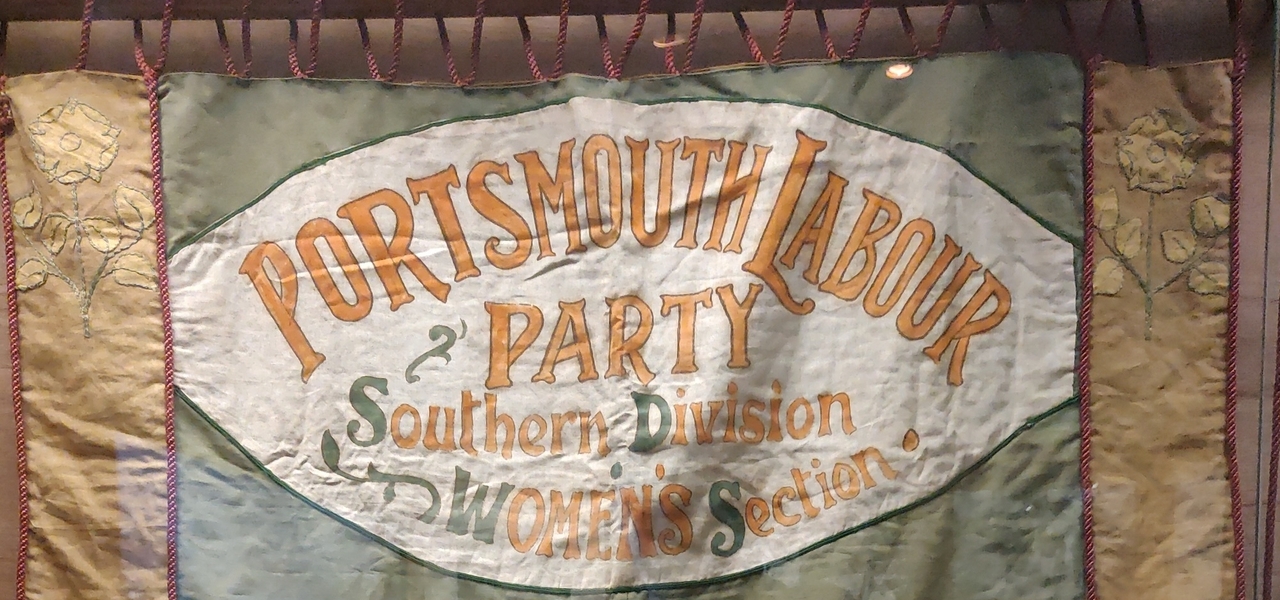
The Labour party was founded in 1900 after the Trades Union Congress sponsored a conference to unite the unions under a single party banner. They fielded over fifty candidates in the 1906 General Election and, due to a pact with the powerful Liberal Party of the day, twenty nine were elected to Parliament.
The first ever Labour Parliamentary leader was Keir Hardie. Hardie had worked in the coal mines from age 10, had become a leader of a trade union at 23 and was an ardent Methodist and a lay preacher. He is reported to have attended campaigns associated with the American preacher Dwight Moody in Glasgow and Edinburgh, and he wrote in his diary in 1877, “Today I have given my life to Jesus Christ”. Towards the end of his life in 1910, Hardie wrote: “The impetus which drove me first into the Labour movement, and the inspiration which has carried me on in it, has been derived more from the teachings of Jesus of Nazareth than from all other sources combined.”
Hardie saw Socialism, and its end result of Communism, as compatible with the principles laid out by Jesus in the Sermon on the Mount. He commented that “Christ recognised clearly that the possession of private property came between a man and his welfare both for time and eternity.”
At other times, Hardie could seem almost evangelistic in his political rhetoric. Addressing a group of striking railway workers in his constituency in 1910, Hardie said:
Oh men and women, in the name of God in whom you profess to believe in, in the name of Jesus Christ of Nazareth who died to save your souls, how long do you intend to submit to a system which is defacing God’s image upon you … which is blurring and marring God’s handiwork, which is destroying the lives of men, women and children … fight for the coming day when in your body, soul and spirit you will be free to live your own lives and give glory to your Creator.
Christians continued to play a crucial role in the development of the Labour Party as the years went by and the party began to grow in influence.
They first became the elected government in 1924 under the leadership of Ramsey McDonald. Philip Snowden, Labour’s first Chancellor, wrote often about the connection between faith and politics, saying that “personal salvation and social salvation are like two palm trees which bear no fruit unless they grow side by side”.
Harking back to the links with Methodism, the Labour Party benefitted from the influence of those in non-conformist churches. “Nonconformity”, said Ramsay MacDonald, “has trained our speakers in its pulpits and fashioned devoted workers in its Sunday Schools”. Arthur Henderson, who was at times leader of the Labour Party, and served as Foreign Secretary in McDonald’s government, agreed, saying in 1929: “It is a demonstrable fact that the bulk of the members of the Parliamentary Labour Party at any given time during the last twenty five years had graduated into their wider sphere of activity via the Sunday School, the Bible Class, the temperance society or the pulpit.”
The legacy of R. H. Tawney
Of particular significance to the shaping of the Labour Party was the economic historian and social critic Richard Henry Tawney. Tawney was a Christian socialist who, anchoring his views in the fundamental equality of every human being, spoke forcefully against capitalism, advocated for free, universal secondary education, and for reforms within healthcare.
His work, and the writings of his friend, the Archbishop of Canterbury William Temple, who coined the term welfare state', helped pave the way for Labour's welfare reforms in the aftermath of the Second World War.
Tawney’s influential books included ‘Religion and the Rise of Capitalism’, ‘Equality’, and ‘The Acquisitive Society’. The latter, published in 1926, presciently considers the problems of economics based on selfish consumption. “Such societies may be called Acquisitive Societies,” Tawney wrote, “because their whole tendency and interest and preoccupation is to promote the acquisition of wealth” and he believed that this philosophy had “laid the whole modern world under its spell.” He warned that this view of society “assures men that there are no ends other than their ends, no law other than their desires, no limit other than that which they think advisable. Thus it makes the individual at the centre of his own universe, and dissolves the moral principles into a choice of expediencies.” We see the sad outworking of this kind of thinking in our world today.
The modern Labour Party
Labour won its first majority in 1945 under Clement Atlee, capturing the mood of the country at the end of the Second World War. Atlee’s government brought in new reforms, including the creation of the NHS, but then Labour found itself out of power in the 50s and early 60s.
Harold Wilson, who served as Prime Minister from 1964 to 1970 and 1974 to 1976. was a member of the recently formed Christian Socialist Movement, which has since been renamed Christians on the Left, and continues to maintain links with Christian MPs within the Labour party.
More recently, although Tony Blair and Gordon Brown have been criticised for introducing socially liberal policies, both men also spoke about the influence of Christian faith upon their politics; indeed, Blair once wrote a piece for The Telegraph entitled, Why I am a Christian (something it feels difficult to imagine being written by a politician today!). Gordon Brown, the son of a Church of Scotland minister, was reluctant to speak about his own faith, although he has been a fervent opponent of the introduction of Assisted Suicide.
Today, there continue to be Christians, from a variety of backgrounds and denominations, at almost every level within the Labour Party. from Ministers and MPs to local councillors and activists. We give thanks for them, and, recognise, with a new Labour government that "there is no authority except that which God has established" (Romans 13:1).