
When I was growing up … I discounted myself from politics, I didn’t think I was clever enough, smart enough, didn’t think I was loud enough. And I just thought, why would I get involved in party politics when I don’t have to?
Those are the words of one of our recent participants in our CARE Leadership Programme. Despite discounting herself, and thinking that politics was out of her reach, she is now working for an MP and acting as a light for Jesus in the corridors of Westminster.
Perhaps we can relate to her words? We can feel insignificant and detached from the world of politics today. We can have the idea that political involvement is something for other people, who are louder and smarter than we are. Is there really any way that an ordinary Christian can get more involved in politics?
Here are eight ways that you might get involved in politics. Some apply to every Christian; others might only be a calling for a few. But there will be at least one way we can take more of an active role in our political life.
Pray
You might feel very detached from the goings-on at Westminster, Stormont, or Holyrood, but every Christian can pray about politics. In fact, Scripture tells us that this is a foundational part of Christian discipleship:
I urge, then, first of all, that petitions, prayers, intercession and thanksgiving be made for all people— for kings and all those in authority
Prayer is not a back-up plan, or something to do if there are no other ways to get involved. It should be our first response to political issues. “The prayer of a righteous person is powerful and effective” says James. At CARE, we have seen many amazing answers to prayer over the years, and we could not work in politics without the faithful prayers of many supporters.
In order to pray effectively, we need to be well-informed as Christians. It is good to keep up with the news, and use that to fuel our prayers. Our CARE Prayer Diary is a great way to help shape our prayers for politics and government in a Biblical way. Our weekly email, Impact Direct, also gives you a snapshot of what is going on in the world of politics, and how we can pray, and we also have specific emails for Scotland and Northern Ireland as well.
Vote
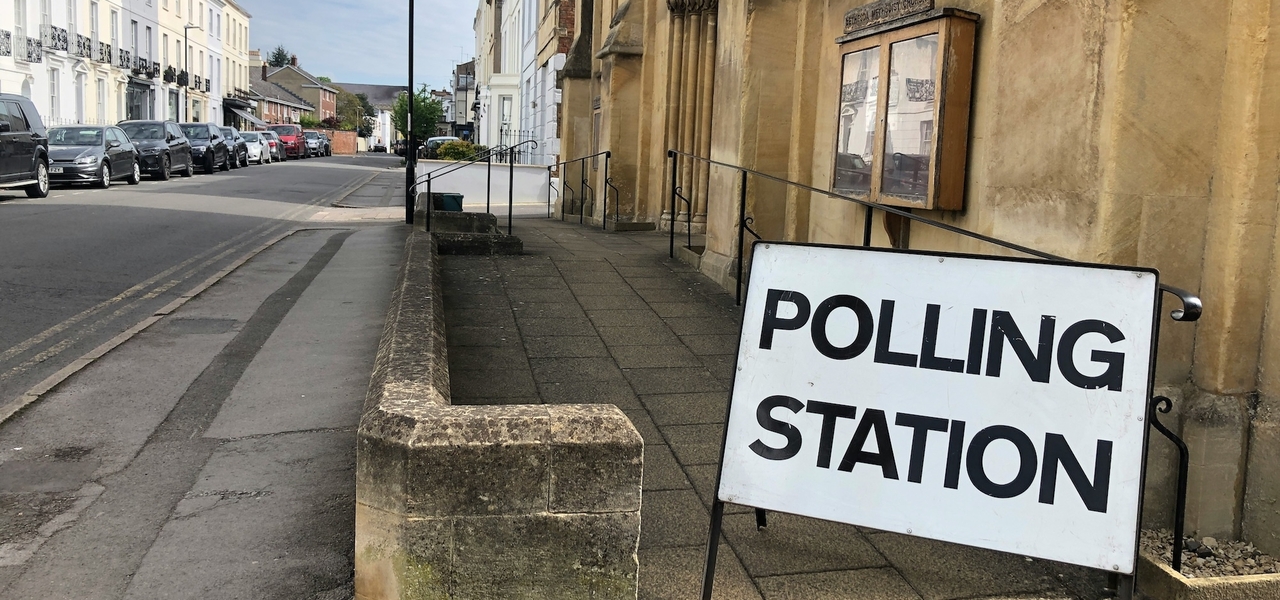
Many of us have the privilege of participating in our political life by voting. The UK is a parliamentary democracy where we cast our vote for Ministers of Parliament to represent our communities in the House of Commons. In Wales, you can also elect representatives to the Senedd, in Scotland, to the Scottish Parliament, and in Northern Ireland to the Assembly. You can also vote for local councillors, as well as mayors and police commissioners in certain areas.
To vote in a general election you need to be 18 or over (although there is legislation in process that will lower this to 16), a British or Irish citizen, or a qualifying citizen from a Commonwealth country, and not be subject to ‘legal incapacity’ to vote, such as serving a prison sentence. You also need to be registered to vote, which you can do through the UK Government website.
Voting is an important part of participating in society, and part of a Christian’s calling to submit to governing authorities (Romans 13:1). Jesus calls us to steward our resources in a way that honours God (Mathew 25:14-30), and one resource that we have is our vote. As followers of Jesus, we should put our vote to work, ensuring we use it in a thoughtful and God-honouring way.
Contact your MP
Your involvement with your MP does not stop at the ballot box. If you live in their constituency, you can engage with your local MP whether you voted for them or not.
Most MPs have an email address accessible from the UK Parliament website. They will probably have a telephone number and postal address for their constituency office, which you can call or write to. Many MPs also hold ‘surgeries’ in their constituency, where you can meet face-to-face to discuss particular issues. These are less common than they were due to attacks on politicians, and you will probably need to make an appointment beforehand.
As Christians, if there is an issue we feel strongly about, then we can communicate with our MP to tell them about our views. This can be particularly effective if there is an upcoming vote about the subject in the House of Commons. There is no guarantee that your words will change your MP’s mind on a specific issue, but they are elected to serve their constituency and will welcome your input when communicated graciously. When MPs are asked what they like most about their role, they often cite being able to help individuals.
CARE’s Topic Guide ‘Dear MP’ contains a wealth of insight and information about why to contact your MP and how to do it in a godly way that will help it receive a good reception. We have a Write to your MP tool that can guide you through contacting your MP, and when specific issues come to the forefront, our website contains suggestions about how to write about these pressing concerns.
Sign a petition
One development that the internet has brought to government is the introduction of ePetitions. Instead of canvassing your local area hoping to get a few signatures on a paper petition, there is now a dedicated website for petitions to Parliament in the UK: petition.parliament.uk. Here you can browse current petitions on a whole range of subjects, sign a petition that concerns you, or even start a new petition yourself. Petitions can be created, or signed, by anyone who is a British citizen and UK resident, and will stay open for six months.
While there is no guarantee that a petition will lead to legislative change in the UK, Parliament have pledged to consider for debate any petitions that receive over 100,000 signatures. The government will also respond to any petitions over 10,000 signatures with information about how they are currently working in this area and what they might plan to do in the future. Debates are arranged by Parliament’s Petition Committee, and most reaching the threshold are discussed, although if the subject has already been considered or if a similar debate is scheduled in the future they might be passed over.
Petitions are a good way to give your input on pressing issues. They might not lead to a change in the law or government policy, but the more people who sign a petition, the more likely it is that MPs will take notice of the strength of opinion behind the issue.
Respond to a consultation
If you would like to have your say in debates on policy beyond signing a petition, then you may want to consider adding your voice to a public consultation.
The government frequently put various policy proposals out for public consultation. The consultation might be looking for input from specific groups of people (such as particular professions), but many are also interested in the views of the general public as well. Depending on the consultation, you may be able to respond online, or via email or in writing.
Consultations gather views and opinions from those who have an interest in the issue. As such, they will ask detailed questions. Consultations are not a quick way to participate in political discussions, but they are a significant opportunity to give your own insights and experience.
Along with consultations, governments can also issue a ‘Call for Evidence’ to gather information to shape a public policy or strategy. These are aimed at people with specific experience and knowledge of a subject area, rather than the general public. However, if you have the time and expertise, then this can be a very specific way to be involved in policy development.
Help with elections
You don’t have to run as a candidate to be involved in election day. For every election that is held, there are an army of people behind the scenes making it happen (about 150,000 individuals for a general election). If you want to play a part in political life without signing up to a particular party, then helping with elections could be a good way to serve.
Poll clerks are employed by local councils to work at polling stations and to count the results of the ballots. To work as a poll clerk you need to contact your local council. The Electoral Commission’s website is a good way to find the contact details of your council along with information about any upcoming elections. Polling station staff are usually paid, and open to anyone who is able to work in the UK. You cannot have worked for any of the candidates, however, and you will need to declare if you are a member of a political party. Election days are long, so you will also need to be prepared to be working from 6am until 11pm!
Alternatively you could serve as an electoral observer, to see how the process works and ensure that the ballot operates correctly. To be an observer, you need to apply and be over 16 and not linked to a particular political party. Electoral observers are a volunteer role and are not paid, but can give an insight into the way elections work in the UK.
Join a political party
If you want to take the step into getting more directly involved with politics, you might want to consider joining a political party.
You may be able to volunteer with a political party (such as canvassing, delivering leaflets, or putting up posters) without becoming a member of that party. But if you are planning to get more involved with their activities, it is helpful to consider joining.
Joining a party is fairly straightforward and usually involves signing up and paying a yearly fee. This could be between £20 and £40 a year (each party has different fees), but can be less if you are a student or young adult, or an armed forces veteran.
Signing up to a particular party commits you to supporting them, so it is important to ensure this is a party whose ideals and policies you can get behind. It is not against the law to be a member of more than one political party, but it will almost certainly be against the rules of each organisation!
Members of a party not only support the political organisation financially, they can play a part in the way the party operates. Most members are able to attend the party’s yearly conference and can take part in choosing candidates to stand in elections, and voting in leadership contests. Members may also have opportunities to shape the party’s policy as well.
Crucially, being a member of a party is a prerequisite to standing as a candidate for that party in an election. So, you will need to take this step if you want to take the next one…
Stand as a candidate
Serving in UK politics is not going to be for everyone. But we need Christians involved in this area of political life just as much as we need Christians in every other area of society. Politics shapes our communities, writes our laws, and helps those in need. It is good for Christians to have a clear voice in each one of these areas.
If you are thinking of serving as a candidate in local or national politics, this is a sacrificial decision. You will often serve long hours with conflicting priorities. But it is also an honour and a privilege. As CARE colleague Caroline Ansell, who served as an MP for seven years, says: “It is a very precious thing when someone gives you their vote; it is an honour to speak for the 80,000 people whose interests you represent and whose hopes and concerns you carry.”
To stand for election in the UK you need to be a British or Irish citizen, and at least 18 years old. There are some other restrictions such as criminal convictions and bankruptcy. You can’t stand as a local councillor if you currently work for the council, and you can’t stand for election as an MP if you are a civil servant, judge, or serve in the police or armed forces.
If you want to stand as a candidate for a specific party (as opposed to being an independent), you will need to be a member of that party. You will also need to be selected by the party as their candidate for that seat, which would typically involve an application and selection process.
Conclusion
As Christians we are called to love our neighbour as ourselves (Matthew 22:39). Jesus expands our view of who our ‘neighbour’ might be, which certainly includes those in our community and our country. Being involved in politics is part of what it means to love our neighbour as ourselves.
If God is calling you to serve Him as a candidate in UK politics, that is wonderful. We need godly, committed Christians in local and national government. But that is not the only way Christians can be involved. We also need godly followers of Jesus as members of different political parties. We need Christians serving their communities as election volunteers. We need Christians to speak up about local and national issues through consultations, petitions, and by writing to their MP. We need Christians who will vote wisely and thoughtfully.
What is the way in which God is asking you to get more involved in politics? We might think we are unable to do much, but our CARE Leadership Programme graduate who was quoted at the start goes on to say: “Don’t discount yourself, and don’t disqualify yourself.” There is something you can do to be involved with God’s help and in His strength. Don’t be afraid to take the next step.