
Imagine you are popping down to the high street to do your shopping. You need to do the weekly shop at the supermarket. You’re also in the market for some new clothes. And while you’re at it, you want to head into a homeware store to do some research on replacing your bathroom floor.
When you go into the shops, you’re interested in the quality of the products on sale, and in the price: is it good value for money? But what none of the shops - and indeed, none of the staff - are likely to inform you about is whether the products you are interested in buying have been manufactured or transported using forced labour.
Interested in buying some coffee? Both the coffee and the cocoa sector in Brazil have strong links with forced labour, where workers live in unsafe housing and are forced to pay their employers for basic needs like food.
And the cotton clothes you’re looking at? Unmarried teenage girls in Tamil Nadu are locked into multi-year contracts in mills and forced to work in appalling, unsanitary conditions, for less than the minimum wage, and with unpaid overtime. They are at risk from injuries in the workplace and are separated from their families.
And as for that PVC flooring? It is estimated that between 1 million and 1.8 million Uyghurs and other Muslim-majority peoples are held in detention centres in China, and forced to work in factories producing a variety of products, including flooring.
David McClenaghan, Head of the Abuse Team at the law firm Bolt Burdon Kemp, explains how difficult it is to live ethically in a world of slavery:
“Do you benefit from slave labour? Unless you live entirely off the grid, the answer is an unfortunate ‘yes’. Across every industry and in every country in the world, criminals are forcing people to work under inhumane conditions while cutting off any means for them to get help, be rescued or even take action themselves to escape. It exists in all stages of the supply chain. Modern slaves may be picking raw materials, producing and manufacturing goods, and shipping and delivering them to you. They may be providing services – such as that long-awaited manicure or car wash. Everything from your mobile phone, your trainers and the t-shirt on your back, to the coffee grains or tea bags that help you get through the day, could be tainted by the fact that modern slaves were exploited to produce them.”
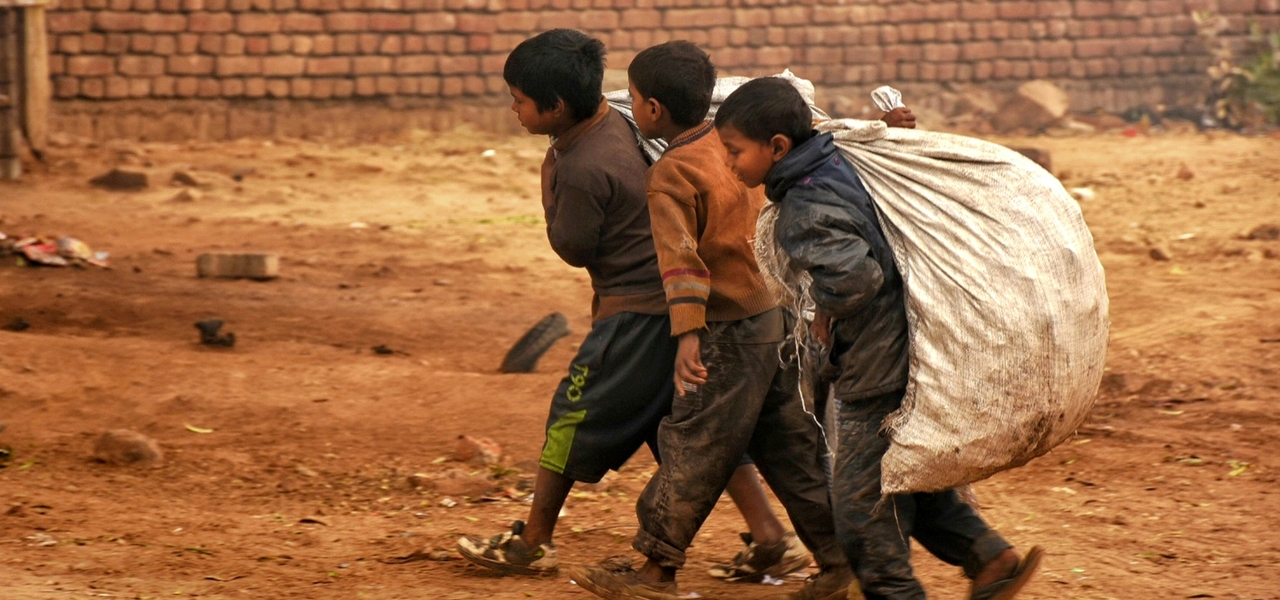
The most recent Global Estimates of Modern Slavery suggest that around 27.6 million people live in forced labour, generating £185 billion in illegal profits every year. 3.3 million of them are children.
Understanding supply chains
The most common form of modern slavery is forced labour. This is defined by the International Labour Organisation Forced Labour Convention as “all work or service which is exacted from any person under the threat of a penalty and for which the person has not offered himself or herself voluntarily”. When you think about forced labour, you might imagine scenes of children harvesting cocoa beans or mass production in sweatshops. But slavery exists at every stage of the supply chain, from production to shipping, including in the supply chains of international businesses supplying our goods and services.
Many of those in forced labour are trapped by ‘false debts’, where a trafficker deceives someone into slavery by offering a payment in advance for their labour, which they then make impossible to repay (such as by not paying the victim their wages, or by inflating it using prohibitively high interest rates). In some cases, these debts have then been passed down to children or even grandchildren.
Of the 27.6 million people in forced labour, around 17.3 million are in the private economy; another 3.9 million are subject to forced labour from the state. There are another 6 million in commercial sexual exploitation. Some of the most common sectors where it is found are: agriculture and fishing, hospitality and transport, construction, manufacturing and packaging. Although the raw numbers are highest in Asia and the Pacific, the area which has the highest percentage of forced labour is actually the Middle East, something which received coverage in the run up to the 2022 World Cup in Qatar.
Those who are already vulnerable are most at risk from being trapped in forced labour, such as children, those living in poverty, or those who had poor access to education. In some countries, being from a lower caste (such as the Dalits in India) is also a factor. Migrant workers are particularly at risk, especially if they do not speak the local language or are more dependant upon their employers (eg. for the legal right to remain in the country).
Lehmeire, a Mauretanian domestic worker in Saudi Arabia, explained: “The worst part was that there was no rest. I slept for two hours a night. There was no going out and no days off. When the bosses were out, the house was locked. I soon learned that if we refused to work, the police would be brought in to make us work. Once I was slapped around the face for not ironing my employer’s scarf properly.”
Other stories are more harrowing: International Justice Mission (IJM) say that they have rescued survivors from each of the following situations: “Women in slavery are giving birth on dirty floors and being forced to go back to work; children are being starved, sleep deprived and denied healthcare; and men are tricked into back-breaking labour for up to 22 hours a day.”
What does UK law say?
British law recognises that commercial organisations have a responsibility to ensure that they are not profiting from slave labour: Section 54 of the Modern Slavery Act 2015 (known as the Transparency in Supply Chains (TISC) provision) marked the first time this was ever enshrined in law in the UK. It requires companies operating in the UK which have a turnover of at least £36 million to adhere to four commitments:
To produce a modern slavery statement every financial year, in which they demonstrate the action they have taken in the last financial year to manage modern slavery risks (both in their supply chains and in their operations)
To publish this statement on their website and include a link to it on their homepage
To have the statement approved by the board of directors (or equivalent body)
To ensure the statement is signed by a director (or equivalent person)
But campaigners recognise that these actions are not strong enough to protect workers, and many companies only view TISC as an exercise in compliance, rather than genuinely working to combat modern slavery.
The Business and Human Rights Resource Centre (BHRRC) analysed 16,000 modern slavery statements from many of the largest companies in 2021. They found that many companies just published general statements, as opposed to statements that related to their own sector, and that 40% of companies did not comply at all with TISC, but that no penalties had been issued for non-compliance. Perhaps most damaging of all, they declared that “The Act has not driven significant improvement in corporate practices to eliminate modern slavery.”
But as Christians, we believe that we have individual responsibility for our actions (and the part we play in propping up economic systems). Just as it is not enough for Adam to say ‘the woman made me do it’ (Genesis 3:12), we cannot simply abdicate responsibility to the Government. The reality is that there are some basic actions that we all can take…
Three things you can do
Research
Certain products are more likely to have been produced by forced labour than others, particularly when they originate from certain countries. It’s worth being aware of these, so you can see where things have been sourced from directly on packaging.
Clothing: Argentina, Brazil, India, Malaysia, Thailand, Vietnam
Computers and Phones: Malaysia
Coffee and Cocoa: Ivory Coast, Kenya, Brazil, Colombia, Vietnam
Fish: China, Ghana, Indonesia, Japan, Russia, South Korea, Taiwan, Thailand
Rice: India, Myanmar
Tobacco: Brazil, Indonesia, Kenya, Malawi, Mozambique, Nicaragua, Philippines, Uganda
This is not to say that every factory in these countries is at risk, but you might want to be more careful when buying certain products from them, and to make enquiries about whether forced labour has been involved.
On the other hand, there are some brands which have been set up deliberately to avoid forced labour, such as ‘Know the Origin’ and ‘People Tree’. Other larger companies may be involved in initiatives to tackle modern slavery, which you can find in a quick google-search (Marks and Spencer, for example, have partnered with the Ethical Trading Initiative).
There are lots of resources out there which can help you to find brands which attempt to use the most ethical supply chains, like Ethical Consumer and the Fashion Transparency Index. Or maybe you need to check something while you’re out and about; apps like ‘Good on You’ help you to make decisions in real-time and see whether a brand is actively working to combat modern slavery.
Since 2018, Oxfam have documented the policies from our leading supermarkets in their Global Supermarkets Scorecard. They examine supermarkets’ practices, look for behaviour which protects workers, farmers and women, and give them a score out of 100%. Between 2018 and 2022, many of the supermarkets have worked towards a substantial improvement. Tesco and Lidl appeared at the top of the list of supermarkets documented.
Some industries will have particular best practices: for instance, if you are buying makeup, you can check whether the supplier is part of the Responsible Mica Initiative. Or if buying foodstuffs, look for certifications like Fairtrade or Organic, which keep companies accountable and ensure they are evaluating their supply trains.
Contact
Maybe you’ve got certain brands you’ve been using for years, but you’re not sure how much they’re doing to combat forced labour. Or perhaps you think their Modern Slavery Statement is vague and not up to scratch (if they even have one at all!).
If so, why not get in touch with them? Send them an email, or tag them on social media. Ask how they are actively working to avoid forced labour being part of their supply chain. Ask them not only which countries they operate in, but also for the names of the factories they are using.
IJM suggests the below, as a template email:
Dear (brand)
I write to you as a loyal customer. I have been shopping with (brand) for (number) years and I love your products.
It has come to my attention that, according to Ethical Trading Initiative, 77% of UK companies believe there is a likelihood of slavery in their supply chains.
With this in mind, I would like to understand what steps you are taking to tackle slavery in supply chains so I can continue to shop with confidence.
I would love to know where you source your (product) and what practical steps you are taking to ensure that workers are being protected from modern slavery.
I look forward to hearing from you.
Yours sincerely,
Name
The more that people get in touch to show that they will not accept products being manufactured off the back of slave labour, the more likely brands are to listen.
Recycle
One final way you can reduce demand for forced labour is to buy (and sell) things second-hand. In today’s world, there are more options for doing this than ever, whether it be physically visiting a charity shop on the high street, or buying clothes second-hand from online platforms. There are also plenty of vintage clothes fairs and some churches and workplaces have set up clothes-swapping parties.
Don’t just look at what you can buy; platforms like Ebay or Vinted make it easy to sell your pre-loved materials, help you to waste as little as possible, and give you the chance to make a quick buck from things you’re not using any more!
Conclusion
In our globalised economy, where products are made in places the UK has no jurisdiction over, it’s almost impossible to avoid profiting from forced labour completely; that doesn’t mean that we should be consumed by guilt about things we can’t change, but it also doesn’t excuse us from taking the small actions we can take.
Living ethically in a world of slavery means not just purchasing products unthinkingly, but taking the time to understand the landscape we’re living in, questioning the behaviour of our biggest retail providers, and potentially adapting our purchasing habits based on what we discover.
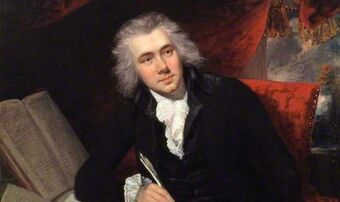
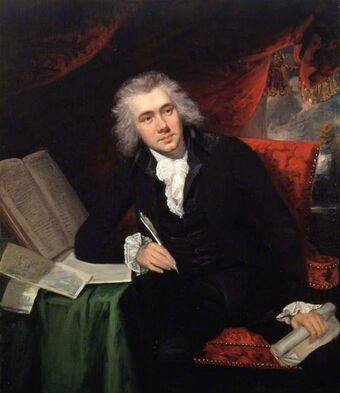
William Wilberforce said of the slave trade, “Having heard all of this you may choose to look the other way but you can never again say you did not know.”
200 years on, his words are just as relevant now as they were back then.