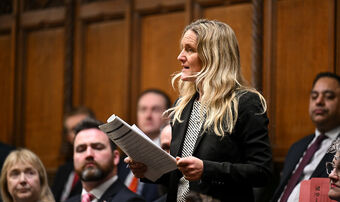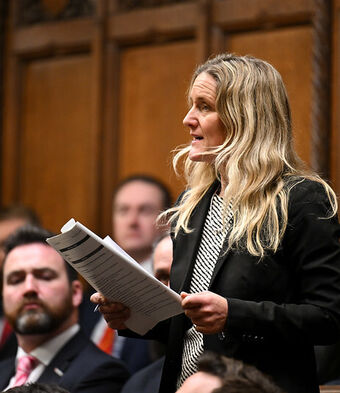

Make no bones about it: the reputation of MPs has taken a hit in recent years. From cash-for-honours to broken promises, to claims of establishment stitch-ups and the Westminster bubble, where as a society we once had a deference for our elected leaders, now trust in politicians is at an all-time low.
Media headlines foreground the latest scandals; others claim that politicians are all out for themselves. Any sense of nuance, or sympathy, as the Government seeks to chart a course through muddy waters, has vanished in an era of social media posts and clickbait. As a society, we increasingly think in broad brushstrokes: an MP is heartless, or corrupt, or incompetent.
Of course, the reality will be far more complicated, and in recent years, some figures have called for a ‘kinder politics’, or reminded us that we have shared values, and more in common than what divides us. But is there a specifically Christian approach to thinking about the Government? Although the Bible tells a story in which a variety of political contexts feature, including anarchy, theocracy and empire, there are some key principles we can glean from it, as we look to shape our response to our political leaders.
1. Submit
"Let everyone be subject to the governing authorities, for there is no authority except that which God has established. The authorities that exist have been established by God.” (Romans 13:1)
MPs are legislators; they determine the laws of our land. In Judges, we encounter a situation where “Israel had no king; each man did as he saw fit” (Judges 21:25). By contrast, good government is God’s design! The Bible tells us that political leaders are appointed for our good, and ought to promote good and restrain evil.
Of course, governments fall short of this ideal. But it has always been like that; the two New Testament passages which talk about government in depth are in Romans 13 and 1 Peter 2, both written in the context of a Roman Empire which had conquered Israel, crushed opposition, and which began to persecute Christians.
Our default position is to submit. Being part of God’s kingdom does not mean that we are not also part of the United Kingdom; the rulers established (or voted for!) are legitimate, and their authority is real. We submit to their laws; we pay them our taxes; and we seek to help them to govern as wisely as possible.
Do you think of our political leaders as “God’s servants for our good”?
2. Honour
“Show proper respect to everyone, love the family of believers, fear God, honour the emperor.” (1 Peter 2:17)
Being an MP today almost seems to make a person public property. Headlines are splashed across newspapers; we feel free to speak harshly about their characters; politicians can even find themselves being abused in the street.
But as Christians, we are to act differently. This should be the case already; we believe that everyone is made “in the image of God”, which gives them inherent dignity and worth. We already ought to speak out against the worst abuse, wherever it is found.
But there is a “proper respect” due too; we are to recognise the dignity of certain offices, even if we do not like the occupant! Politicians have been elected to govern our nation. Far from resulting in abuse, this should lead to “honour”. In a world which tears people down, and shows little grace, we can speak counter-culturally about politicians, building them up, and showing them honour.
Why not contact your MP and thank them for all they are doing for your neighborhood?
3. Challenge
“Speak up for those who cannot speak for themselves, for the rights of all who are destitute. Speak up and judge fairly; defend the rights of the poor and needy.” (Proverbs 31:8-9)
The Government does not always get it right. As Christians, we believe that all of us have been impacted by sin. Even the best political leader will fall short of God’s standards. Sometimes an MP will vote for something we disagree with. Sometimes it might be their behaviour that falls short of what we expect.
Christian submission does not mean that we have to just stay silent if we disagree with our leaders. Obedience does not mean a lack of challenge, or not speaking truth to power. It is right to hold to account those who have been awarded high office. We believe in a God who loves good and hates evil, and who judges nations (even His own people of Israel) because of how they have treated the most vulnerable.
Under very specific circumstances, this may even mean civil disobedience: for instance, if a political leader were to order Christians to stop preaching the gospel, as happened to the early disciples in Acts. But in any challenge, we want to model Jesus’ own behaviour, which was “full of grace and truth”.
Think about times when you have disagreed with the Government: what would it look like to speak to them with “grace and truth”?
4. Pray
“I urge, then, first of all, that petitions, prayers, intercession and thanksgiving be made for all people— for kings and all those in authority, that we may live peaceful and quiet lives in all godliness and holiness.” (1 Timothy 2:1-2)
As Christians, we believe in ‘common grace’: God can use anyone to accomplish His purposes, even if they don’t believe in Him. God raised up Cyrus to return his people from exile (Isaiah 44:23-45:8). Even when politicians get things wrong, God is not surprised: He is sovereign, and accomplishing His purposes.
The Bible specifically tells us to pray for our leaders; we pray that they might make good decisions and govern wisely, due to the impact this has on other people (including us). When government is working well, we will be able to lead “peaceful and quiet lives”.
The Psalms can be a really helpful guide as we work out what to pray for, as some of the ‘Royal Psalms’ particularly feature prayers for the King, and the characteristics of a good leader.
How can you incorporate prayers for your MP, the Prime Minister, and the Government into your prayer life, and other contexts you are involved in, such as church services or small-groups?