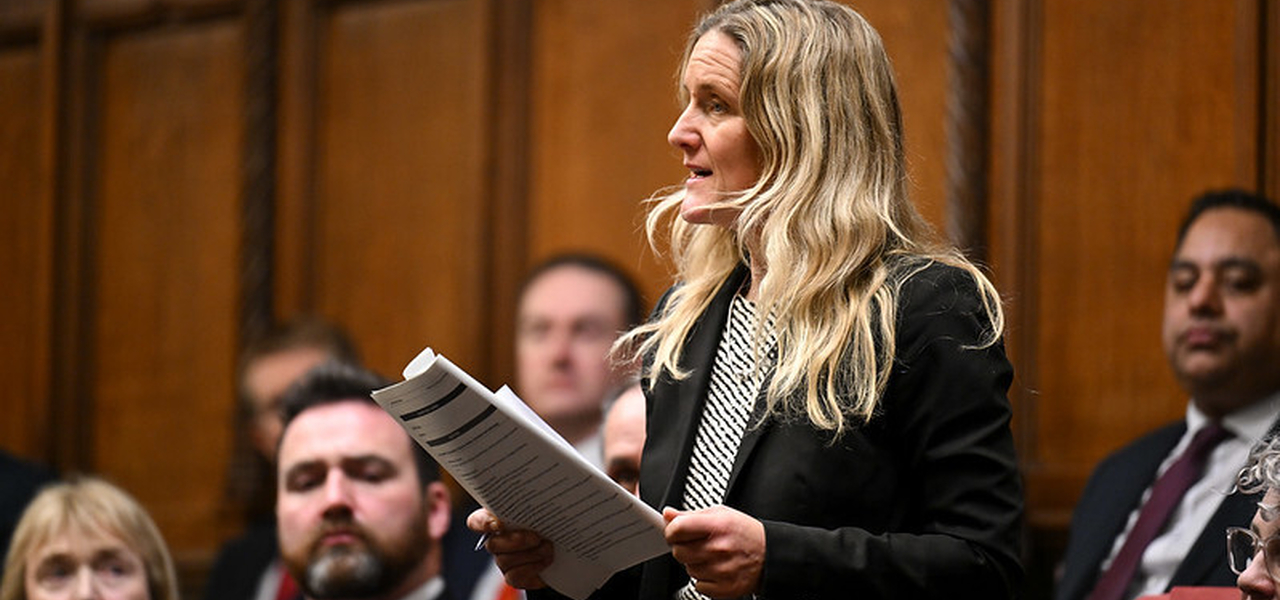

We all disagree with our MPs sometimes; maybe you asked them to vote a certain way and they did the opposite. Perhaps you have allegiance to one political party, and they represent a different one. Or maybe they have recently appeared on TV or in the newspapers and you didn’t agree with what they said.
If that’s you, we’ve all been there! MPs have a very public role; their voting records are published for all to see, they are regularly doing the media rounds, and any mistakes are quickly seized upon.
But in a world which is so quick to tear down, as Christians we want to bear witness to a better way of living: one that is marked by both truth and grace; not pretending that differences do not matter, but expressing them humbly and charitably.
Here are five things to remember when you feel your MP has let you down...
1. Disagreement is inevitable
Every MP has 73,000 constituents on average: it is impossible for an MP to agree with all of them! Each MP will have their own views, and unless they are an Independent MP, they will also belong to a political party and so there will be pressure for them to vote in certain ways on different issues.
If you are a member of a political party, do you agree with everything they stand for? Probably not! It’s similar in the church: it is highly unlikely that you will agree with absolutely everything your leaders think or your fellow congregants believe, but does that mean you treat them poorly? No!
Every week, your MP will disappoint someone. When that happens to you, how you respond is a crucial part of your witness to Jesus.
2. Are you humble?
This is a more challenging and provocative point. But when your MP disagrees with you or you with them, are you willing to admit that you might be wrong? Sometimes there are issues on which an MP might know more than we do; but how often is it our default to assume that we are the experts?
Paul reminds us in Romans 12:3, “Do not think of yourself more highly than you ought, but rather think of yourself with sober judgment.” Of course, it can be very frustrating when your MP does not listen to you, particularly if you have relevant expertise on a given subject.
But a humble posture is one where we are willing to listen, and where we have a sober enough judgement of ourselves to admit that we might sometimes be in the wrong.
3. Be polite
Some of the issues which we might contact our MP about are highly emotive subjects, like assisted suicide. You might speak clearly and compassionately about what the Bible says and urge your MP to vote in a certain way on these vital, life and death issues. But if your MP has a different view, it can be so easy to reply in anger and frustration.
As Christians we want to speak differently, even if we are upset. Colossians 4:5-6 says: “Be wise in the way you act toward outsiders; make the most of every opportunity. Let your conversation be always full of grace, seasoned with salt, so that you may know how to answer everyone.”
None of this means you should not respond at all and or let your MP know you are disappointed. But let it be a distinctive disappointment! In today’s world, it is a rare thing to ‘disagree well’; it is important to maintain a relationship, so that your MP might listen to you another time.
4. Recognise what they do well
MPs do not just exist to respond to a single issue; we might particularly care about certain subjects ourselves, but there are many things which MPs are asked to vote upon, from the environment to the economy, or immigration to education.
Rather than only contacting MPs when the topic at hand is particularly controversial, or simply contacting them to register our disa- greement, we can write to them at other times too: thanking them for their hard work for the community, registering your support when we do agree with their vote, and looking to find common ground.
This is something we have to regularly grapple with at CARE; an MP who might disagree with our stance on, for instance, abortion, might be a key ally when it comes to another subject like combatting human trafficking or protecting women who are in prostitution.
5. Respect their God-given dignity
This final point should be a banner over all your interactions with your MP. We read in James 3:10-11: “With the tongue we praise our Lord and Father, and with it we curse human beings, who have been made in God’s likeness. Out of the same mouth come praise and cursing. My brothers and sisters, this should not be.”
James draws an explicit link between the image of God and not cursing human beings. Your MP has the same intrinsic dignity and worth that you have. Like you, they have been formed by God in the ‘secret place’ and are ‘fearfully and wonderfully made’ (Psalm 139:13-14).
It is inevitable that you and your MP will dis- agree over some things, and potentially over many things. But that does not make them an evil person! Their status as an image-bearer of God holds regardless of political allegiance, voting record or personal mistakes.
In a world which so often disrespects MPs, let us seek to live differently by loving our MPs as we love ourselves. After all, if Jesus could even say that a Samaritan was his neighbour, how much more is that the case for our local MP...!