
If you are even vaguely interested in video games, you will probably be familiar with EA Sports FC (formerly known as Fifa). Consistently the best-selling video game franchise in the UK - it is estimated that each year, between 2 million and 3.5 million copies are bought for every new edition - its core demographic is 16-34s, with around 17% of players being teenagers.
EA Sports FC, at its simplest, can just be a game of human vs computer (or vs another human). Sometimes that means winning one-off matches, or sometimes it means simulating a season. So far, so innocent.
But since 2009, Fifa has offered users an additional option: Ultimate Team mode. Rather than playing as a regular team, such as Manchester United or Arsenal, users are able to build up their own team from scratch, accumulating players from different teams and leagues. This also includes retired legends, such as Diego Maradona or Pele. They can then test their team against other players’ Ultimate Teams through online gameplay. When a player begins assembling their Ultimate Team, they receive mostly average (or worse) players, with one ‘superstar’.
But to improve their team, they can buy a random pack of new players for their team. The information they have on what they are buying is limited: the number of cards, their rating out of 100, and their rank (gold, silver or bronze). There are no guarantees that buying the pack will improve the player’s team.
These packs can either be bought with coins, which can be earned by winning matches, or participating in the virtual transfer market, or, through a short-cut, with points which are bought with real money. 100 points costs £0.99, although far more would need to be spent to build up a team. The maximum amount of points which can be bought at once, is 18,500 points for £129.99.
Spending money with a randomised chance of success? We have a word for that…
Understanding loot boxes
The EA Sports FC Ultimate Team system is one of a number of examples of what we call ‘loot boxes’ in modern gaming. Loot boxes are commonly defined as “features in video games which may be accessed through gameplay, or purchased with in-game items, virtual currencies, or directly with real-world money”. Loot boxes commonly appear in games as card packs, chests and crates.
Whereas video games once just involved a one-time purchase, now, players are encouraged to spend real money for random results. David Zendle, a lecturer in Computer Science from the University of York, commented: “There’s been a shift from video games as products to video games as semi-unregulated sales platforms. We see an increasing convergence between video games and gambling activities getting mixed together.”
The history of loot boxes is disputed: some claim that they have their origin in Japanese vending machines called ‘gachapon’, where users would insert a coin and obtain an item by chance. Sometimes, people refer to loot boxes as ‘gacha’, as a link with this practice. Since 2012, loot boxes have been publicly linked with online gambling, and Japan actually became the first country to introduce legislation around certain types of loot box.
Loot boxes entered the public consciousness more widely with the release of the game Star Wars Battlefront 2 in 2017, in which content which was assumed to be already available, such as the ability to play as Luke Skywalker or Princess Leia was ‘hidden’ in loot boxes, to widespread dismay.
Loot boxes have become almost unavoidable for many gamers today; one survey suggested that 78% of gamers have bought them. But several academics have warned about the “structural and psychological similarities” between loot boxes and gambling. There are different degrees of risk, depending on what features the boxes entail. Many employ psychological techniques which are well-known within the gambling industry, including:
Endowment effects (giving players a ‘free’ loot box to draw them in)
Price anchoring (showing supposedly ‘particularly good’ deals next to less generous ones)
‘Fear of missing out’ (on special offers or items)
Hiding costs (through in-game currencies)
They are designed to be addictive. The game designer of the Overwatch loot box described how they draw the user in: “We [build anticipation] in a lot of ways — animations, camera work, spinning plates, and sounds. We even build a little anticipation with the glow that emits from a loot box’s cracks before you open it.... Seeing purple or gold you start to think about what specific legendary or epic you’ve unlocked.”
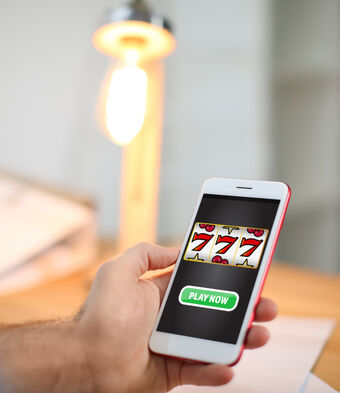
Although some senior gaming executives have attempted to justify the existence of loot boxes by pointing to the existence of chance in innocent products like Kinder Eggs, gaming developers have openly confessed the gambling design behind loot boxes. Some loot box interfaces are even modelled on slot machines or roulette wheels.
Academic evidence has also shown ‘surprise mechanics’ tend to be more effective within video games than traditional products: studies of collectable card games have not seen the same link with problem gambling, and the widespread availability, scope and accessibility of online games can lead to a ‘continuous play’ effect.
The money involved in loot boxes is not insignificant, particularly when it accumulates over multiple rounds of purchases. In EA Sports FC, the most expensive ‘player packs’ can cost around £30. By 2015, EA reported that around one-third of their revenue was coming from loot boxes. Nor are such sums unprecedented. In the game Overwatch, bundles of up to 50 loot boxes can be bought for £34.99.
In 2020, the loot box market in the UK was estimated to be worth around £700 million, according to the Government. The global loot box market today is estimated to be worth more than £20 billion.
The impact of loot boxes
As is so often the case with forms of gambling, what promises to be a short-cut to success is anything but. In EA Sports FC, the probability of receiving a Gold 84+ Player can sometimes be as low as 4.2%. Many players have testified about how they have found themselves addicted to the prospect of building the team they want, and then finding their spending habits to be out of control.
Joe Stapleforth, told ‘The Athletic’ that he spent around £1,500 while playing FIFA at university: “I was even poorer than most students and had to borrow money for food from friends at one point. It also prevented me expanding my overdraft as the bank could see my money wasn’t being spent in constructive ways.”
Another player, Jonny, was given £20 worth of points for a Christmas present, through his mother’s credit card. He eventually spent somewhere in the region of £1,000-£1,500. He said: “I didn’t really know what I was doing and it spiralled. (My) parents eventually found the transactions in their bank account and thought I’d been hacked, until I eventually confessed out of guilt. I felt awful and stopped playing FIFA for a bit but then picked it up again once I started university.”
Several academic studies have proven that there is a link between loot box spending and gambling spending (although it is more difficult to prove that the link is causal). GambleAware’s April 2021 report, ‘Lifting the lid on loot-boxes’, said that links between buying loot boxes and problem gambling were “robustly verified in around a dozen studies”. Around 50% of loot box revenue comes from around just 5% of loot box purchasers (who spend over £70 every month on loot boxes), of whom almost a third could be defined as “problem gamblers”. Around one-third of revenue is drawn from just 2% of purchasers. Young males, particularly those from lower educational backgrounds, were the most likely to be drawn in.
And of course, it is not just adults who are at risk. Here in the UK, 93% of children regularly play video games; somewhere around 25-40% of these have purchased a loot box. In 2019, the then Children’s Commissioner for England and Wales, Anne Longfield, issued a warning: the “monetisation of gaming brings children closer to gambling.” She later warned about “children entering a cycle of uncontrolled spending as they attempt to chase losses.”
Her warnings have been echoed by the Gambling Commission: “Many parents are not interested in whether an activity meets a legal definition of ‘gambling’. Their main concern is whether there is a product out there that could present a risk to their children. We are concerned with the growth in examples where the line between video gaming and gambling is becoming increasingly blurred…Whether gambling or not, we all have a responsibility to keep children and young people safe.”
The Government response
There is open debate over whether loot boxes should be officially classed as gambling or not. The Gambling Commission, who are responsible for enforcing the law around gambling, have said that the Gambling Act 2005 does not cover loot boxes, and so it cannot regulate the industry: “A key factor in deciding if that line has been crossed is whether in-game items acquired ‘via a game of chance’ can be considered money or money’s worth. In practical terms this means that where in-game items obtained via loot boxes are confined for use within the game and cannot be cashed out it is unlikely to be caught as a licensable gambling activity. In those cases our legal powers would not allow us to step in.”
In 2020, a House of Lords committee report considered loot boxes and problem gambling, and recommended that the 2005 Act should be extended to cover them: “We echo the conclusions of the Children’s Commissioner’s report, that if a product looks like gambling and feels like gambling, it should be regulated as gambling. We also agree with the House of Commons Digital, Culture, Media and Sport Committee’s recommendation that loot boxes should be regulated as a game of chance…”
Around the same time, the House of Commons launched a call-for-evidence into the impact of loot boxes on gambling and other similar behaviours. Despite recognising a number of harms which are linked with loot boxes, including financial troubles, gambling-related harms, and mental health issues (each of which are exacerbated for children and young people), the Government said it would not extend the Gambling Act to cover them.
Although they too cited the lack of real-world monetary value in loot boxes, many of their arguments were pragmatic, citing “significant implementation challenges and risks of unintended consequences”, including changes to the gambling tax system and increased costs of running the Gambling Commission. They did recommend, however, that purchases of loot boxes should be unavailable to children and young people unless enabled by a parent or guardian.
At CARE, we are concerned that this approach does not go far enough in protecting people who are at risk of harm, and several other countries have taken far stronger approaches in recent years. Some countries, such as China and South Korea, require the publication of all probabilities in receiving a given reward from a lootbox, although there are questions around how understandable these probabilities actually are, particularly for children. Probabilities are often limited only to a general category of product, rather than a particular example within that category (eg. EA Sports FC might show the probability of winning a gold card, rather Cristiano Ronaldo specifically).
In 2020, a Dutch court proclaimed that the EA Sports FC Ultimate Team loot boxes should be classified as gambling. Belgium took a more widespread approach in 2018, banning lootbox mechanics, and declaring in law that a product would be classified as gambling purely by having a gambling mechanic within it (regardless of whether it were offering a prize).
Solutions to the issue of loot boxes are unlikely to be simple. In GambleAware’s report, ‘Lifting the lid on loot-boxes’, researchers write: “Gambling regulation was not conceived for loot boxes, and it is here that we get into the thorny ‘square peg, round hole’ problems. For example, it is unclear how developers should deal with aspects such as ‘return to player’ – a legal obligation for gambling games. Similarly, there will need to be provisions for issues like rule-bending, where (for example) developers might provide ‘gift boxes’ with every real-money purchase. Changes to gambling laws will also have unexpected ramifications. It will require, for example, clarifications of whether other types of items, such as trading card games, will now be subject to gambling controls.”
In their final section, they suggest a series of policy-recommendations, to be taken in tandem (rather than imagining there is one catch-all solution). These include:
Clearly worded age ratings
Full odds disclosures, with as much precision as possible
Spending limits
Real currency (rather than in-game currencies like gold coins, with confusing exchange rates)
Provisions for oversight and enforcement (whether through existing or new regulators)
Provisions for further education and research
They conclude: “Whatever form policy might take, we need to stay mindful that there is now a whole box of psychological tricks available for unscrupulous developers. Longer-term mitigation of risk, as suggested above, will require more research, new education approaches, and updated consumer protection frameworks. Such recommendations, however, do not preclude policy action on loot boxes.
“Perhaps, in the long run, the benefits of loot box regulation won’t stem from the legislative fine-print. Instead, the gains might be leveraged from a clear message, directed straight at transnational gaming companies that when left with few other options (when an industry does not effectively self-regulate), these types of predatory monetisation strategies are not beyond the reaches of national powers.”
At CARE, we want to speak up on behalf of those who are vulnerable, including those who experience, or are at risk from, addictions. We also have a particular heart for children and young people, who we want to see flourish, rather than become trapped in destructive cycles which can damage not only their present but their future.
Jesus warned: “If anyone causes one of these little ones—those who believe in me—to stumble, it would be better for them to have a large millstone hung around their neck and to be drowned in the depths of the sea” (Matthew 18:6). As a society, we would do well to heed His warning…