
The American writer Michael Jay Tucker wrote: “If the anti-abortion movement took a tenth of the energy they put into noisy theatrics and devoted it to improving the lives of children who have been born into lives of poverty, violence, and neglect, they could make a world shine.”
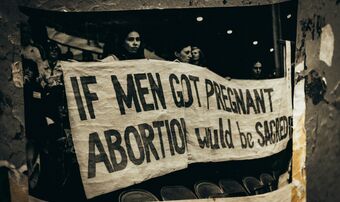
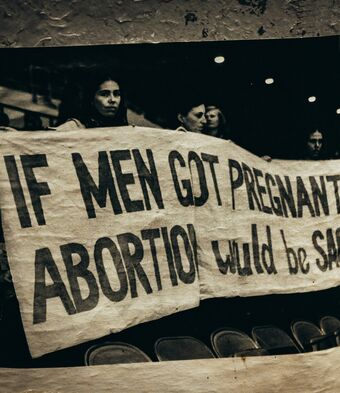
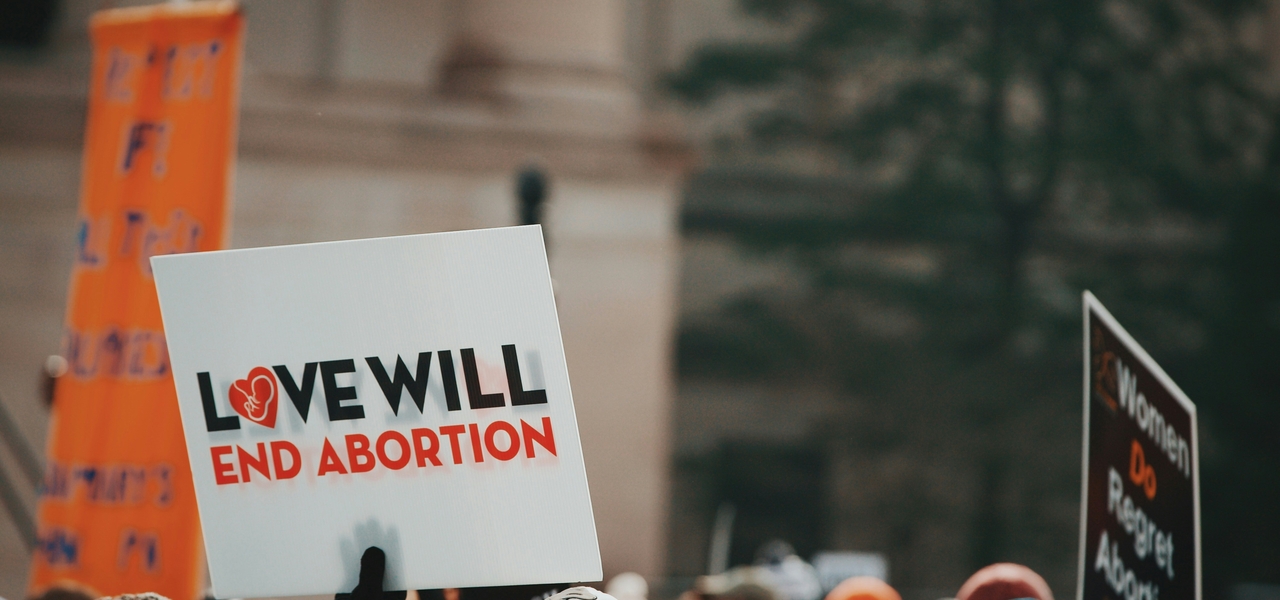
His words carry some force to them: although the context in the UK is not identical to that of the US, the pro-life movement still carries with it associations of marches, protests and placards of babies, some of which has caused a degree of emotional distress. And regardless of the importance of the subject-matter, it is undeniable that the pro-life movement in the UK has seen little to no progress in Parliament (in fact, quite the reverse!).
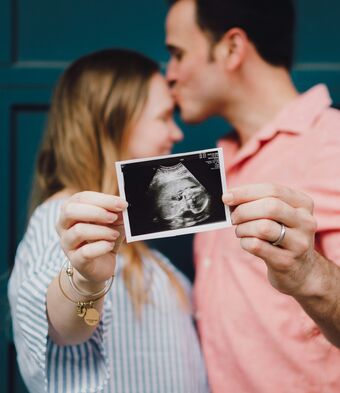
At CARE, we want to be a voice for the voiceless, and to speak on behalf of the most vulnerable within society. That means that we are unashamedly pro-life: we believe that the baby in the womb is fully human (rather than just a ‘foetus’) and has inherent dignity and worth. While we want to speak with gentleness and compassion in this area, it is a topic which we cannot stay silent about.
But at CARE, it is one of our core values that we are ‘for people’, rather than for issues. When critics suggest that Christians sometimes only care about the start and end of life (aka abortion and assisted suicide), and not what happens in-between, they lay down a gauntlet which we do not want to go unanswered. If we believe that Jesus came that we may have ‘life in all its fullness’, we have to say that that was not limited to being born!
So what does it truly mean to be pro-life? And how can we develop a consistent ethic, rather than picking it up at certain times and laying it down at others (at least by implication, even if not in reality)?
All lives are equal
At the heart of the pro-life ethic is one underlying principle: that every human being is created in the image of God, and of equal, infinite value. It is difficult to imagine a higher status which could be given to humans. Each of us contains the imprint of the Creator; the elderly person with dementia, or the baby who is just a few weeks old in the womb, reflects more of God than any non-human object in the universe. For it is only humans who have this status: while other animals may contain the ‘breath of God’, it is only humans who have been created ‘in the image of God’.
This status is awarded to the whole human race. People are not defined by how big they are, how old they are, or by what they can or cannot do. They are not defined by their sex, or their race, or even by what they have done. This was a radical teaching; consider how in the Greco-Roman world, disabled babies used to be left out for the wild animals, or how the traditional caste system in Hinduism asserted people’s value based on their race.
And it is still vitally important to restate today; some philosophers, such as Peter Singer, advocate for ‘personhood’ theory, where someone is only a person if they have control of certain faculties. Singer himself laid out the natural destination believing in this worldview can lead to: “Killing a disabled infant is not morally equivalent to killing a person. Very often it is not wrong at all.”
But even for those of us who believe that all people are equal in principle, it is easy to let it slip in practice. Consider the way we think about civilian casualties in warfare. Back in 2011, the theologian Tom Wright wrote, in a challenging passage: “How many folk out there were deeply moved both by the reading of the 9/11 victim names and by the thought that if they’d read the names of Iraqi civilians killed by your country and mine over the last ten years we’d have been there for several days?” One could easily apply the same principle onto the recent conflicts in the Middle East.
But even those who are pro-choice tend to agree with the underlying assumption here (irrespective of the theological language which undergirds it), that all humans are equal in their essentials. In 2023, the then-Conservative MP Lee Anderson spoke about his support for the return of the death penalty, and was widely condemned by figures on the political left: they were, in a sense, taking a pro-life stance! (Of course, it is the same political left which today tends to be the most resistant to protecting babies in the womb).
Whenever we talk about topics like ‘human rights’ (all 193 UN member states have ratified at least one treaty influenced by the Declaration of Human Rights) we recognise the truth that all humans are equal, and that they are worthy of certain dignities, simply by virtue of being human. As Article 6 of the International Covenant on Civil and Political Rights puts it: “Every human being has the inherent right to life. This right shall be protected by law.”
For all lives to be equal, we have to mean what we say. We have to advocate for the unborn child, yes, but we also have to say that the mother is of equal value too, and to care about them (just as much as we do about the unborn child): in their make-up, neither is more valuable than the other. This is why at CARE we say that we are both pro-life and pro-women: we reject the false dichotomy which seeks to present the two as in conflict. And it is why we run our programme, Open, to support women who have experienced miscarriage, abortion or baby loss.
The law is not the only problem
As Christians we do not believe that abortion is the best route forward (for either mother or baby), with some very occasional and painful exceptions. But - although we do work with legislators and policy-makers and advocate for the law to be altered - we do not believe that the only route to progress is through law-changes, and if we are to solely focus our efforts in this area, we are not likely to bear much fruit.
Even the most modest law-changes have been rejected by Parliament, from attempting to clarify that sex-selective abortion is illegal to trying to reduce the time limit from 24 to 22 weeks. The only substantial change to abortion law in recent years has been a negative one, with decriminalisation (added to the Crime and Policing Bill) meaning that a mother can now abort a child for any reason up to full-term without prosecution: this marked the removal of some of the final legal protections for unborn babies.
It is important for Christians to listen to what it is that motivates women to choose an abortion, and to see how we can support them directly. This is not only more likely to bear immediate fruit than law-changes, it also demonstrates that we care about the people at the centre of this topic (rather than just about the issue in the abstract). And if our ‘opponents’ in this area claim that they are pro-choice, then surely we ought to be able to find common ground by building a world where women are genuinely able to choose, rather than feeling forced to choose an abortion when they don’t want to.
For example, a 2022 UK study indicated that childcare costs contributed to the decision to have an abortion in around 60% of cases. 17% of women declared that it was the main factor for their decision.
And yet we live in a world where around 31% of children (in real-terms, about 4.5 million) grow up in poverty today, where parents are forced to make difficult choices around housing, clothing and food. That number cannot just be written off as the consequence of the poor choices (or unemployment) of a few. Our country’s social contract has been broken: 72% of poor children live in working families. And the impact becomes greater, the more children a parent has to look after: 44% of children in families with three or more children are in poverty, compared to 21% of children in families with one child, or 25% of children in families with two children.
In the most recent polling, conducted in 2017 by Savanta ComRes, 79% of the general population and 84% of women agreed that women who want to continue with their pregnancies, but are under financial pressure to have an abortion, should be given more support.
Or similarly, a study in America (admittedly not the same context as the UK) showed that 64% of post-abortive women said they felt “pressured by others” to have an abortion. 54% said they “were not sure about the decision at the time.” 76% of the general population agreed that doctors should be required by law to verify in person that a patient seeking an abortion is not under pressure from a third party to undergo the abortion. And 79% of the general population supported the introduction of a five-day cooling-off period to ensure that a woman considering an abortion has had enough time to consider all of the options available to her.
Our society presents women with binary choices, between caring for children or pursuing a career. The American author Nancy Pearcey makes this point forcefully: "“Instead of asking women to bully their bodies with toxic chemicals (contraceptives), violent acts (abortion), and invasive laboratory-based fertility treatments so they fit into a career path designed essentially for single men, we should design career paths that are supportive for parents - both mothers and fathers.”
Laws around time-limits are important, but they are not the only way we can speak up on behalf of unborn babies; to be genuinely pro-life means looking at all the different reasons why women might choose an abortion, and providing them with a more hope-filled, life-giving option.
What is living?
It is not enough for Christians to care just about what happens to a baby in the womb. Yes, life matters…but what kind of life are we talking about?
Consider babies born with disabilities. By UK law, abortions are permissible right until birth for babies with physical or mental abnormalities, and around 3,000 abortions every year occur on these grounds. Tragically, more than 90% of pregnancies that screen positive for Down’s Syndrome are aborted. One of the reasons that people sometimes give for aborting a child in these circumstances is that they are unsure how they could look after a disabled child; sometimes they ask what kind of life will a disabled person have? Tragically, 31% of disabled children (and 33% of disabled adults) live in poverty.
Or what about babies who have been conceived by a single parent, where the other parent does not want to be involved? Or babies where a couple is unmarried, and their relationship is now on the rocks? We can make such a difference to children by working to combat family breakdown, which is linked with a number of negative outcomes for children. The CSJ found in 2019 that children in broken families are more than twice as likely to experience poverty than those whose families stay together, 2.3 times more likely to experience homelessness, 2.0 times more likely to have trouble with the police, 1.8 times more likely to experience alcoholism, and 1.7 times more likely to experience mental health issues.
And what about offering another option to women who do not want to abort, but feel like they have no other option? There are around 3,000 adoptions in the UK every single year, and almost 70,000 children currently in the fostering system, but tragically, the demand on the system far outstrips the number of parents who are willing to adopt or foster.
Child poverty. The cost of childcare. Stable housing. Strengthening marriages. Support for mothers who worry about the impact on their career. The list goes on. All of them contribute to the environment which a child grows up in, and so as Christians, we want to care about all of them. And it continues into adulthood: we want to combat discrimination against disabled people, to take on big companies which make money out of preying on the vulnerable and the addict, to advocate for the voiceless, and to work towards a world where every human being is able to flourish and thrive as God intends them to.
The Christian vision is not just that people should be able to ‘live’ in the technical sense of the word. It is so much more: when God created Adam and Eve, he did not simply create them to breathe. He gave them a world of abundance and variety and colour, for them to enjoy. In the Old Testament law, although there were plenty of commands about protecting life (such as ‘thou shalt not murder’), God’s intention for every human was that they should ‘eat and be satisfied’.
And although Jesus himself certainly cared about life (raising people from the dead, after all!), he also cared about life in a holistic sense: for him bringing the Kingdom meant healing those who were sick, reaching out to those on the margins, and restoring what was broken (including challenging the religious elites of the day).
It is worth uttering a word of caution at this point; although every Christian ought to care about all of the different areas above, that does not mean that we are all called to ourselves to work on all of them! The church is one body, made up of many parts (1 Corinthians 12), and within that, we have different giftings and different opportunities.
Christians have long spoken about the idea of ‘calling’ (or ‘vocation’) where as individuals or organisations, we feel God leading us towards work in a particular area. It is completely legitimate for an organisation to focus on working directly about abortion law, and it does not mean that the individuals working there do not care about other issues. (Indeed, can you imagine a similar accusation being thrown at people working for an anti-poverty charity or a charity advocating for disabled rights?)
But at CARE, we do genuinely feel that our calling is to be broader. Our vision is to see Politics Renewed and Lives Transformed; although we do have particular areas of policy in which we have a history of campaigning, we want to approach people as people, with complex needs which interact together. We do care about abortion, because we care about the unborn children who are affected by it, but we want to do so holistically.
And that means we have a range of areas we work in, from the beginning to the very end of life (and everything in between), whether it is in supporting stronger families, speaking up on behalf of every individual and working against the human trafficking and sex industries, or championing palliative care for those who are sick and suffering. We believe the Bible speaks a better story about all of life. And we want to bring that story to our broken world, and to see people genuinely thrive.
And as Christians, ultimately, we believe that Jesus came “so that we might have life, and life in all its fullness” (John 10:10). This is not some mere slogan: Jesus is talking about a life that is so rich and good, that you can barely imagine it. He claimed that he was bringing ‘good news’, and was accompanied everywhere he went by celebrations and praise to God for his mighty acts.
He offered a life with dignity, where every individual is unique, precious and loved, created in the image of God Himself. He offered freedom, where we can be set free from guilt by a God who forgives, and set free to live a new life in the Spirit. He offered healing, where brokenness could be restored and wholeness was possible. He came with the promise of justice for the downtrodden, as a companion in the face of suffering, and bringing resurrection-hope in the face of death.
Christians ought to be the most ‘pro-life’ people (in the fullest sense of the word) out there. Far from focusing on a narrow definition of life, we believe in a God who cares about human flourishing in all its facets. We speak out about abortion because we care, and when you’re approaching life and death issues, the stakes could not be higher. But it would be unfair to say that Christians do not care about anything else.