
You’ve probably seen debates or tv interviews with Christians speaking about abortion before. The Christian - sometimes a doctor, or occasionally a vicar - speaks about affirming the value of both lives, the woman’s and the child’s. They may be expressing themself calmly and kindly. They’re coming across as reasonable, thoughtful and non-judgemental.
And then the interviewer asks the tough question. What about when the mother’s life is at risk? What about in cases of severe foetal abnormality? Do you really think abortion should be illegal when pregnancy is a result of rape, or incest? Often, the question is not actually aimed at getting into the nuances of nightmare scenarios. Sometimes, it’s more about portraying Christians as the bad guys: oppose abortion, and you must be unfeeling, uncaring, backward, or even dangerous.
For in the vast majority of cases when an abortion takes place, it is not because of such extreme circumstances.
98% of abortions in the UK take place on the grounds that the pregnancy is within the first 24 weeks, and that the woman’s physical or mental health would be negatively impacted. In reality, in the most recent data, 99.9% of these came under the justification of mental health, which is very loosely interpreted, and essentially just relates to whether the woman wants the baby.
1% of abortions take place on the grounds that “there is substantial risk that, if the child were born, it would suffer from such physical or mental abnormalities as to be seriously handicapped.” This is legal up to birth. Again, this has been interpreted very broadly, and has included abortions for Down’s Syndrome, cleft lip and club foot.
And although it is often asked about in interviews, very few (0.03%) of abortions occur on the grounds of risks to the mother’s life. In real-world terms, this amounts to around 80 cases per year, out of 250,000. Numbers of abortions sought due to rape or incest are also low.
But having said all of that, in a fallen world, such cases do, tragically exist, and it does not serve the handful of people who go through them to pretend otherwise. For them, these questions are not just hypothetical, but deeply personal.
And for many women, the decision to have an abortion is a painful one, reached after serious thought. We are called to have compassion for all who are in pain, and to provide support and love, rather than condemnation.
As Christians, we want to be guided by God’s word, even in the most difficult of circumstances; although the Bible is not a catechism, providing a Q and A about every situation in which we might find ourselves, it does provide principles to guide us through the tensions of life. We know that every human life is created ‘in the image of God’ (Genesis 1:27), regardless of how small it is. We know that our value or worth is not dependent on our physical or mental ability. And we know that God is not naive about human pain and suffering, but that he knows us, loves us, and understands what it’s like, having come into our world as a tiny baby himself.
Babies with disabilities or Down’s Syndrome
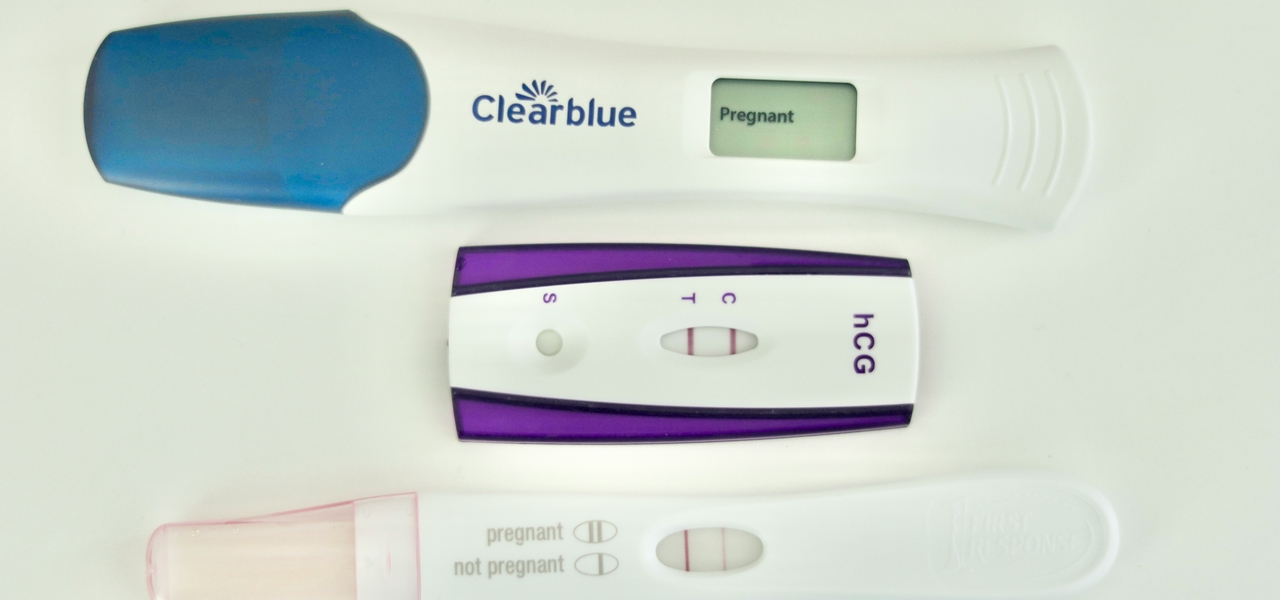
Imagine for a moment that you have been trying for a baby. Maybe it’s your first child. You’ve not been able to conceive for so long, but finally the pregnancy test shows a positive result. You’re overwhelmed with excitement. What might he or she be like? What kind of person are they going to grow up to be?
But when you go to the scan at 12 weeks, the doctor says there might be a problem. Perhaps it’s a limb abnormality. Or a cleft palate. Or perhaps you have the additional test for Down’s Syndrome and the result isn’t what you were expecting. The doctor offers you (or in some cases might even advise you of) the option of an abortion, or as they put it, the chance to ‘terminate’ the pregnancy. What will you do?
This is the sad situation in which thousands of parents find themselves each year. It is important that we have compassion for those who might have envisaged one future for a child, only to find that the reality will be very different. And it is particularly important that as a society we work to create a world in which parents who are looking after children with disabilities are supported, both emotionally and financially, and that disabled people are given the opportunity to thrive.
But we also have to recognise that as humans, we are all created in God’s image, and all knit together in our mother’s womb by Him. This is not dependent on any abilities (or inabilities) we possess. The legal option to abort a child with a physical or mental disability is predicated upon an assumption that such a child is less valuable than an able-bodied child. But every human has equal dignity and worth; there is no distinction in God’s eyes between Albert Einstein and a child with Down’s Syndrome.
As a society, we have gradually moved to a place of celebrating the achievements of people with disabilities. At the closing ceremony for the 2012 Paralympic Games, in which disabled athletes were feted, Lord Coe said: “we will never think of sport the same way, and we will never think of disability the same way.” But the sad reality is that disabled people do still face various forms of discrimination today (during the Covid-19 pandemic, at least one NHS trust put in place a blanket ‘do-not- resuscitate’ order, for patients who had a disability, without getting their consent).
Our abortion law is an area where nothing has changed. By UK law, abortions are permissible right until birth for babies with physical or mental abnormalities, and around 3,000 abortions every year occur on these grounds. Tragically, more than 90% of pregnancies that screen positive for Down’s Syndrome are aborted.
The abortion of pre-born babies simply because of their condition, in practice, amounts to little more than sifting out babies with ‘undesirable’ characteristics. There is little philosophical difference between the way in which disabled babies in the womb are treated and forms of eugenics, as has been practised at various times in history, including in the 20th century. But if we believe today that disabled people outside the womb should be supported, why should a baby in the womb (some of whom are aborted well after the point of viability) be treated any differently?
This systematic prejudice against people with disabilities can leave people feeling dehumanised. Heidi Crowter, a Down’s Syndrome activist who has campaigned to make it illegal to abort babies in the womb after 24 weeks who have Down’s Syndrome, has commented: “I find it extremely offensive that a law doesn’t respect my life, and I won’t stand for it. I want to change the law and I want to challenge people’s perception of Down’s syndrome.”
Since the introduction of accurate prenatal screening for Down’s Syndrome in Iceland, which is taken up by around 85% of mothers, nearly 100% of babies with the condition have been aborted. On average, only 2 or 3 babies are born with it each year. The Icelandic geneticist Kari Stefansson said: "We have basically eradicated, almost, Down syndrome from our society." In response, the American actress (and pro-life advocate) Patricia Heaton offered an alternative perspective: "Iceland isn't actually eliminating Down syndrome. They're just killing everybody that has it. Big difference."
Back in 2016, when the Down’s Syndrome screening was first introduced in the UK, the actress Sally Phillips, who has a son with Down’s, presented a documentary called ‘A world without Down’s Syndrome?’, exploring the rich, fulfilled lives which many people with the condition go on to live. In advance of its release, she wrote about her own experience:
“I was told Olly might not walk. He walks, runs, swims and rides a bike. I was told he might not talk. He recites poetry, he acts, he plays the piano. I was told he wouldn’t be able to handle money or get about independently. By 8am today Olly had made his own breakfast, got the telly working that no one else could fix and turned on Match of the Day, popped out to buy a jumbo pack of marshmallows, eaten the lot and called me a ‘wazzock’.”
Heidi Crowter herself now lives independently of her parents, held down a stable job in a hair salon, and got married (to a young man who also has Down’s) in 2020.
Sally Phillips summarises well the subliminal message our society sends to people with disabilities: “If we deny someone the chance to be born because we’ve already decided they won’t meet some predetermined measure of status or achievement, then we’ve seriously failed to grasp what it is to be human. Maybe one of the great gifts people with disabilities have for the rest of us is the power to remind us of this, to teach us, and to lead us back into our own humanity.”
Rape and Incest
How do you even begin to talk about the horror of rape? Estimates suggest that in the first fortnight after the event, 94% of survivors of rape or sexual assault develop symptoms of PTSD, and around 50% of survivors experience long-term symptoms. In his novel ‘Beartown’, Fredrick Backman writes: “For the perpetrator, rape lasts just a matter of minutes. For the victim, it never stops.” One survivor, Chrissy Chambers, described the effect that just encountering other men has had upon her: “Whenever I’m going to the supermarket, every man that I see, I have to come up with some plan in case he tries to attack me or how I will save myself.”
Our data on the number of babies conceived in rape is relatively lacking (as is data on the number who are aborted as a result of it), but estimates from Durham University and the Centre for Women’s Justice suggest that it may be just over 3,000 in a given year (around 0.4% of pregnancies). We long to see this number fall, for each individual case bears witness to an evil.
As Christians, we believe in a God who is “close to the brokenhearted and saves those who are crushed in spirit” (Psalm 34:18), and who “keeps track of all [our] sorrows [and has] collected all [our] tears in a bottle.” We are to comfort those who are grieving, to mourn with those who mourn, and to come alongside them in their pain. Any form of sexual violence is a grievance offence, a violation of the dignity of a person who is created in the image of God. We believe that God will, one day, hold the perpetrators to account.
Women who find themselves in this position may feel a sense of horror at the thought of giving birth to a child conceived through violence, a child who would be a visual reminder every day of their worst nightmare. Some may struggle to distinguish between their feelings towards their disgust towards the rape and the child themself, or may see the face of their abuser in the face of the child.
There are no simple answers here, and some wounds cut very deep. But just as the woman - who has been so devalued and abused - is created in God’s image, and has infinite worth and value, so too does an unborn child, however they were conceived. The prospect of abortion might seem appealing, but it cannot undo what has already been done, and ending the life of an unborn child will not make things right.
And not every woman’s experience is the same. Back in 2023, the BBC produced a documentary called ‘Out of the Shadows: Born from Rape’. It featured a range of heartbreaking stories, including those of Sammy and Mandy. Sammy was groomed, raped and abused from the age of 14. The documentary shows Sammy’s son asking her, ‘Mum, am I a rape baby?’. Her reply is earnest and heartfelt: ‘No. You’re my baby’. Her love for him - regardless of the hurt she has gone through - is evident.
Mandy’s experience of rape is, tragically, something she experienced at the hands of her own father. She was abused by her father from the age of 11, a police special constable and a Salvation Army member. Incest makes up a minority of rape cases, but carries it with additional consequences and complications, such as disabilities which occur as a result of in-breeding, which happened with Mandy’s baby. When Mandy’s father held her child first in the hospital-room, she said, “I was just thinking, ‘Get your hands off him, keep away.’ He was my baby, he was precious. I was going to protect him forever.” When they were back home, she took the baby in his pram, and never came back.
In the documentary, Sammy asks Mandy whether she thinks it is different to have a child who is conceived in rape, as opposed to from a happy relationship. Mandy’s response does not shy away from the complexities of her case: “Yes. He wasn't conceived out of love. He wasn't conceived out of my love. He was conceived by a monster. But by God I love him.” Her son has been formally adopted by her husband, and they live together with their other children.
But it is also important to recognise that it need not be a binary choice between abortion or keeping and raising the baby oneself; many babies conceived through rape are given up for adoption. This preserves women from having to be confronted by a physical reminder of their rape on a daily basis whilst also protecting life. In total, there are around 3,000 adoptions in the UK every single year, and almost 70,000 children currently in the fostering system: some Christians who are pro-life might feel that this is something they can consider, as we seek to provide solutions, rather than just obstacles.
Although Christians will generally hold similar views around the topic of abortion in the abstract, cases like these - involving violence which no woman should ever have to face - can prompt more uncertainty. Some may still feel that abortion is not an option in any circumstance. Others will feel that although they might personally choose to keep a baby even in a case such as this, these cases carry such long-lasting emotional pain that the state should not legislate on them.
When the mother’s life is at risk
What do you do when a mother’s own life is genuinely at risk? In some heartbreaking stories, this is the reality. Thankfully such occasions are very rare (in the most recent abortion data, there were around 80 such cases in the given year, making up 0.03% of abortions), but they do exist.
This is particularly the case with ectopic pregnancies, in which embryos attach outside the uterus. Regular symptoms include vaginal bleeding, lower abdominal pain, pelvic pain and a tender cervix, and occasionally, nausea, vomiting and diarrhea. However, in the most serious cases, a ruptured ectopic pregnancy can lead to internal bleeding, hypovolemic shock, and even death.
Motivation matters: whereas the intention behind an abortion in other cases is to end a life (for a variety of reasons), in tragic cases like these, it is to protect a life. Although basic Christian teaching around life is laid out in the 10 commandments (‘thou shalt not kill’), Christians have, for centuries, grappled with some of the particular circumstances in which killing is acceptable, such as in ‘just war’ theory or the principle of self-defence (eg. Exodus 22:2-3).
The presbyterian minister Matthew Henry wrote about the injunction not to murder: “This is one of the laws of nature, and was strongly enforced by the precepts given to Noah and his sons, Gen. 9:5, 6. It does not forbid killing in lawful war, or in our own necessary defence, nor the magistrate's putting offenders to death, for those things tend to the preserving of life”.
In fact, in the vast majority of scenarios, there is no way to save the baby, for they often occur too early in pregnancy for the baby to survive outside the womb, and the mother is the baby’s life-support. In effect, the choice is not between one life or the other, but between saving one life or none at all.
Indeed, the method of ending the baby’s life is also often different to regular abortion procedures. Within ectopic pregnancies, one of the most common methods is the removal of the Fallopian tube, essentially leading to the child being born prematurely, which will mean that it cannot survive.
Interestingly, even the Catholic church - which takes a strict line on abortion in almost all circumstances - distinguishes between an ‘indirect abortion’ (in which the baby’s death is an unintended, albeit foreseen, consequence) and a ‘direct abortion’ (in which the baby is directly harmed). In the 1968 encyclical ‘Humanum Vitae’, which covers a range of life-issues, Pope Paul VI writes, "the Church does not consider at all illicit the use of those therapeutic means necessary to cure bodily diseases, even if a foreseeable impediment to procreation should result there from—provided such impediment is not directly intended for any motive whatsoever".
To perform an abortion in cases where the mother’s life is at risk is not only legal in most countries around the world (including those with stricter abortion legislation), it is supported by the vast majority of Christians.
To be pro-life means being pro-all life, regardless of whether it is the baby in the womb or the mother; it is not without cause that in Northern Ireland, the leading advocacy organisation against abortion is called ‘Both Lives Matter’. Women must never be forced to risk their lives.
Conclusion
Our presumption as Christians must be to look to affirm the value of, and to protect, life. Every person - and it is important to stress that personhood does not just begin at birth - is created ‘in the image of God’, regardless of their abilities or disabilities, and irrespective of how they were conceived.
But within a fallen, broken world, clear principles are sometimes challenged by complicated circumstances. Some of these we will find easier to think through than others: as Christians we want to speak up on behalf of the rights of babies with disabilities, whether physical or mental, and we never want a mother to be forced to put her own life at risk. Other cases - particularly those involving rape - will be more complex, and there may be no perfect solution.
Irrespective of the circumstances, it is important that Christians provide a compassionate voice in the most painful of circumstances. If all the world hears from us is judgement, we are not living up to the good news of Jesus. People need to know that we care about them as individuals, rather than just about the principle. And as Christians, we can be involved in facilitating possible solutions, particularly by getting involved in fostering or adoption services.
Thankfully, cases like the ones outlined above - and particularly, the most difficult ones - are relatively rare. Exceptional cases don’t tend to make for good laws, precisely because they are exceptional. Nor do they tend to make for productive discussions either; the reality is that of the more than 10 million abortions in the UK since the Abortion Act was introduced, a small minority of cases involved the factors at play above.
We should not forget that such cases exist - or the real people at the centre of them - but nor should we let them dominate the wider debate around abortion either.
For there are other questions we might want to ask.
Why do we live in a country where 60% of mothers say that childcare costs contribute towards their decision to have an abortion (and 17% of mothers say it is the main factor in their decision), rather than being given the support they need?
Why do we live in a country where abortions are essentially on-demand until 24 weeks, the joint most-liberal abortions laws in all Europe, and laws which permit the abortion of babies past the point of viability?
And why are we not listening to women when polling has consistently shown that the majority of them actually want to see our abortion laws tightened? Parliament passed the decriminalisation of abortion in 2026, even though only 1% of women in the UK support abortion up-to birth.
Tough cases do, tragically, exist. But they are the exception, not the norm. It would be wrong for them to be used as a political football, and to be used to stop our society from asking some of the questions on which we could genuinely make progress.