
Stories from the Leadership Programme
For 30 years, CARE has been shaping a generation of Christians to be salt and light in our culture.
CARE’s year-long graduate programme gives a unique insight into Parliament, political advocacy and Christian leadership.
The Leadership Programme provides talented Christian graduates, who have a desire to serve the Lord in public life, the opportunity to experience a year in Parliament or a policy-shaping NGO.
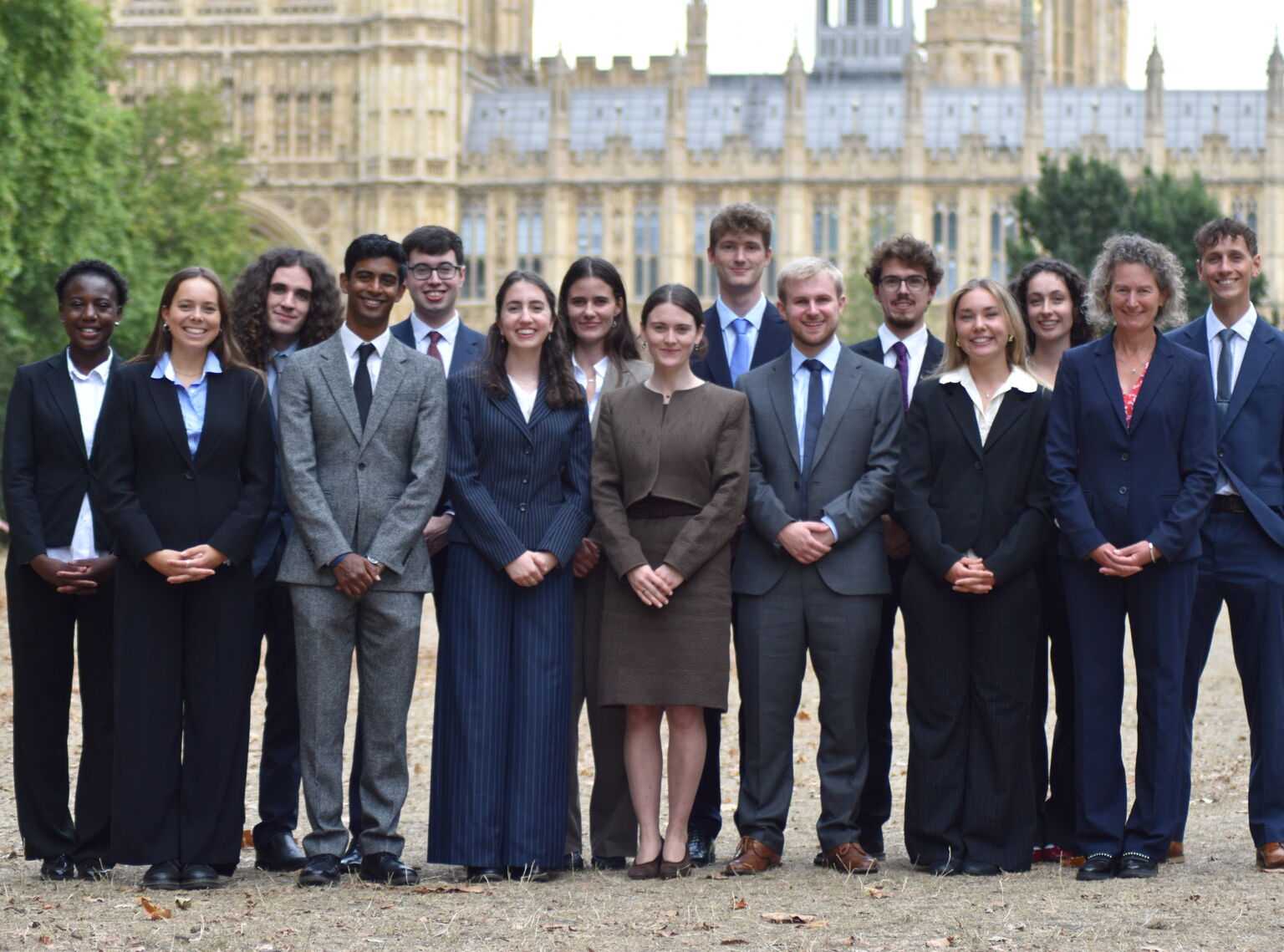
Philippa Taylor, Director of the Institute of Faith and Culture
Summarising the impact of 30 years of the unique CARE Leadership Programme in just a few stories is an almost impossible task! The Programme has been one of CARE’s most exciting and long-lasting initiatives and we are delighted to be able to share some of the stories from it with you.
In 1993, Lyndon Bowring and Charlie Colchester had the original vision to set up a politically-focused Leadership Programme, prompted by conversations with various Parliamentarians. They recognised the importance of inspiring and developing young Christian leaders who could be an influence for good in the long-term, both in Parliament and in the wider public square.
For the last 30 years CARE has provided the first step into public life for nearly 400 young people, giving them a year that combines a political placement with an intensive study and leadership training programme. We have run around 1,500 study days and over 100 study weekends. We have arranged placements with politicians from more than 10 different political parties, and with many charities and NGOs. We have had yearly cohort sizes ranging from just 2 grads to 24 grads. And we have probably provided them with at least 35,000 cups of coffee!
The stories written here are from just a sample of those young people. There are many more such stories we could tell of alumni working in Parliament, the Civil Service, the media, the charity sector and the church, who are all a testament to the realisation of that original vision.
Rich Day, 2013-2014
Placement: Micah Challenge, a Christian NGO
What did you do on your placement?
My role focused on advocacy and campaigning. It involved engaging with Churches, Christian movements and influential Christian Leaders from across the world to gain support for our campaigns to tackle poverty. I was able to lead on elements of the global campaign as well as have week-long placements at other charities. This gave me a real insight into how different charities operated. One of those placements was at Christian Aid, supporting their annual Christian Aid week.
How did it shape you to work for a Christian boss?
Hugely. I learned so much from the fantastic team and from the brilliant and wise, late Joel Edwards. Joel continued to be my mentor after I finished my placement, and I’m so grateful for the times we could spend together where he listened to me and spent time sharing his own wisdom. I learned about the importance and power of prayer and how Joel was able to interact with so many Christian leaders from around the world with such grace, wisdom and love. Joel and the team were always so composed and calm during stressful periods and I’ve tried to adopt that in my workplace.
What was the most exciting thing you did in your placement?
I designed and launched a youth stream of our ‘EXPOSED’ campaign which aimed to shine a light on global corruption, and I was able to write blogs for Tearfund to publicise the campaign, as well as being fortunate to travel to Kenya for a week with Joel to launch the campaign in Nairobi and Mombasa. Seeing the impact of corruption in the slums of Nairobi really brought home why we were campaigning on the issue.
What did you go on to do next?
After CARE I went on to work with Education Charities for a year before becoming a management consultant at Atkins which my year at CARE hugely influenced. I mainly work with Government clients (e.g. The Department for Education and The Home Office) on helping them navigate large scale transformation, but alongside that I set up an apprenticeship programme for our business and used the Leadership Programme as inspiration. Monday-Thursdays the apprentices work on their different client projects and at university and then on the Fridays it’s a chance for them to develop themselves, learning what their strengths are and forming close and collaborative relationships with their peers.
Are you still in touch with people from your time on the programme?
Yes, very much so. It is such a unique community that I’m so lucky to be part of, and one where we’re actively sharing our life updates and prayer requests. When we do meet up face to face, it’s amazing how quickly we are able to skip through pleasantries and dive into the challenges we’re working through and how God is moving our lives. The CARE 2013 WhatsApp group is still very much alive, and I continue to be so blessed by my CARE cohort.
Kitty-Kay Shuttleworth, 2002-2003
Placement: Alistair Burt, Conservative MP for Northeast Bedfordshire
How was your time on placement?
I worked in Alistair’s office and helped with correspondence with constituents in particular, and helped a little with some of his speech writing too. I went to stay with him and his wife Eve for a weekend and saw him in action in the constituency, and I remember being really impressed by what a great constituency MP he was. Despite busy weeks in Westminster, all his weekends were fully dedicated to serving the constituency. I was consistently struck by Alistair’s integrity and I feel very grateful in retrospect that I got to see up close a really good MP. It has subsequently made me less cynical about politicians than I might have been!
What was it like being in Parliament?
The experience ofworking in Parliament, having only just graduated, was an extraordinary opportunity to learn and grow. Parliament is busy and has its own distinct culture, and it was an exciting place to be; you got to walk past Ministers and different people you recognise and grew up listening to and reading about. It was a great place to be for that year.
What was it like learning with a group of other young Christians?
The group was fantastic. We were cross-party and had different points of view. Paul Woolley did an excellent job organising a great programme of speakers and helping us think about various ethical topics. It was nice to have that contrast on a Friday and it was quite a fun and relaxed environment to come back to at the end of the week.
What did you go on to do next?
After the CARE intern scheme in 2003, I joined Alpha
and I’ve been there ever since: 20 years this month! I started looking after Alpha in the Catholic Church globally, which was relatively fledgling at the time, but which now is quite a big part of Alpha’s mission across the world. My role now is quite a bit broader; as well as overseeing Alpha in the Catholic Church, I oversee our Church Engagement strategy globally and a global event for Christian leaders that we host at the Royal Albert Hall every May called the Leadership Conference.
What have been some of the biggest encouragements in that time?
About 20% of the churches running Alpha around the world now are Catholic churches: that is about 5000 Catholic parishes. In every country where Alpha is present, Alpha is now running in the Catholic Church. I’ve had the privilege of meeting each of the last three Popes. The trust and the support for Alpha by the Catholic Church has really grown in that time as well; it’s born a lot of fruit at a parish level, with many people coming to faith and becoming evangelists themselves.
How did the CARE Leadership Programme prepare for what you went on to do?
It was a great experience, having to write and to build relationships and to work with different leaders: it was a good foundation in lots of transferable ways. And it was a great first thing to come out of university and do. My desire to be connected to a Christian mission with a very significant purpose came in part through CARE. The Leadership Programme would be a great springboard for whatever you go on to do, whether you know you want to stay within politics or not!
Sarah-Jane Marshall, 2010-2011
Placement: Gavin Shuker, Labour MP for Luton South
I was based in Gavin’s Westminster office, helping draft responses to letters and emails, organising his diary and contributing research towards his speeches.
What did you learn from your placement?
Ultimately I learnt that this line of party politics wasn’t for me – but that was helpful in itself! More broadly, I learnt so much about the challenges and opportunities provided by working as a Christian in such a public role. I saw cross-party Christian unity in action, which was really inspiring. Also Gavin’s tagline was “dirty hands, clean heart” and this has always stuck with me.
Were there any particular standout moments?
I’ll never forget the time Rupert Murdoch was in Portcullis House to face questions from a committee and he and his wife were escorted hurriedly past me after she was attacked with a custard pie!
How did the Friday sessions impact your Christian thinking?
The Friday sessions were so critical in giving me the time, resources and fellowship to really think through my worldview. The characters in our year group were so varied but that was brilliant! It really is a case of “iron sharpens iron”. I still come back to our sessions around Niebuhr’s book “Christ and Culture”, as the framework can be applied to almost any contemporary issue. Similarly, J D Hunter’s ironically-titled book “To Change the World” has had a lasting impact and I’m glad I had the chance to unpack such a huge book in a group setting.
What did you go on to do next?
After CARE, I worked for the Christian charity LICC and then later retrained as a Primary School Teacher. I am currently in a season at home with three small children. I’m not perhaps where I imagined I would be working during CARE, but the programme has embedded in me a strong belief that God can be at work in and through me wherever I am and in the faithfulness of my day-to-day.
Quotes from other Alumni
"It became clearer to me throughout the year that Christians can do politics in a very different way." Alasdair Gordon 2008-09
"It's nice to have a group of people who knew you right at the outset of your career. They value you for who you are rather than for any title." Gregor Catto 2016-17
"Sometimes even now I come into contact with someone who has been on the Programme, and that's been a source of huge encouragement to me." Paul Woolley 1999-00
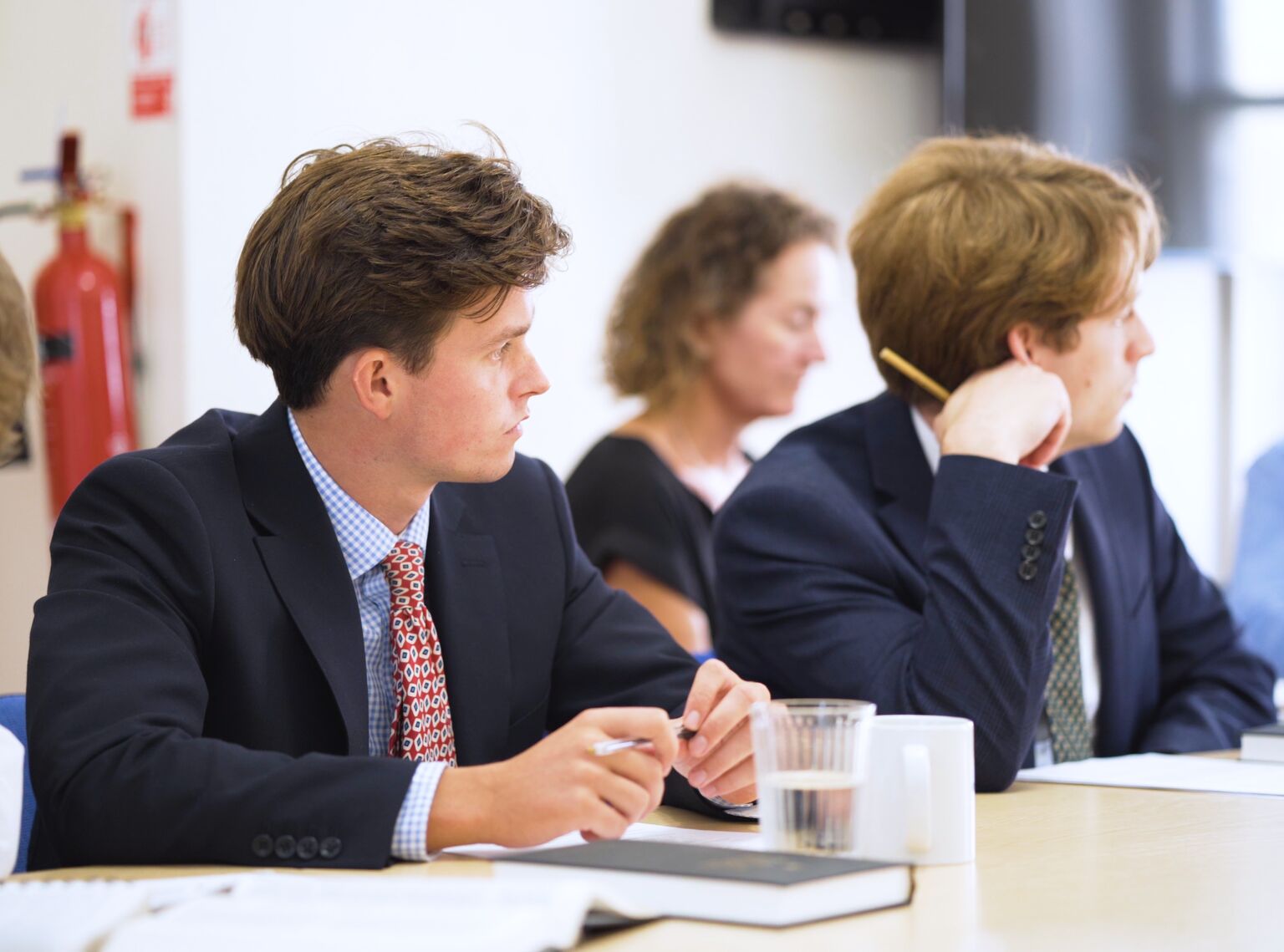
John Casson, 1994-1995
Placement: Stephen Timms, Labour MP for East Ham
I always had a desire to live for God’s Kingdom, but thought that could be in politics as much as in the Church. I was the kid with a poster on the bedroom wall, saying: ‘I’m confused which Bible people are reading when they say religion and politics don’t mix’!
The day I met Stephen for my interview was the same day that Tony Blair had been announced as the new Labour leader. There was a sense that for the first time since 1979, Labour was coming back into power. There was a freshness and an energy in being a Labour backbencher at that time. It felt like a new era.
Stephen had just been elected in a by-election in June 1994. Part of the fun of it was we learnt our way around Westminster as new boys together. The first time he got a question at PMQs, he talked it through with me. When he secured his first adjournment debate, we wrote the speech together. We’re still friends to this day.
Stephen is unusually ego-free for a politician. He’s authentic and honest: what you see is what you get. I felt he treated me as an equal; he told me what he was worried about and let me help him. He made me feel like I was in his circle of trust, as a member of his team, a friend, and a Christian brother. He upended the idea in politics that you can’t be nice if you want to be successful. He has been in the Cabinet as Chief Secretary to the Treasury, and was unusually well respected in the Departments where he was a Minister. He is respected across the House, because he always plays the ball and not the man, as they say, so people trust him and he’s able to forge consensus across the aisle.
The Leadership Programme gave me the sense that I could show up in the political world and belong. It opened the door to a world which seemed like it existed only in the media and you couldn’t access it, and it gave me the confidence to believe I could be a part of politics and government and policy.
In the end I concluded that I wasn’t enough of a partisan for party politics. I liked to see the different sides of an argument, so I ended up going into the Civil Service and joined the Foreign Office. Within a couple of months I was posted in Brussels, and from there I went to Washington from 2000-2005, where I was the Ambassador’s Private Secretary, and then the Head of the political section, reporting on American politics and Congress back in London.
After that I came back and worked for the Treasury, alongside another graduate of the Leadership Programme. After two years of that, I went into Foreign Office Arabic Language training. I had always thought it would be amazing to be employed to learn Arabic. I became Deputy Ambassador in Jordan until the end of 2009, then came back and did a year as the Head of the Near-East and North Africa Department in the Foreign Office.
From 2010, I was in 10 Downing Street as David Cameron’s Private Secretary for Foreign Affairs for 3 years. I was at his side for all foreign meetings, trips and phone calls. We flew into Libya while Colonel Gaddafi was hiding in the desert, we met Vladimir Putin, Angela Merkel and Barack Obama, and we went to Afghanistan. It taught me a lot about how decisions really happen and what politicians really need. It taught me the centrality of relationships in politics and diplomacy. We were all doing the job of our lives in a really testing situation. I tried to live out my faith by helping others to succeed, rather than simply jostling for position.
I then became the youngest-ever British Ambassador to Cairo from 2014 to 2018. We faced some major crises, including evacuating 19,000 British tourists after a terrorist attack, and we built up a Twitter presence with over a million Egyptian followers.
In Cairo and Downing Street I started really thinking about what would nurture real wisdom and character for these jobs. I realised that they don’t just come by skill or willpower, but by practices and habits of making yourself available to God. I started to be more attentive to what was nourishing God’s life in me, and what was inhibiting it. This set me on a path which eventually led me to leave the Foreign Office.
I felt a calling and a sense of freedom to let go of the career that I had built. I wanted to put myself in a place that would allow me to live with more freedom and joy. I wanted to be with people who are marginalised, rather than trying to fix things for them from a great height. Because so much of my identity had been rooted in being successful within the Foreign Office and climbing the ladder, I needed to be set free from that by fasting from it and denying myself.
I’m now Chief Executive of L’Arche, a charity which builds communities where people with and without learning disabilities share life. It’s life-giving work: people with learning disabilities are poor in the things our world over-values: being busy and important, what you have, what you do, what people think of you. This gives them a gift of inviting all of us to let go of those addictions and pay attention to other things. People with learning disabilities also lead us to encounter God in different ways. It’s a door to new dimensions of what Jesus meant by “life in all its fullness”.
The Leadership Programme gave me some wonderful friendships: I’m still friends with two or three of the five in my cohort, and one of them is still one of my closest friends. It gave me a set of like-minded fellow travellers whom I’ve been able to trust and to share the journey with throughout my career. We can reflect on whether we’re making a difference, and who we are becoming. It is a rare thing to have people you can trust to be honest with about things which are difficult, but even though we began by working for different parties, I trust that group totally.
The Leadership Programme gave me the sense that I could show up in the political world and belong.