
The first newspaper in the United States of America was launched in Boston in 1690. It was intended to be published monthly, with the expectation that there would not be enough news to warrant more frequent publication (although the owners did reserve the right to publish extra issues if ”if any Glut of Occurrences happen”). They even included a blank page so that if any readers had more news they were aware of, or more accurate information than that published, they could write it in themselves and pass it on.
Our consumption of news and politics has changed considerably in the past three hundred years or so. From the expectation that there would be barely enough news to fill a newspaper once a month, we now have more ways of consuming political news and information than ever before.
How we consume politics
Many people continue to access news and information through the traditional sources of newspapers and television. Television news in particular is the main source of political engagement for adults over the age of 35. Even among younger adults, traditional media is seen as more trustworthy and reliable than newer platforms such as social media or AI. In the UK, the BBC is seen as particularly trustworthy (around 59% say they trust BBC News) and 48% of people watch or listen to BBC TV or Radio news coverage. That rises to around 67% of people if you include BBC’s online news as well.
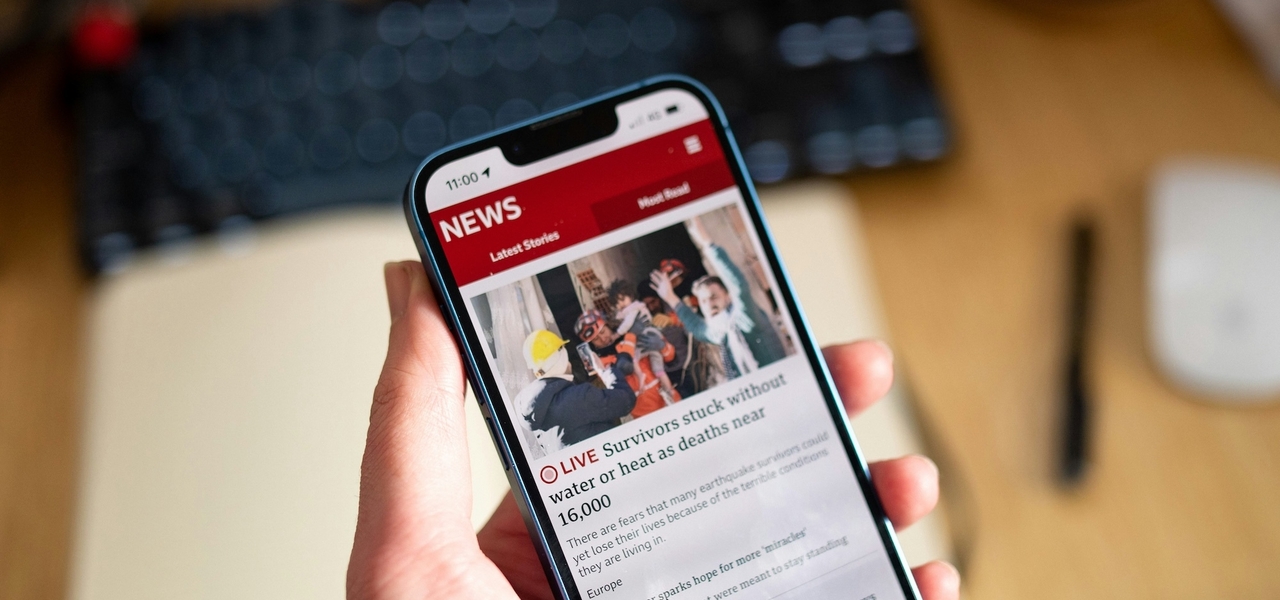
Online news platforms have rapidly come to rival television and newspapers for engagement with political news. According to the Reuters Institute, 75% of people in the UK get their news from an online source. Some of this online engagement is through websites from more traditional outlets, such as the BBC or ITV, The Times, The Telegraph, or The Guardian. Other sites offer a political engagement that is not available through traditional means. Parliament Live, for example, gives everyone access to livestreams of debates and events happening in Parliament.
For young adults, social media has become one of the primary sources for political news and engagement. Recent research has found that 58% of adults aged 16-34 get their political news mainly through social media, compared to merely 8% of those aged 55 and above. Those accessing news mainly through social media are more likely to be from working class occupations, or from minority ethnic backgrounds. Facebook is the top social media brand for consuming news, followed by YouTube, WhatsApp, Instagram, and X.
The most recent development in how we consume and engage with politics is the advent of artificial intelligence. AI tools are increasingly used to summarise news stories and present digested, tailored political information. This new form of consuming news has the potential to reshape how people engage with politics. A paper by researchers in the UK, US, and the Netherlands concluded that: “AI-generated summaries can improve conversation quality while narrowing conversational engagement” and noted “growing concerns about how embedded AI systems fundamentally … shape public discourse.”
The dangers of over-consumption
Not only do we have more ways to consume political news today, we have more opportunities to over-consume it. Those who get their politics from television can be glued to 24-hour news channels. Online news sources are available, and updated, around the clock. And social media offers a particularly tempting method of over-consuming politics.
Social media platforms deliver a continual scroll of news and views, seemingly going on forever. You can consume a diet of political intrigue for as long as you want, whenever you want. The social media feed is like a never-ending stream of news that we can immerse ourselves in at any point of the day or night.
It seems obvious to say that this over-consumption of news and politics is not especially healthy. The more we take in, the more we can feel overwhelmed by the constant stream of opinions. Some psychologists have dubbed this ‘politically induced stress’ which can present itself through physical symptoms as well as feelings of anxiety. The desire to keep refreshing our political feed has been named ‘political obsession disorder’ and can feel very hard to escape.
As Christians we should be on our guard for this over-consumption. It can manifest in our habits and priorities. Do I look through the news first thing in the morning, or last thing at night? Do I prioritise keeping up with the latest political scandal over my relationship with God? Do I reach for my phone and my newsfeed before I reach for my Bible? If so, I might be in danger of over-consuming politics.
The dangers of undernourishment
As much as we face the threat of over-consumption, we can react in the other direction and leave ourselves with political undernourishment.
If over-consuming news can lead to overwhelm, we might choose to not consume news at all. Recent research by the Reuters Institute and University of Oxford shows that 50% of people in the UK say that they avoid the news ‘sometimes’ or ‘often’. This is at the same time that trust in news coverage is falling. In the UK only 30% of people say that they trust the news, down 5% in the last year and less than the global average of 37%.
The rise of social media as a source of news has coincided with a fall in interest in politics. Nearly half of those who get their news through social media say they are “not very interested” or “not at all interested” in the subject. The image-heavy, short-form communication of social media lends itself to presenting a story narrowed to its bare essentials, removing nuance and leaving the viewer with a desire to swipe to the next thing rather than learn more.
Ceasing to consume politics might seem like a safe, even healthy, path to take. But Romans 12 directs us: “Do not conform to the pattern of this world, but be transformed by the renewing of your mind” (Romans 12:2). Our minds must be engaged as Christians, not only about theological truths, but also about the world around us. To avoid being conformed to the pattern of this world we need to be aware of what that pattern actually looks like. Disengagement with political news, views, and information is not helpful for Christians.
Pursuing a healthy diet
So what is the right path for us to take? In our modern culture we are surrounded by messages about the health of the food we eat. We get advice on what is good to consume, how much, and what is dangerous to put into our bodies. What about our political consumption? How do we ensure that our political diet is just as healthy as our physical one?
Watch what you take in
When it comes to food, we understand the truth of the adage: “You are what you eat.” We are shaped by the things that we consume. So too with politics; we are influenced by what we consume, how we consume it, and how often.
What is the politics we consume doing to us? Much political debate is adversarial, and much political coverage is combative. Is our political consumption making us more judgemental, quarrelsome, and antagonistic? Or do we have a diet that helps us to develop the fruit of the Spirit: love, patience, kindness, and gentleness?
Just as we wouldn’t put into our bodies things that are actively harmful, or in quantities that would be detrimental (at least if we are thinking clearly), so we should not put into our hearts a diet of political input that is spiritual damaging and damaging to our character. We need to watch what we consume.
Paul tells Titus to encourage Christians in his care to obey those in secular leadership and authority. He then goes on to say that they are “to slander no one, to be peaceable and considerate, and always to be gentle toward everyone.” (Titus 3:2) This is in stark contrast to our usual diet of political news, which can be full of vitriol, name-calling, and unpleasantness.
We need to consume politics that is true, peaceable, considerate, and gentle. These are not necessarily qualities that sell newspapers, keep people turned to TV broadcasts, or sell adverts on websites. But as far as it is possible, we should seek out political content that helps us to think and act more like Jesus.
Watch your heart
The idea of ‘mindful eating’ has been promoted in recent years to ensure a good diet and relationship with food, and to “connect with how we really want to eat”. It means concentrating on what and how you eat, and being intentional about the food you consume.
In a similar fashion, we need to consume politics in a mindful fashion. What is my motivation in spending time on this website, or scrolling through views on this issue? Why am I keeping up with politics in the first place?
For followers of Jesus, there are many good reasons to follow political life. We need to know what is going on in order to be able to pray well. We need to be well informed in order to be engaged with the world around us for God’s glory. We need to be present in politics to see ways we can love and serve our neighbour.
However, my motivation for following political news can be quite different. I can be fascinated by seeing those in power being toppled from their positions. I can revel in the squabbles and finger-pointing that fills much of our political discourse. I can be drawn to gossip, even if it is obscured by a worthy veneer of ‘keeping up with the news’.
As he writes to the church in Colossae, Paul tells the Christians to let Christ’s peace rule over our hearts, and Christ’s word dwell in us richly. The gospel should be our motivation in all that we do. Then he goes on:
And whatever you do, whether in word or deed, do it all in the name of the Lord Jesus, giving thanks to God the Father through him.
Whatever we do, including consuming news and politics, should be done in the name, and for the glory, of Jesus our Lord.
Watch your biases
One of the healthiest ways to eat food is to ensure you are getting a balanced diet, eating the right amount of a range of foods instead of having a narrow diet of just a few things.
Our political diet should be the same. We need a balance of different opinions, perspectives, and political positions in order to truly understand a particular issue. The trouble is, we tend to consume news that aligns with our own views and perspectives. We choose sources that connect with the way we already think about politics.
Every piece of reporting has an angle, a political worldview through which the journalist or reporter is writing. In his book ‘User’s guide to the media’, David Porter reminds us that “news editing involves assumptions about relevance, importance, and values … ‘bias’ in the news is not just a regrettable tendency. It is something which is unavoidable if news is to be reported at all.” This is true in ‘traditional’ media as much as online sites or social media.
Whether we get our news through print, television, websites, or social media, each one of us chooses the sources we hear from. We may or may not be aware of the particular slants and bias of each outlet, but consuming without thinking will likely result in views that we agree with. The internet gives us a range of sites to visit which can give the illusion of a breadth of opinions. But it can easily end up in an ‘echo chamber’ where we simply hear our existing views reflected back to us.
This becomes more acute as more people use social media as their main source of news. These platforms rely on algorithms to deliver content in that addictive ‘infinite scroll’. The algorithms choose what to show you based on your preferences, thus reinforcing the echo chamber of news input. If you watch news from one perspective, the algorithm is likely to give you more of that point of view, rather than a range of opinions and perspectives. This only continues with the new trend of using AI tools to curate content. A recent piece of research concluded: “Most strikingly, across all providers and platforms, [AI] models consistently recommend more polarizing content” a risk that could increase as AI tools generate and recommend content from other AI tools.
Taking in our political news from a range of sources helps to counter these dangers. If you are a Telegraph reader, for example, it might be helpful to balance that by reading articles from The Guardian. Watchers of the BBC News Channel might want to engage with GB News as well. Since social media algorithms are most likely to serve up content you agree with, you will need to actively seek out people you might disagree with to read their takes, and even follow them to ensure your feed has input from both sides of an argument.
Consuming politics from different perspectives is helpful in various ways. It enables us to listen to the issue from a different side of the argument. You may still disagree with their position, but you will gain a better appreciation of the motivation behind it and perhaps even find areas of common ground. Listening to those we disagree with also helps us to see the people behind the political issue. We can then respond with grace and gentleness as we engage with the discussion, instead of resorting to stereotypes.
Watch for the truth
As followers of Jesus, we should be concerned about truth, since Jesus himself was “full of grace and truth” (John 1:14). Paul tells the Ephesians that the gospel entails taking off our old self and putting on the new, which means that “each of you must put off falsehood and speak truthfully” (Ephesians 4:25). To be on Jesus’ side is to be on the side of truth (John 18:37).
The rapid and easy production of social media posts means the potential for disinformation is huge. Even those who use social media seem to think so. Only around half of those who use social media as their main news source regard that as a reliable source, compared to television, newspapers, and radio which are all seen as more trustworthy alternatives. In data collected in April 2026, 78% of adults in the UK reported being concerned about the spread of misinformation, disinformation, and ‘fake news’.
AI platforms also make it more and more difficult to discern whether something is real or fake. AI generated photos or video can circulate online, generating political uproar, without anyone suspecting that they are not genuine. This has led the World Economic Forum to identify misinformation and disinformation as some of the most pressing risks over the next two years, according to their 2026 Global Risks Report.
Given the difficulty of knowing whether news stories today are real or fake, it is all the more important for Christians to pursue the truth and test what we consume against the facts.
One way to test what we come across on social media is to see if it is reported on mainstream media. This is not a complete guarantee of authenticity, but if ITV or Sky News are showing it, they will likely have done fact checking of their own. You may also want to consider who is posting it, and whether it comes from the original source. The House of Commons Library has some helpful briefing papers on verifying images and video and checking facts.
There are also online tools that can help if you are unsure about a story: The BBC’s Verify page exposes the truthfulness of popular online accounts. Full Fact is an independent fact checking organisation focused on UK current affairs. From a global (and more US-focused) perspective, the website Snopes checks the veracity of a range of online rumours.
One of the best things we can do when pursuing the truth of a news story is to read the original sources. Is that really what that person said? If possible, you can find out by reading the original speech, or watching the full coverage. Lines taken out of context can make it seem as if people are saying something other than they intended. With the rise of social media and AI as main sources of news, more and more people are getting their politics from third-party platforms - apps that report what news sites are reporting about what actually happened. As Christians we can be distinctive by going to the original source where we can and ensuring that what we consume is actually the truth.
Conclusion
Finally, brothers and sisters, whatever is true, whatever is noble, whatever is right, whatever is pure, whatever is lovely, whatever is admirable—if anything is excellent or praiseworthy—think about such things.
It is important for Christians to be aware of what is going on in the world, and to be engaged with political life. It can be hard, however, to consume politics and follow these words of the apostle Paul. Political news that is true, noble, pure, lovely, and admirable is hard to come by!
As Christians we can avoid consuming a bad political diet by watching what we take in. Does it polarise, or does it enable us to understand the issues better? Does it demonise the opposition or allow us to have compassion on those who think differently? Does it manipulate the facts, or does it speak the truth plainly? No news outlet will do these things perfectly, and there is no one source of politics that is entirely ‘correct’. Rather we need to consume politics well, watching what we take in, so that our thinking is focused on what is good and honouring to God.