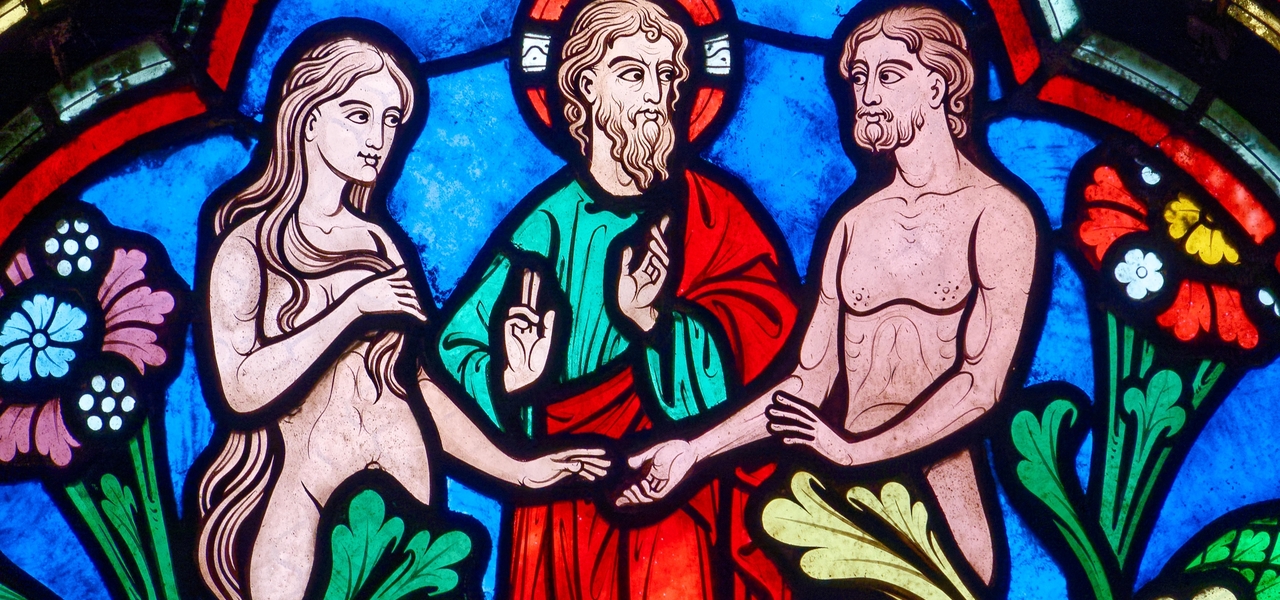

It’s all very well saying that as Christians we are against pornography, and that it distorts God’s gift of sexual intimacy; but we also need to make the case for what we are for. Christian sexual ethics have always been counter-cultural: in the Greco-Roman world the earliest Christians inhabited, all kinds of sexual relationships were permissible, including many which were abusive.
At CARE, our mission is to speak God’s better story to a broken world: so what is God’s better story for sex in particular?
Sex is good
By opposing pornography, Christians can be accused of being ‘prudes’. But Christians should be the most positive people about sex, since it is God’s idea!
In Genesis, we read that God created all things, declaring them to be ‘very good’. Since sexual expression was part of that creation, sex is affirmed to be good by God. God tells humanity to “be fruitful and increase in number” (Genesis 1:28) and sex as a means of procreation is a direct response to this command.
In Genesis 2, we read the first love-song, as Adam responds to his wife Eve: “This is now bone of my bones and flesh of my flesh. She shall be called ‘woman’, for she was taken out of man” (Genesis 2:23). In the next verse, we read about how sex has been designed by God to be a ‘one-flesh’ union, where two become one. In fact, far from being negative about sex, the Bible devotes a whole book to talking about sexual pleasure, in Song of Songs!
In the Bible story, we see how sin enters the world and corrupts every part of our lives, including our sex lives. Humans have used sex in lots of sinful ways, including pornography. But while sex can be used for sin, sex is not itself sinful. It is a good gift from God.
Sex is intimate
Sex has various purposes, including pleasure and procreation. But at its core, it is about intimacy. The Bible uses the word “united” to describe it (1 Corinthians 6:15). In Eden, we are told that “Adam and his wife were both naked, and they felt no shame” (Genesis 2:25). It is a picture of intimacy and vulnerability, which includes sexual intimacy.
Tim Keller describes sexual intimacy like this: “Sex, as prescribed in the Bible, is a way of saying, I see all of your imperfections and I am still completely, exclusively, and permanently committed to you. You are naked to me in all ways, and I still accept you forever.”
It is also a picture of the intimacy that Adam and Eve enjoy with God. But in the next chapter, as Adam and Eve sin, they become ashamed and cover up their nakedness. They hide from each other, and they attempt to hide from God. The rest of the Bible is the story of how humanity can be restored to intimacy with God once more.
Writing to the Ephesians, Paul talks about the union of husband and wife in marriage, and says: “This is a profound mystery—but I am talking about Christ and the church” (Ephesians 5:32). Marriage points us towards Jesus and, since sex is part of God’s design for marriage, sex does so too.
Because of our sin and brokenness, married couples are never completely ‘naked and unashamed’ with one another. However, sexual intimacy at its best is a picture of the intimacy and closeness that God desires with every person.
Sex should be practised safely
The Bible talks a lot about sexual intimacy. It speaks of sexual love between a husband and wife like this: “It burns like blazing fire, like a mighty flame” (Song of Songs 8:6).
Fire is a positive thing when used properly. It can bring light and warmth, cook food and even drive machinery. But fire that is used in an improper or uncontrolled fashion is dangerous. It can get out of control, destroy possessions and damage lives.
God views sex like fire, powerful and needing caution. It is to be enjoyed but also respected. It needs to be treated in the right way to produce the positive benefits for which it was intended.
In RSE classes today, young people will be taught about ‘safe’ sex, including various forms of physical protection. But God’s view of safe sex is far wider. Precisely because it is so powerful, He has given us boundaries for His good gift of sex: He creates marriage, a lifelong union between one man and one woman, as the context for sexual expression.
The Bishop of Lancaster Jill Duff explains: “Local women my age were astonished that I believed sex is for marriage. ‘You mean I’m worth it?’ Our inherited Christian ethics on sex speak preciously into our culture which is craving intimacy and worth.”
Sex is not ultimate
When Jesus is quizzed about marriage at the resurrection, He replies to those who tried to trap Him: “At the resurrection people will neither marry nor be given in marriage” (Matthew 22:30). Marriage will not last into the New Creation, and so neither will sex, but the relationship to which it points, between us and God, will last forever.
The pastor Sam Allberry writes: “If marriage shows us the shape of the gospel, singleness shows us its sufficiency.” Our relationship with Jesus helps us to see that, while sex is good, sexual expression is not the most important thing. Sexual pleasure is not the ultimate goal in life. It is quite possible to be fully and completely human without sexual activity.
We know this because of Jesus. He lived a perfect life which was the fullest humanity has ever seen, without having sex. Our culture says sexual fulfilment, whether through pornography or other means, is crucial. The Bible helps us to see that fulfilment comes not through sex but through knowing Jesus Christ. Sexual pleasure does not complete us; Jesus does.