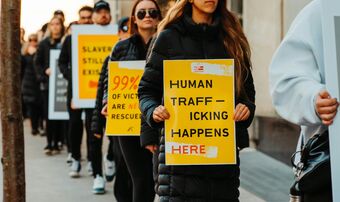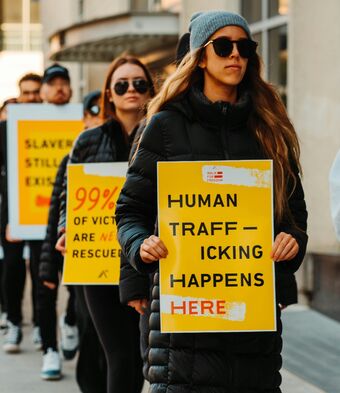

It is tempting to think of slavery as something that happened a long time ago, or somewhere in another part of the world. But according to the 2023 Global Slavery Index, around 50 million people are trapped in modern slavery across the world today, and 122,000 of those are here in the UK.
Modern slavery can affect those who are born in this country as well as those who have come here from overseas. The National Crime Agency statistics show that the third most common nationality among those being enslaved is British. Sadly a person can be trafficked from the same street that they have lived on their entire life.
The term ‘modern slavery’ covers the crime of exploiting or controlling another person, often holding them captive, for personal or commercial gain. Usually a victim of modern slavery is threatened or punished to stop them reporting the crime to someone else. If you meet a possible victim, you might find them extremely traumatised by their treatment, so that they do not necessarily consider themselves a victim. The control and coercion exerted over them will mean that they are very reluctant to report the crime, and fear for their safety and the safety of their family.
Because of this, modern slavery thrives in secrecy and can be difficult to identify. Nevertheless, there are certain signs you can be on the look out for:
General signs of modern slavery
While there are different types of modern slavery, such as sexual exploitation, forced labour, or domestic servitude, there are some signs that are often present in various forms of exploitation.
Someone who is a victim of modern slavery might be frightened and unwilling to make eye contact or interact with others. They may be especially frightened of the police and fear violence to themselves, or their family, or deportation to another country, and reluctant to seek help.
They may look unkempt and dishevelled, wearing the same clothes every day and unsuitable clothes for the weather or the work they are doing. They might look malnourished and perhaps have untreated injuries on their body.
They might be confused and unsure about their own address. They could be unable to travel on their own, perhaps travelling to work very early in the morning or late at night, potentially in a crowded vehicle with other workers who are all picked up and dropped off at the same time.
Their living accommodation might be very poor quality: dirty, cramped and overcrowded with many people living in one room. Heating, lighting and washing facilities may be very limited or non-existent. The accommodation might be at the same place as their exploitation, living and working at the same address, sometimes in temporary facilities like a caravan or container.
They might have very few, if any, personal possessions and no documents that would allow them to travel such as ID or a passport. Another person might be paying for them, or even speaking for them, and they may have relationships that seem off, such as a teenager acting like a boyfriend or girlfriend of a much older adult.
You may not see all of these signs, and only some of them might be present in each individual case. There are also particular signs to be aware of that indicate specific types of modern slavery:
Forced labour
Forced labour is a form of modern slavery where a person is coerced to work for little or no pay. The work is usually done under threat of punishment of some kind, without agreement, and the worker is unable to leave.
Someone in forced labour might lack the suitable protective equipment, clothing, tools, or training to do their job. They may also be forced to pay for their own equipment or tools. They may owe, or feel that they owe, a substantial debt to their employer and work under intimidation or threats.
Those in forced labour often work unusually long hours, with few or no breaks during that time. They will have no contract and will be paid less than the minimum wage, if they are paid at all. They may be afraid to take payment for work that they have done.
They may be accompanied by another person at all times and unable to freely move on their own. They might also be forced to stay in accommodation that is provided by their employer.
County Lines
County Lines refers to illegal drugs being transported from one area to another, often across police and local authority boundaries. The ‘County Line’ refers to the mobile phone ‘deal line’ used to take orders for the drugs. There are estimated to be 2,000 County Lines operating in the UK.
Dealers target children as young as 7, and adults, often with mental health or addiction problems, to exploit into storing and transporting the drugs, and the victims may be subjected to other forms of physical, mental, and sexual abuse. The dealers use their victims to shield themselves from the risks from dealing drugs.
Someone involved in County Lines might talk about ‘running a line’, ‘going OT/out there’, ‘going country’, or ‘going cunch’. They could exhibit significant changes in their emotional wellbeing, like being aggressive, anxious, withdrawn, or secretive. They might have hotel keys or keys to unknown places, and there might be an increase in visitors and cars to their house or flat.
Young people exploited in this way might return home late, or be found in places away from home, and there might be unexplained absences from school. They may have unexplained injuries, be seen being driven in a car or taxi, dress differently, or have unaffordable new things such as clothes, jewellery, or mobile phones.
Sexual exploitation
Sexual exploitation is the coercion or exploitation of another person for sexual purposes. It includes prostitution, but also encompasses other ways in which a person is controlled for sex.
When a person is sexually exploited they are likely to be closely guarded. They might be branded in some way with a tattoo and may display signs of physical abuse such as bruises, scars, or cigarette burns. They may have few clothes and those they do have are highly sexualised. They might also have very limited English, restricted to a sexualised vocabulary.
Someone in sexual exploitation is likely to sleep in the same place that they work, with male visitors calling day and night, and only staying for a short time. There may well be a number of females who are foreign nationals staying at the same address.
You can read more about the signs of sexual exploitation in this article.
Domestic servitude
Domestic servitude is a form of modern slavery where victims are forced to work in private households for little or no pay. Because this exploitation occurs in a home, it can be especially difficult to spot.
Someone in domestic servitude will be held in their employer’s house and forced to do domestic tasks such as cooking, cleaning, or child care. They will work unusually long hours and have no access to their own belongings, including ID, passport, or a phone. They could have no personal living space or bedroom, and little, if any, food, water, or medical care.
They are unable to leave the house on their own, and rarely interact with the family that they work with, including not eating with them. They stand out from the other family members due to their poor-quality clothes. Their employer is likely to be physically and/or verbally abusive toward them.
Child exploitation
Modern slavery can affect children as well as adults. A child who is being exploited might exhibit mood swings, becoming very angry or upset, or withdrawing by themselves.
They might go missing for some length of time, or miss school frequently. They could have multiple phones and receive excessive numbers of texts or phone calls. They may also have gifts or presents that they cannot explain.
If a child is being sexually exploited they may start to dress inappropriately for their age, and they may also exhibit inappropriate sexual behaviour.
What you can do
It can be hard to spot the signs of modern slavery and it might seem intimidating to report your suspicions. Trust your instincts. If something seems off, then it is better to let someone know. You do not need to be certain that a situation is modern slavery in order to report it.
If you think someone is in immediate danger, then call 999. You might be wary of doing so because you don’t want to waste police time. However, if you believe someone is in direct danger of harm, especially if that person is under 18, don’t be afraid to call.
If you have suspicions that someone might be trapped in modern slavery, you can call the Modern Slavery and Exploitation Helpline on 08000 121 700. The helpline is operated by Unseen and is free to use, confidential, and open every day. You can also report concerns via the Unseen app, or on their website (unseenuk.org).
The Salvation Army also has a 24/7 confidential referral advice line that you can call on 0800 808 3733. You may also want to talk to the police for advice by calling 101, or you can contact Crimestoppers anonymously on 0800 555 111.
Whatever your concerns, please put your safety, and the safety of potential victims of modern slavery, first at all times. Do not confront the possible exploiters yourself, and do not put yourself in danger. Don’t ignore your concerns, but report them so that professionals can act to help those in danger.